







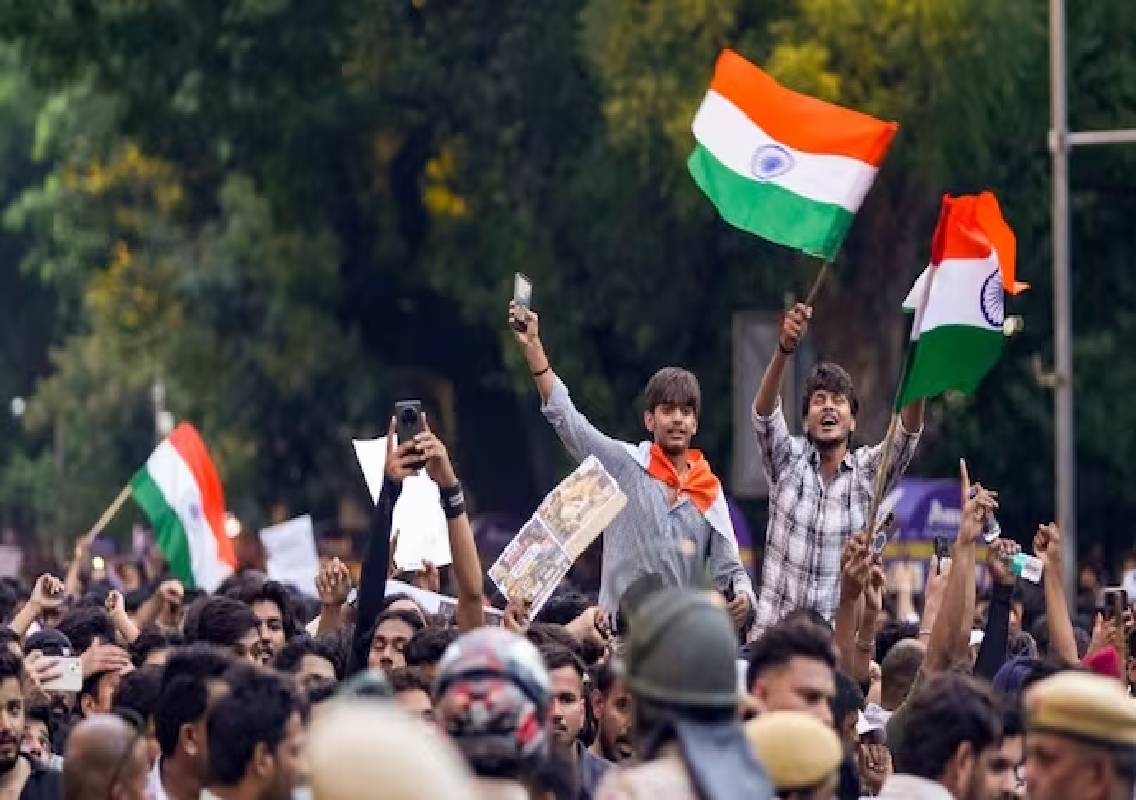


New Delhi: Delhi Police have deployed AI-enabled face recognition vans near Jantar Mantar during the ongoing Cockroach Janta Party (CJP) protest, with the technology reportedly being used to identify demonstrators by matching facial images against government databases, including Aadhaar-linked records. The deployment has triggered fresh concerns over privacy, surveillance and the use of facial recognition technology during public demonstrations. According to reports, the police maintain that the system is intended to assist in maintaining law and order and identifying individuals with pending criminal cases.
The AI-equipped mobile surveillance units were stationed around the protest venue as thousands of students and supporters gathered to demand accountability over alleged examination irregularities. The move comes amid heightened security following clashes between protesters and police earlier this week.
How the AI face recognition vans work
The specially equipped vehicles are fitted with high-resolution cameras capable of scanning faces in real time.
According to reports, the cameras capture images of people passing through the protest area and compare them against existing databases to identify individuals. Police officials told India Today that the system is primarily designed to detect wanted persons, habitual offenders and individuals with outstanding warrants.
The facial recognition software reportedly analyses unique facial features before generating potential matches within seconds. Officials said the technology is intended to improve security management during large public gatherings.
Reports claim Aadhaar-linked identification
One of the key claims surrounding the deployment is that the technology can connect facial images with Aadhaar-linked information through government databases.
While reports suggest that the system can retrieve identity details after generating a successful match, the exact databases being accessed and the legal framework governing such use have not been publicly explained in detail.
The deployment has reignited debates over the scope of facial recognition technology and the safeguards required to prevent misuse of biometric data.
Privacy concerns raised by experts
Digital rights advocates and privacy experts have questioned the use of facial recognition technology at public protests.
Critics argue that continuous biometric surveillance could discourage citizens from exercising their democratic right to peaceful protest, while also raising concerns about consent, transparency and data protection.
Privacy campaigners have repeatedly called for comprehensive legislation governing facial recognition technology, including clear rules on data storage, retention periods and independent oversight.
Police defend deployment
Delhi Police officials have defended the use of AI-enabled surveillance during the protest.
According to officials quoted in reports, the technology is being used solely for security purposes and to identify individuals who may pose a threat to public order. They said similar systems have previously been deployed during large religious gatherings, major public events and high-security occasions.
Officials also maintained that facial recognition technology allows police personnel to respond more quickly in case of security threats while improving crowd management.
Debate over surveillance and civil liberties
The deployment of facial recognition technology has intensified the broader national debate over balancing security requirements with individual privacy rights.
India has increasingly adopted AI-powered surveillance systems in policing and public administration, but the use of facial recognition at political protests continues to draw scrutiny from civil society organisations and legal experts.
The issue is expected to remain a subject of discussion as authorities continue using advanced surveillance technologies in public spaces.
Conclusion
The deployment of AI-enabled face recognition vans at the CJP protest in Delhi marks another step in the expanding use of surveillance technology for crowd management. While police say the system enhances public safety and helps identify suspects, privacy advocates continue to seek greater transparency, legal safeguards and accountability over the collection and use of biometric data during public demonstrations.