







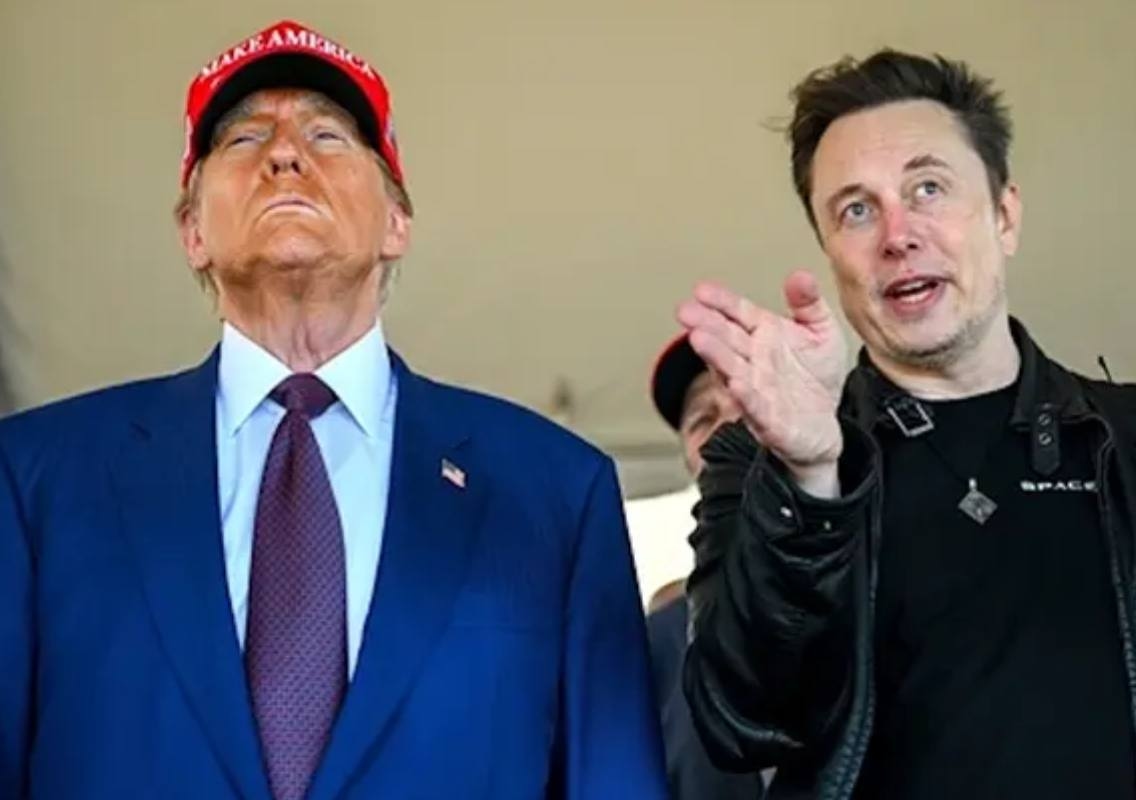


New York: Billionaire Elon Musk has admitted that he feels foolish about spending nearly $500 million backing Republican candidates in the 2026 US midterm elections, after the party suffered major electoral setbacks and lost control of both chambers of Congress.
Speaking at The New York Times’ DealBook Summit on Wednesday, the Tesla and SpaceX chief executive reflected on his financial support for Republican candidates and said he would have spent less if he could go back in time.
“Obviously the Republicans were routed in this election. I feel pretty foolish about having spent so much money and not seen much for it,” Musk said, according to the Financial Times.
He also suggested that the outcome might have been worse for Republicans without his financial support. However, looking back at the scale of his spending, he admitted: “If I could rewind the clock, I would have spent less.”
Musk reportedly spent more than $470 million, approximately Rs 4,200 crore, supporting Republican candidates across the United States ahead of the November midterm elections. Despite the substantial financial backing, Republicans lost control of the House of Representatives and the Senate, along with several statehouses.
The remarks mark a notable shift in tone from a billionaire who was among US President Donald Trump’s most prominent supporters during his political campaign and the early months of his return to the White House.
Musk distances himself from the MAGA movement
Musk’s comments at the summit were not limited to his election spending. He also appeared to distance himself from the Make America Great Again (MAGA) movement, which he had previously supported enthusiastically.
“I’m not MAGA,” he said.
Musk added that he was not entirely sure what the MAGA label meant. However, he indicated that he did not identify with blindly following a fixed set of Republican Party policies.
The statement is significant given his close association with Trump during the latter’s presidential campaign. Musk had publicly endorsed the Republican leader, appeared alongside him at political events and contributed heavily to efforts supporting his return to the White House.
At one point, Musk described himself as Trump’s “first buddy”, reflecting the closeness of their political relationship at the time.
He also embraced the movement’s imagery, wearing a customised MAGA hat and appearing on stage with a chainsaw during the Conservative Political Action Conference in 2025. The appearance became one of the most recognisable moments of his public involvement in the Republican political movement.
Musk had also donated more than $250 million to Trump’s 2024 presidential campaign. His subsequent support for Republican candidates in the 2026 midterm elections further established him as one of the party’s major financial backers.
His latest remarks suggest that he is reconsidering both the scale of his political contributions and the political identity with which he was once closely associated.
From Trump’s close ally to a more complicated relationship
Musk’s relationship with Trump has not always been smooth. The two have previously disagreed over issues including the federal budget, electric vehicle subsidies and the handling of the Jeffrey Epstein files.
Their differences had at times raised questions about whether the billionaire would continue supporting the administration. However, the two later reconciled, with Musk attending state visits and dinners alongside Trump.
Musk’s association with the administration also extended beyond campaign donations. After Trump returned to the White House, Musk took charge of the Department of Government Efficiency, commonly known as DOGE.
The initiative was tasked with identifying government spending reductions and cutting federal bureaucracy. It became closely associated with large-scale reductions in government jobs and changes to federal agencies.
Musk’s involvement in the administration placed him at the centre of several contentious policy debates. His business interests, including electric vehicles, space technology and artificial intelligence, also meant that government decisions could have direct implications for his companies.
The relationship between the billionaire and the administration therefore involved both political support and overlapping business interests.
Democrats prepare to scrutinise the Trump administration
The Republican losses in the midterm elections are expected to reshape the political environment in Washington. Democrats are preparing to take control of both chambers of Congress in January 2027, giving them greater authority to scrutinise the Trump administration and its policies.
The shift could also increase congressional attention on major technology companies and their dealings with the federal government.
Musk could face particular scrutiny because of his role in DOGE and the government contracts held by his businesses. Democrats have expressed interest in examining the department’s role in federal job cuts and the decisions made during Musk’s involvement.
SpaceX’s government contracts are another potential focus. The company has a significant relationship with US government agencies, making questions about public spending and private-sector interests relevant to congressional oversight.
Lawmakers are also looking into issues involving Musk’s companies and their activities in Ukraine, as well as his artificial intelligence chatbot Grok.
Possible conflicts of interest arising from Musk’s simultaneous roles as a business leader and an adviser to the Trump administration could also attract attention. Congressional investigations may examine whether his government involvement created advantages or raised questions about the treatment of his companies.
The change in control of Congress would give Democrats greater opportunities to hold hearings, seek documents and question officials about the administration’s decisions.
A rethink of Musk’s political spending
Musk’s admission that he would have spent less on Republican candidates highlights the uncertainty surrounding his future political involvement. His financial contributions made him an influential supporter of the Republican campaign, but the election outcome has prompted him to publicly question the value of that spending.
His declaration that he is no longer MAGA also marks a change from the public image he cultivated during Trump’s campaign and early presidency.
However, his comments do not necessarily signal a complete withdrawal from political activity. Musk’s remarks at the summit focused on his disappointment with the election results, the amount he spent and his relationship with the MAGA label.
With Democrats preparing to take control of Congress, the political and regulatory environment surrounding Musk’s businesses could become more challenging. His role in DOGE, SpaceX’s government contracts and the activities of his technology companies are among the issues that lawmakers may examine.
For now, Musk’s message is clear: he believes he spent too much supporting Republicans and no longer identifies with the political movement he once championed.