







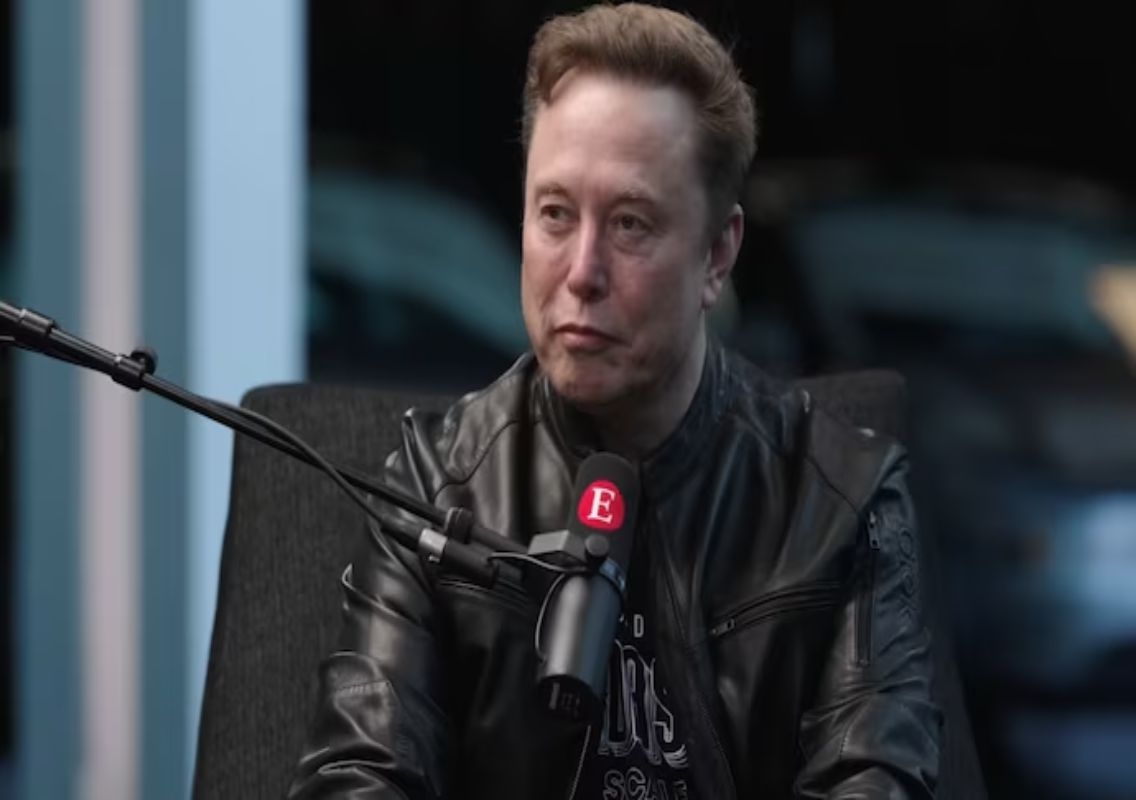


Washington: Tesla and SpaceX CEO Elon Musk has rejected accusations of racism, saying his personal life, family background and company leadership demonstrate that he does not hold racist views. In a recent interview with The Economist, Musk pointed to his relationship with Neuralink executive Shivon Zilis, who is of Indian heritage, and revealed that one of their children was named partly in honour of renowned Indian-American physicist Subrahmanyan Chandrasekhar.
The discussion took place during a wide-ranging conversation covering Musk’s political views, immigration policies, his activity on social media platform X and criticism that he has faced over his public statements.
When The Economist editor-in-chief Zanny Minton Beddoes questioned Musk about allegations that he promotes racist or far-right ideas, the billionaire strongly denied the claims and referred to his family and professional record.
Musk highlights Indian connection through son’s name
During the interview, Musk spoke about his partner Shivon Zilis and their children while responding to accusations of racism.
“My partner is… she’s half Indian and I have four children with her,” Musk said. “One of them was named after a famous Indian physicist… so I would say I’m not racist.”
The physicist he referred to was Subrahmanyan Chandrasekhar, the Indian-American astrophysicist who received the Nobel Prize in Physics in 1983 for his studies on stellar structure and evolution.
Earlier, Musk had explained on X that his son’s name, Strider Sekhar, was inspired by two different sources. The first part, “Strider”, comes from Aragorn’s nickname in The Lord of the Rings, while “Sekhar” was chosen as a tribute to Chandrasekhar.
Musk’s reference to Chandrasekhar highlighted his connection to Indian scientific heritage while making his argument against allegations of racial prejudice.
Musk points to diversity in company leadership
Apart from his family background, Musk also defended the workplace culture at his companies, including Tesla, SpaceX and other ventures.
He argued that the presence of executives from different ethnic backgrounds demonstrates that his organisations do not promote racial discrimination.
“And also… if you look at the people that are employed at my companies… we have senior executives of all races. I don’t think there’s any racism there,” Musk said.
The billionaire has frequently faced criticism over his comments on social and political issues, particularly after taking ownership of X. Critics have accused him of amplifying controversial opinions, while Musk has maintained that he supports open debate and freedom of expression.
Debate over immigration and political views
The interview also moved towards Musk’s views on immigration, especially his criticism of immigration policies in Europe and the United Kingdom.
When asked whether his comments could be interpreted as anti-Muslim, Musk rejected that suggestion. He said his criticism was focused on what he described as differences in values rather than religion.
“If people are coming to a country with antithetical views, I am against that,” Musk said.
He added that his concerns were related to issues such as crime, public safety and legal systems, while arguing that some media outlets had misrepresented his position.
Musk has previously expressed support for stricter border controls and has criticised European governments over immigration policies. His comments have attracted both support from people who agree with his views and criticism from those who believe his statements contribute to polarisation.
Musk denies supporting far-right ideology
During the conversation, Musk also rejected claims that he supports far-right political movements.
He argued that positions such as stronger national borders, safer communities and reducing government spending are mainstream political views rather than extremist ideas.
However, his political commentary on X has continued to generate debate. Musk has used the platform to comment on elections, immigration, government policies and European politics, often attracting criticism from opponents.
The interview reflected the broader debate surrounding Musk’s influence as one of the world’s most prominent technology leaders and social media owners.
Controversy over Britain criticism and X activity
The interview also included a discussion about Musk’s criticism of Britain. Beddoes challenged some of his claims about crime and social conditions in the country, saying available data and personal observations did not always match the picture presented by Musk on X.
She also questioned Musk’s decision to share a controversial film that critics said contained anti-immigrant messaging. Musk defended his action, saying he was recommending content for people to view rather than endorsing all interpretations of it.
The exchange highlighted the ongoing tension between Musk’s supporters, who describe him as a defender of free speech, and critics who argue that his online activity can spread divisive narratives.
Conclusion
Elon Musk’s latest comments come amid continued debate over his political positions and public statements. By referring to his Indian family connection, his son’s tribute to Subrahmanyan Chandrasekhar and diversity within his companies, Musk sought to reject accusations of racism.
While Musk maintains that his views are based on policy concerns rather than prejudice, his comments on immigration and social issues continue to attract significant global attention and criticism.