







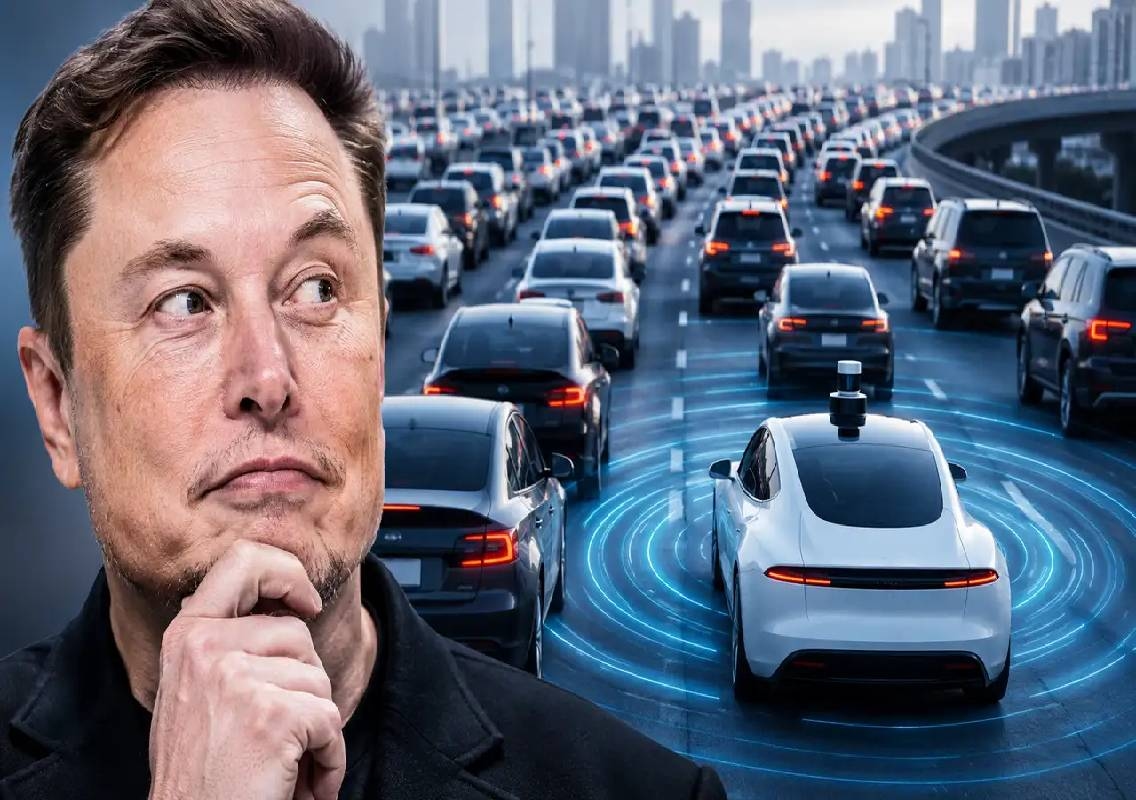


Musk’s remarks came during a discussion on social media platform X about changing travel habits in the era of self-driving technology. While autonomous vehicles promise safer roads and greater convenience, the billionaire entrepreneur suggested that the ease of robot-driven transport could encourage people to spend significantly more time on the road.
The comments have reignited debate over the long-term impact of self-driving vehicles on urban mobility and transport planning.
Musk responds to robot car discussion
The discussion began after Aaron Burnett, founder and chief executive of investment firm mach33, shared his experience with autonomous driving.
Burnett wrote that his annual travel had doubled because a robot-driven vehicle handled nearly all of his journeys.
“I can confirm. I’ve doubled my annual miles ‘driven’ because my robot drives me 99% of the time,” he posted.
His comment was in response to technology commentator and former Microsoft executive Robert Scoble, who described how autonomous transport had changed his travel habits.
Convenience could increase road usage
Scoble explained that he now regularly undertakes journeys he would previously have avoided because he no longer needs to concentrate on driving.
Describing a three-hour round trip between San Jose and San Francisco, he said he would rarely have made such frequent journeys if he had been required to drive manually.
He argued that as more people adopt robot-driven vehicles, traffic congestion is likely to increase because travelling becomes far less demanding.
Scoble also noted that every technological advancement comes with both advantages and disadvantages, suggesting the increased convenience of autonomous vehicles may have unintended consequences.
Musk agrees traffic may worsen
Responding to Burnett’s observations, Musk acknowledged that autonomous driving could lead to a sharp rise in road usage.
Sharing the post on X, the Tesla chief wrote:
“Traffic will get much worse with robot cars, because the pain of driving yourself is not there anymore!”
Although brief, Musk’s comment reflects a broader concern among transport experts that autonomous vehicles may create what economists describe as induced demand, where making travel easier encourages people to travel more often.
Impact on future cities
The prospect of increased traffic presents a significant challenge for cities preparing for the arrival of autonomous vehicles.
While self-driving technology has the potential to reduce accidents, improve mobility for elderly and disabled passengers, and make journeys more efficient, greater vehicle usage could offset some of those benefits through increased congestion.
Urban planners are already examining how autonomous vehicles could reshape road infrastructure, parking demand and public transport systems.
Some experts believe future cities may require smarter traffic management systems, expanded public transport integration and redesigned road networks to accommodate widespread adoption of autonomous vehicles.
Why Musk has promoted underground transport
The discussion also revived interest in Musk’s long-standing support for underground transport infrastructure.
Supporters noted that projects such as underground tunnel networks have often been presented as one way to ease future congestion if autonomous vehicles significantly increase traffic volumes.
As self-driving technology becomes more advanced and commercially available, questions about how cities will manage rising travel demand are expected to become increasingly important.
Self-driving future brings new challenges
Autonomous vehicles are widely viewed as one of the most transformative developments in modern transportation.
By removing the need for constant driver attention, they could improve accessibility, reduce fatigue and make long-distance travel more comfortable.
However, Musk’s latest comments underline that technological progress may also create new urban planning challenges.
If travelling becomes effortless, more people may choose to make longer and more frequent journeys, placing additional pressure on already congested road networks.
As governments, automakers and city planners prepare for the next generation of transport, balancing the benefits of autonomous vehicles with their potential impact on traffic will remain a key policy challenge.
Excerpt: Elon Musk says autonomous vehicles could increase traffic congestion because people may travel far more often once they no longer have to drive themselves.
Tags: Elon Musk robot cars traffic, Tesla autonomous vehicles news, self-driving cars congestion, Elon Musk X comments, future of autonomous transport
Meta title: Elon Musk says robot cars could worsen traffic
Meta description: Elon Musk believes self-driving cars may increase traffic congestion as people travel more when they no longer need to drive themselves.
Facebook hashtags:
#ElonMusk #Tesla #SelfDrivingCars #Technology