


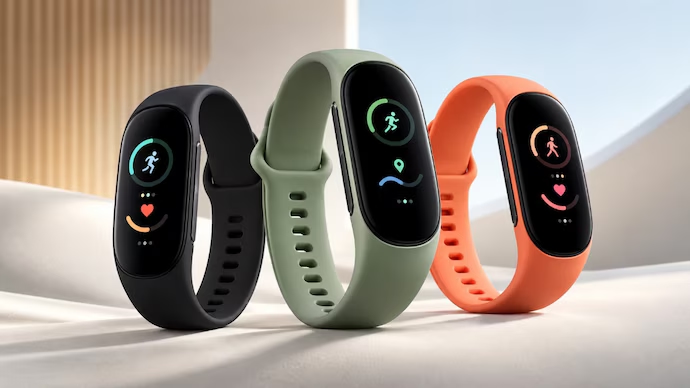


New Delhi: Google is set to launch the Fitbit Edge fitness tracker on October 12, expanding its wearable lineup with a device expected to combine essential health-tracking features with a small touchscreen and support for selected smartphone apps.
The upcoming fitness band is expected to offer up to seven days of battery life, built-in GPS and a limited set of smart features, including Google Maps, YouTube Music and Find My Phone. The device could appeal to users who want to monitor their fitness and access a few useful applications without the distractions of a full-fledged smartwatch.
Google teased the new wearable on X last Friday, confirming the October 12 date. Although the company has not yet disclosed the complete specifications and pricing, reports suggest that the Fitbit Edge could resemble the Fitbit Charge series, the last of which received a major new model in 2023.
The device is expected to occupy a middle position between the screen-free Fitbit Air and the Pixel Watch 5, offering more functionality than a basic fitness tracker while retaining a compact design and longer battery life.
Fitbit Edge: Expected price and positioning
Google has not officially announced the Fitbit Edge’s price. However, reports suggest that the wearable could be positioned between the Fitbit Air and Pixel Watch 5 in terms of both price and features.
The strategy would give consumers another option between a basic fitness band and a smartwatch with a broader range of applications.
The Fitbit Air focuses on screen-free health and activity tracking, while the Pixel Watch 5 offers a more comprehensive smartwatch experience. The Edge is expected to sit between the two, combining a display and selected apps with a fitness-first design.
Its final price will be an important factor in determining how it compares with other wearables. Google is yet to confirm the official price, regional availability or an India-specific launch schedule.
Fitbit Edge design and display
The Fitbit Edge is expected to feature a 1.34-inch OLED touchscreen housed in an oval-shaped body. Its design reportedly draws inspiration from the Fitbit Charge series, with a compact screen intended to display fitness statistics, notifications and selected app information.
Google’s teaser also showed a physical button on the side of the band. Sensors are expected to be positioned on the underside of the device to collect health and activity data.
Unlike the screen-free Fitbit Air, the Edge would allow users to check information directly on their wrist without needing to take out their phone. However, its interface is expected to remain simpler than that of a full smartwatch.
The display could make it easier to view workout progress, activity summaries and other key information during exercise. The final screen resolution, brightness and always-on display capabilities have not been officially confirmed.
Battery life could reach seven days
Battery life is expected to be one of the Fitbit Edge’s main selling points. Reports suggest that the fitness tracker could last up to seven days on a single charge.
If confirmed, that would make it suitable for users who prefer to wear a tracker continuously to monitor their activity and sleep without charging it every day.
Battery performance will depend on factors such as GPS usage, display settings, app activity and notifications. Google has not yet confirmed the battery capacity or the conditions under which the claimed battery life can be achieved.
The Edge is also expected to prioritise essential fitness features rather than the extensive app ecosystem available on a full smartwatch. That more focused approach could help it balance functionality and power consumption.
Google Maps, YouTube Music and Find My Phone
The Fitbit Edge is expected to support a limited selection of useful applications, including Google Maps, YouTube Music and Find My Phone.
Google Maps integration could help users access navigation information while walking, running or travelling. YouTube Music support could make it easier to control music during workouts, although the precise playback and connectivity options remain unconfirmed.
Find My Phone could be useful for locating a misplaced smartphone through the connected wearable.
These applications would add convenience without turning the Edge into a miniature smartphone. Instead, the device is expected to focus on a small number of functions that complement fitness tracking.
Google has not yet confirmed the complete app list or whether all applications will be available on both Android and iOS devices.
Fitness tracking and built-in GPS
The Fitbit Edge is expected to include built-in GPS, allowing users to record outdoor activities such as walking and running with location data.
A built-in altimeter is also anticipated. This sensor could help track elevation changes, making it useful for activities such as hiking, stair climbing and outdoor training.
Automatic workout detection is another expected feature. It could allow the device to recognise certain activities without requiring users to start tracking manually.
Alongside these features, the tracker is expected to provide standard fitness information such as steps, distance and workout duration. The final health sensors and supported activity modes will become clearer once Google releases the official specifications.
For users who want a straightforward fitness companion, the combination of GPS, activity recognition and a small display could provide a practical balance between convenience and functionality.
Fitbit Edge vs Fitbit Air
The Fitbit Edge is expected to differ from the Fitbit Air primarily through its display and support for selected apps.
The Fitbit Air is designed for people who prefer screen-free tracking, while the Edge would provide a way to view activity information and access a limited number of smart features directly on the wrist.
The Edge is also expected to support notifications, allowing users to receive selected phone alerts without constantly checking their smartphone.
Both devices are expected to focus on fitness and health tracking rather than offering the extensive functionality of a conventional smartwatch. The choice between them would therefore depend on whether a user prefers a distraction-free tracker or wants a screen and a few additional features.
Fitbit Edge vs Pixel Watch 5
The Pixel Watch 5 is expected to offer a broader range of smartwatch functions, including a more extensive application experience through Wear OS. The Fitbit Edge, by contrast, is expected to offer a simpler interface focused on fitness tracking and a small selection of apps.
Battery life could be another important difference. The Edge is tipped to last up to seven days, while its actual endurance will need to be tested after launch.
Compatibility could also influence the choice. The Fitbit Edge is expected to work with both Android and iOS devices, whereas the Pixel Watch 5 is designed for Android phones.
However, Google has not yet confirmed the Edge’s complete compatibility requirements. Its final software features, app support and phone integration will determine how it compares with the Pixel Watch 5 in everyday use.
Fitbit Edge colours and availability
The Fitbit Edge is expected to arrive in multiple colour options, although the exact number has not been confirmed.
Reports suggest that black, green and orange variants could be offered, potentially corresponding to Google’s Obsidian, Olive and Canyon colour schemes. Additional colours may also be announced.
Google’s October 12 launch is expected to provide more information about the design, specifications and availability of the wearable. However, the company has not confirmed when the device will reach individual markets, including India.
What to expect from Google’s new fitness tracker
The Fitbit Edge could give Google a wearable option for people who want more functionality than a basic fitness band without committing to a full smartwatch.
Its reported 1.34-inch OLED touchscreen, built-in GPS, altimeter, automatic workout detection and support for selected apps could make it useful for everyday fitness tracking. The expected seven-day battery life could also appeal to users who want to wear the device throughout the day and night.
However, the official price, complete specifications, app availability and India launch details remain unconfirmed. Google is expected to provide greater clarity at the October 12 launch.
Until then, the Fitbit Edge should be viewed as an anticipated addition to Google’s wearable range rather than a product with fully confirmed specifications and pricing.