







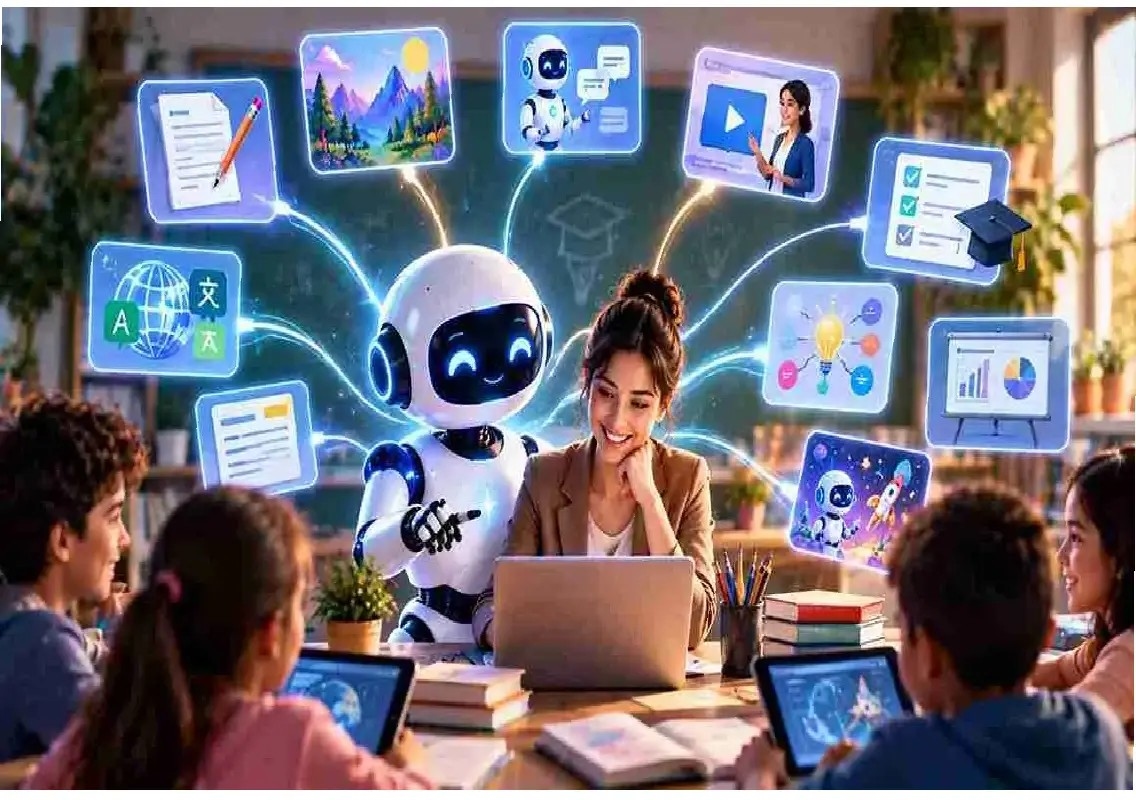


Generative artificial intelligence is increasingly finding a place in classrooms, and new research from Google is exploring how the technology could help teachers create interactive learning experiences without requiring advanced programming skills.
Google Research has examined the use of generative user interfaces (GenUI) to enable educators to create guided learning interactives tailored to classroom needs. The approach combines AI-generated experiences with learning-design guardrails intended to keep activities aligned with educational goals. (research.google)
Teachers could create learning tools more easily
Traditional interactive educational resources can require considerable time, technical expertise and collaboration with developers. Generative UI could potentially allow teachers to describe what they want students to learn and generate an interactive activity around that requirement.
Such tools could support subjects where visualisation and experimentation are particularly useful. Students might, for example, explore concepts through simulations, manipulate variables or receive guided prompts as they work through a problem.
Guardrails remain important
Google’s research emphasises that simply generating an interactive experience is not enough. Educational activities need to support sound teaching practices and provide appropriate guidance.
Learning-design guardrails can help shape how AI-generated interactives present information, structure activities and guide students. This is particularly important because generative AI can sometimes produce inaccurate information or interactions that are unsuitable for a particular learning objective.
A changing role for classroom technology
The research points towards a model in which teachers remain central to lesson design while AI assists with creating supporting materials.
For schools and educators, the potential benefit lies not simply in automating teaching but in making customised learning resources easier to create. As generative AI develops, careful testing, teacher oversight and attention to student needs will remain important.
The emerging approach could eventually give more teachers the ability to experiment with interactive learning experiences while keeping educational purpose at the heart of technology use.