




Google has expanded its Android Earthquake Alerts System to more than 200 countries and regions, up from 98, after delivering over one billion alerts since the service launched in 2021.
Announced on October 16, the expansion aims to make early earthquake warnings available to more people around the world. Panama and Guatemala are among the newly covered locations, although Google has not published a complete list of every region included in the expansion.
The company is also updating its alert experience to provide users with more information about detected earthquakes, helping them understand the potential threat and take appropriate safety measures.
Android earthquake warning system expands globally
Google describes the Android Earthquake Alerts System as the world’s largest mobile-based earthquake detection network. It is designed to provide people with a few seconds of warning before earthquake shaking begins, potentially giving them time to take cover.
The system uses sensors in Android smartphones to help detect earthquake activity and send alerts to users in affected areas. Its reach has grown considerably since its launch in 2021, with the latest expansion more than doubling the number of countries and regions covered.
Google said the system has sent more than one billion alerts since its introduction. The latest expansion brings the service to more than 200 countries and regions, extending its potential reach to additional communities that face earthquake risks.
However, the availability of alerts varies by location, and the system is not a substitute for official emergency information or established earthquake-safety practices.
Google updates the “Be Ready” earthquake alert
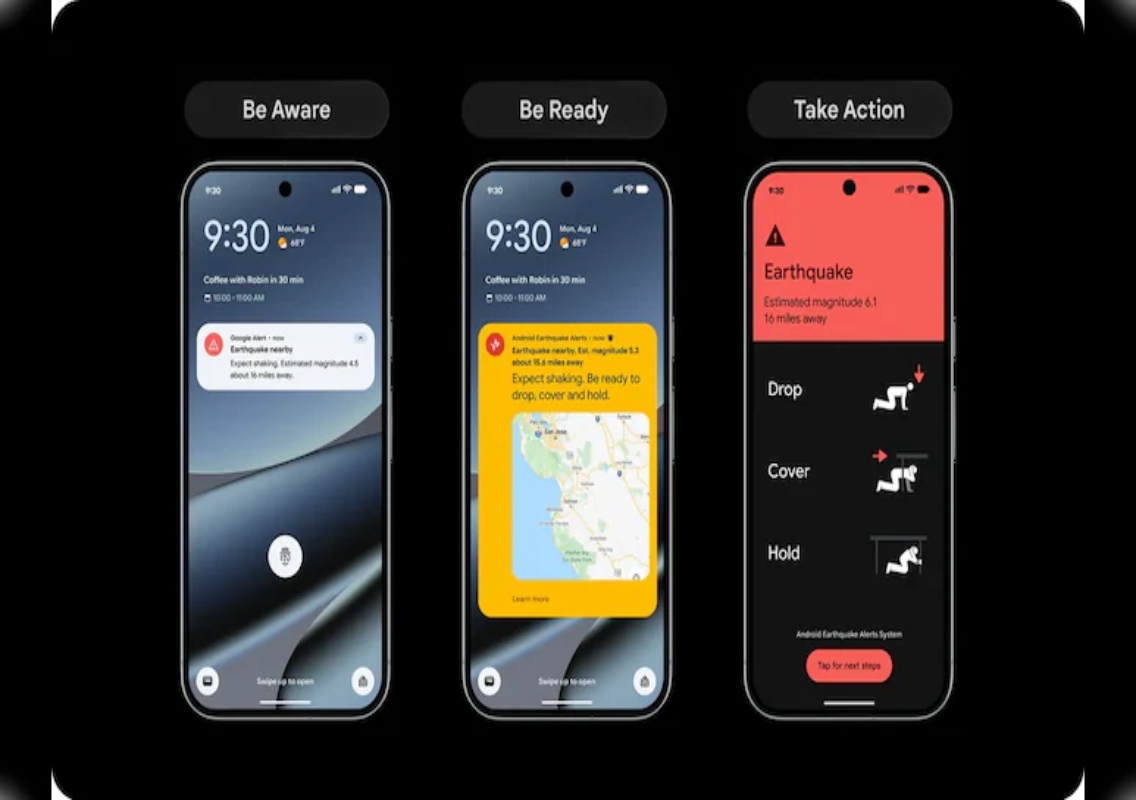
Alongside the expansion, Google is improving its “Be Ready” alert to provide more detailed information about an earthquake.
In the coming months, the alert is expected to include a map showing the radius of the area where shaking has been detected, an estimated magnitude and recommended safety actions.
Users will also be able to access a button to learn more about the earthquake as additional information becomes available.
The update is intended to help people understand the situation more clearly when an earthquake is detected nearby. Information about the affected area and estimated magnitude can help users assess the alert and respond appropriately.
The enhanced features are planned for a future rollout rather than being described as immediately available to every Android user.
Three types of earthquake alerts
Android users in regions where the service is active may receive one of three types of alerts, depending on the expected intensity of shaking.
Be Aware: This notification informs users that an earthquake has been detected nearby and that light shaking is estimated.
Be Ready: This alert provides more detailed information when stronger shaking is expected, prompting users to prepare to take action.
Take Action: For moderate to heavy shaking, this full-screen alert delivers immediate safety guidance.
Google’s example safety guidance includes the instruction to “drop, cover and hold” during an earthquake. These actions are intended to help reduce the risk of injury from falling objects and other hazards while the ground is shaking.
The alerts are designed to communicate different levels of urgency so users can respond to the expected conditions.
Early warnings can provide valuable seconds
Earthquake early-warning systems do not predict earthquakes days or hours in advance. Instead, they detect seismic activity after an earthquake begins and attempt to alert people before stronger shaking reaches their location.
Because seismic waves travel through the ground, a warning may reach some users before the more damaging shaking does. The time available depends on the earthquake’s location, the distance from the user and how quickly the system detects and processes the event.
Even a short warning can provide an opportunity to move away from immediate hazards, take cover or follow emergency instructions. However, alerts may arrive too late for people close to an earthquake’s epicentre, and not every earthquake will generate a warning in time.
Google’s expansion aims to make this capability available to more communities while improving the information users receive when an alert is issued.
What Android users should know
The service is available only in supported countries and regions, so users should check Google’s official Android earthquake-alert support information to confirm availability in their location.
The system’s alerts can complement local emergency services and official warnings, but users should continue to follow instructions from relevant authorities during an earthquake.
Google’s latest announcement combines a major expansion in geographic coverage with planned improvements to the information shown in alerts. With more than one billion alerts sent since 2021, the company is continuing to develop its smartphone-based approach to earthquake detection and public safety.