









New Delhi: Google is preparing to send its artificial intelligence hardware into space as the technology giant explores whether large-scale AI computing could eventually be carried out in orbit. The company is set to launch a prototype satellite carrying its Tensor Processing Units (TPUs) as part of Project Suncatcher, a long-term research programme focused on developing space-based computing infrastructure.
The first test mission is expected to launch next week aboard SpaceX’s Transporter-18 rideshare mission, in partnership with Planet Labs. The experiment will examine whether Google’s AI chips can withstand the harsh conditions of space, including launch forces, radiation and extreme temperatures.
Google’s move comes as technology companies increasingly explore the possibility of shifting some computing infrastructure away from Earth. The company believes low Earth orbit could eventually provide access to abundant solar energy while reducing some of the land, electricity and cooling requirements associated with large terrestrial data centres.
What is Google’s Project Suncatcher?
Project Suncatcher is Google’s research effort to investigate whether interconnected satellites equipped with TPUs could one day provide scalable machine-learning computing infrastructure in space.
Google first announced the project in November 2025. Its long-term concept involves solar-powered satellites carrying AI chips and communicating with one another to process increasingly demanding workloads. Google has said satellites in low Earth orbit can receive near-constant sunlight and potentially generate up to eight times more solar power than comparable systems on Earth.
The upcoming mission is, however, an early technology demonstration rather than the deployment of a commercial orbital data centre.
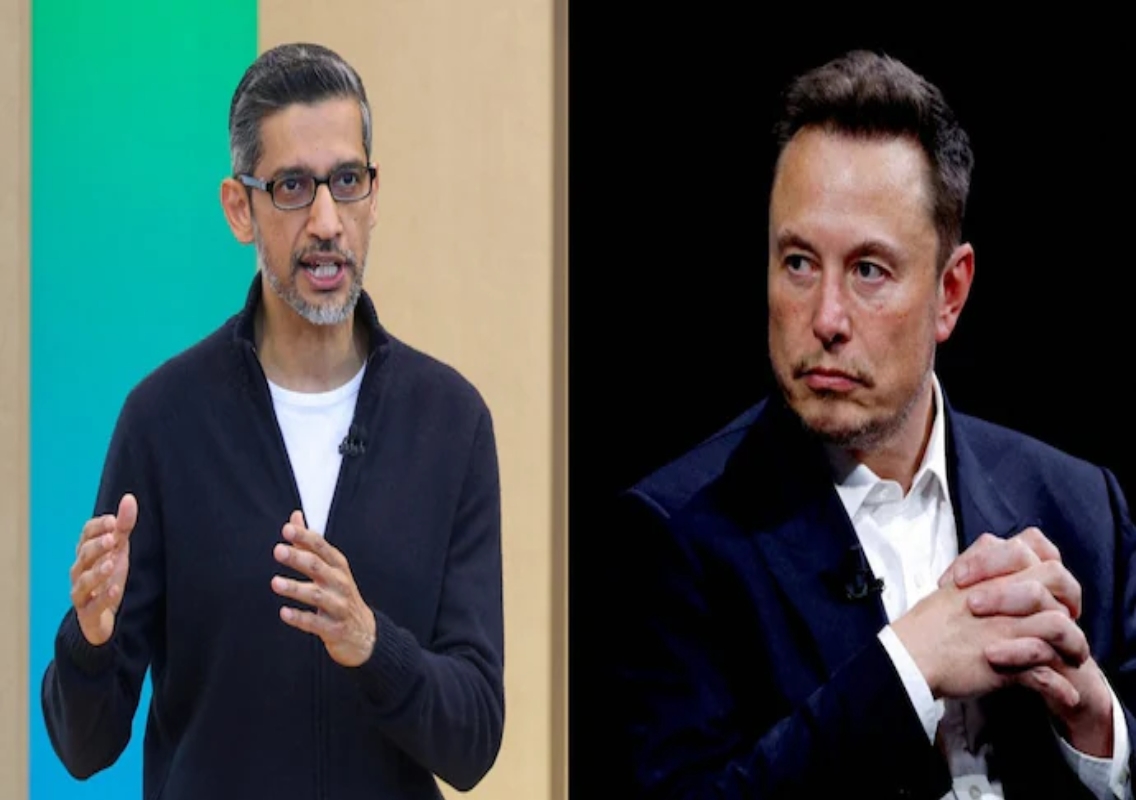
Google CEO Sundar Pichai announced the test flight on X with the phrase, “One small step for TPUs….”, referencing Neil Armstrong’s famous words from the first Moon landing.
SpaceX will launch Google’s TPU satellite
Google’s prototype satellite will travel to low Earth orbit on SpaceX’s Transporter-18 rideshare mission. The mission is being carried out in partnership with Planet Labs.
The initial test has a straightforward objective: determine whether Google’s TPU hardware can function reliably in the space environment. The company needs to understand how the chips and other satellite components respond to the stresses experienced during launch and the conditions encountered once in orbit.
A rocket journey to low Earth orbit involves intense vibration and acceleration. Google says spacecraft can experience loads of up to around 10 times the force of gravity during launch, while individual components such as TPU chips may experience forces of 50 to 100 times gravity.
The company has already carried out vibration testing on the satellite across all three axes to replicate some of the forces expected during launch.
Radiation is a major challenge for AI chips
Radiation is another major concern for electronics operating in space. Solar activity and cosmic rays can interfere with electronic components and potentially cause computing errors.
Google says it tested its Trillium TPUs at the UC Davis Crocker Nuclear Laboratory while running AI workloads. According to the company, initial testing showed that the TPUs could withstand a total ionising radiation dose greater than what they would be expected to encounter during a five-year space mission.
However, laboratory testing cannot reproduce every condition encountered in orbit. The upcoming flight will therefore provide real-world data on how the hardware performs in space.
Cooling AI chips in space presents another problem
Running powerful AI hardware generates considerable heat, making thermal management one of the biggest engineering challenges for data centres.
On Earth, data centres can rely on air movement and other cooling systems to transfer heat away from processors. In space, there is no conventional airflow because satellites operate in a vacuum.
Google is therefore testing a cooling system that combines heat pipes with radiators. The company has already tested the approach inside a thermal vacuum chamber designed to recreate the vacuum and thermal conditions of space.
The success of such a system will be important if space-based AI computing is eventually scaled beyond small experimental satellites.
Google plans to test satellite-to-satellite AI computing
Project Suncatcher is not limited to the first prototype. Google’s longer-term concept involves clusters of satellites, with each satellite potentially carrying dozens of TPU chips.
Such satellites could be linked together to handle larger AI workloads in orbit. But making this possible would require extremely accurate positioning and high-speed communication between satellites.
Google plans to investigate high-bandwidth laser links that could allow satellites operating close to one another to exchange data rapidly. The company has said it aims to test this part of the concept in 2027, when it plans to place two satellites in orbit.
Elon Musk reacts to Google’s space AI plans
Elon Musk, who has previously promoted the concept of placing computing infrastructure in space, reacted to Google’s announcement.
Musk said on X that the amount of computing carried out in space would eventually reach virtually all computing, reflecting his broader view that orbital infrastructure could become important for meeting future AI computing demand.
Google’s mission will nevertheless be focused on testing technical feasibility rather than establishing an operational orbital data centre. The company still needs to overcome challenges involving radiation protection, thermal management, communications, satellite coordination and launch costs.
Space-based data centres attract wider industry interest
Google is not the only company exploring the possibility of moving computing infrastructure into space.
Blue Origin, founded by Jeff Bezos, has previously discussed concepts involving data centres in lunar orbit. Indian AI company Sarvam has also announced plans related to orbital data centres in partnership with aerospace company Pixxel.
Meanwhile, Starcloud, which is working with Nvidia, has been developing plans involving satellites equipped with advanced graphics processing units for computing in Earth orbit.
These projects remain at different stages of development, and significant technological and economic hurdles remain before space-based AI computing can become a mainstream alternative to terrestrial data centres.
Google’s space AI experiment begins with a small step
Project Suncatcher represents an early attempt to answer a larger question: whether the rapidly increasing demand for AI computing could eventually be supported by infrastructure beyond Earth.
For now, Google is concentrating on basic engineering questions, including whether TPUs can survive launch, withstand radiation, manage heat and operate reliably in orbit. The upcoming satellite mission will provide data that cannot be obtained entirely through simulations on Earth.
If the technology proves viable, Google’s longer-term vision involves networks of solar-powered satellites working together to process AI workloads. For now, however, Project Suncatcher remains a research experiment, with the first TPU flight serving as an important test of whether AI computing in space can move from concept towards practical engineering.