







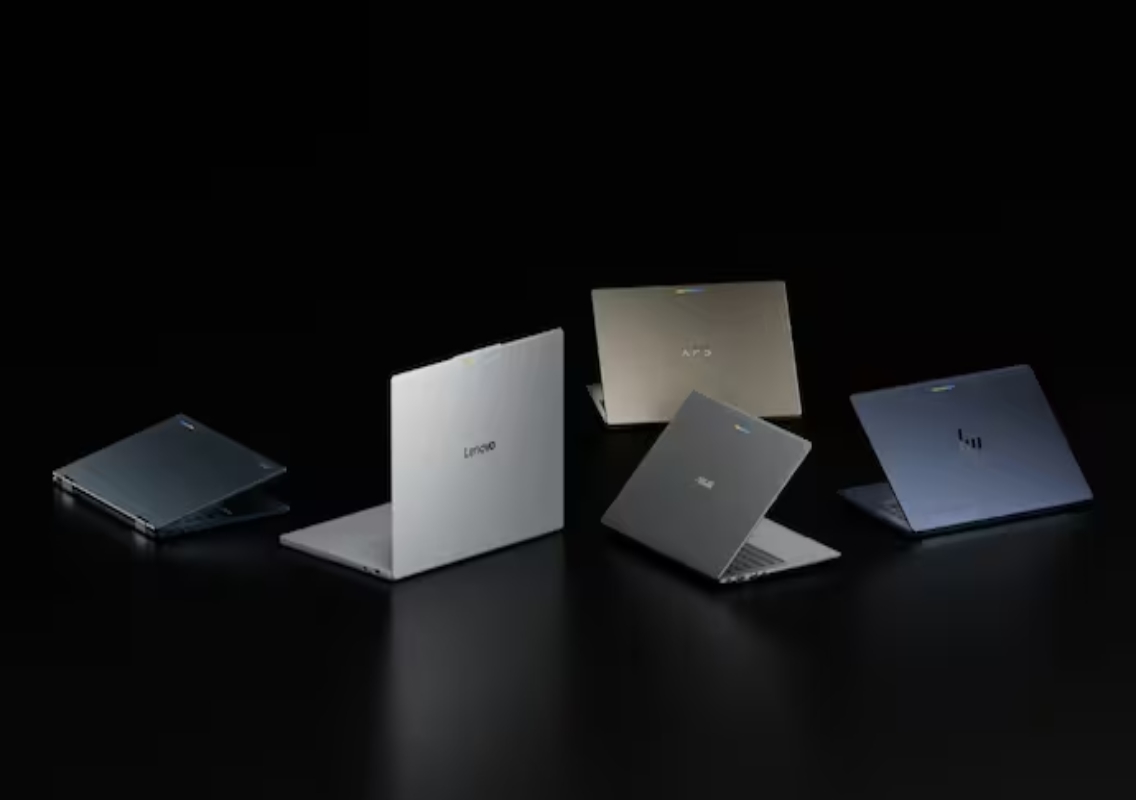


New Delhi: Google has entered the premium laptop market with a new category called Googlebooks, positioning the devices as AI-powered computers designed to work closely with Android smartphones and compete in the broader premium PC segment.
Unlike Google’s long-running Chromebook line, Googlebooks are designed to offer a more complete desktop experience while retaining Google’s Android ecosystem. The laptops run on a new Googlebook OS, previously known by the codename Aluminium OS, which combines the Android technology stack with desktop foundations from ChromeOS.
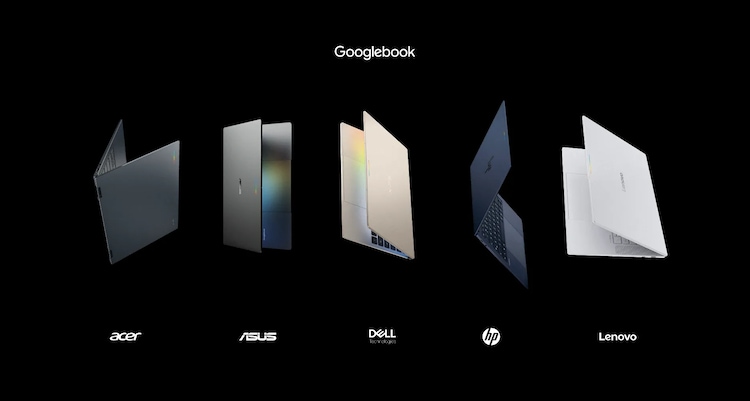
Google has launched five Googlebook models with Acer, Asus, Dell, HP and Lenovo as hardware partners. Pre-orders are currently open in select markets, while sales are scheduled to begin in the US on October 4 and in Canada, the UK, Ireland, France, Germany and Australia on October 5. There is no announced India launch date yet.
Googlebooks bring Gemini AI to laptops
Artificial intelligence is central to Google’s new laptop strategy. The company has integrated Gemini Intelligence directly into Googlebook OS, allowing the system to understand information displayed on the screen and assist with different tasks.
One of the features is Magic Pointer, which appears when users move the cursor in a particular way. It can work with text, images and information visible on the screen. Google says it can perform tasks such as turning a training plan found on a webpage into scheduled activities in Google Calendar, checking whether an email could be spam and combining selected images.
Googlebooks also include Rambler, a voice-based writing tool. The feature can convert spoken notes into structured content containing headings, bullet points and action items. It can also handle multiple languages in the same workflow.
Another feature called Create My Widget allows users to describe a widget in natural language and generate one without having to write code.
Designed as an Android phone companion
Google is also making the connection between Googlebooks and Android smartphones a major part of the product.
During setup, information such as passwords, contacts, messages and Wi-Fi networks from a user’s Android phone can be made available on the Googlebook, with Google saying the information is protected by end-to-end encryption.
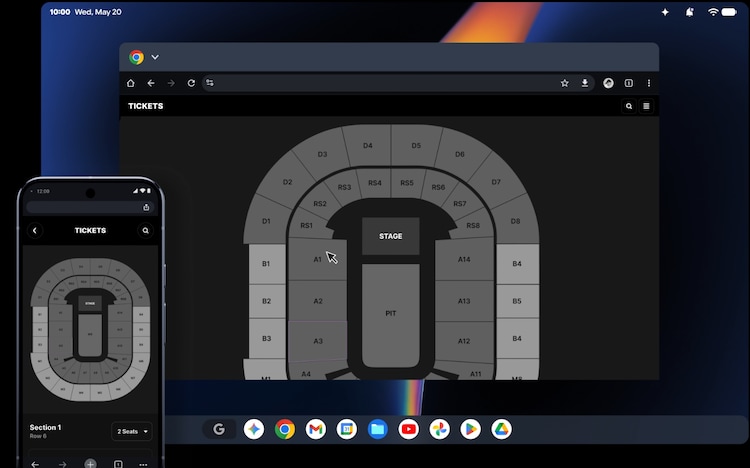
The Continue On feature allows users to resume tasks started on their Android phone from the Googlebook taskbar.
Users can also access photos and files stored on their phones through a dedicated Files application. The Cast My Apps feature allows Android applications to appear in desktop windows, enabling users to access services such as delivery apps or one-time authentication codes without constantly switching between devices.
This integration gives Googlebooks a different positioning from conventional Windows laptops and MacBooks, with Google focusing heavily on the relationship between the laptop and an Android smartphone.
Googlebook hardware requirements
Google has established a common set of specifications for manufacturers producing Googlebooks.
The laptops must use premium materials such as aluminium, magnesium alloy or carbon fibre, meaning plastic-only builds are excluded. Every Googlebook must also have a touchscreen, although manufacturers can choose between OLED and IPS panels.
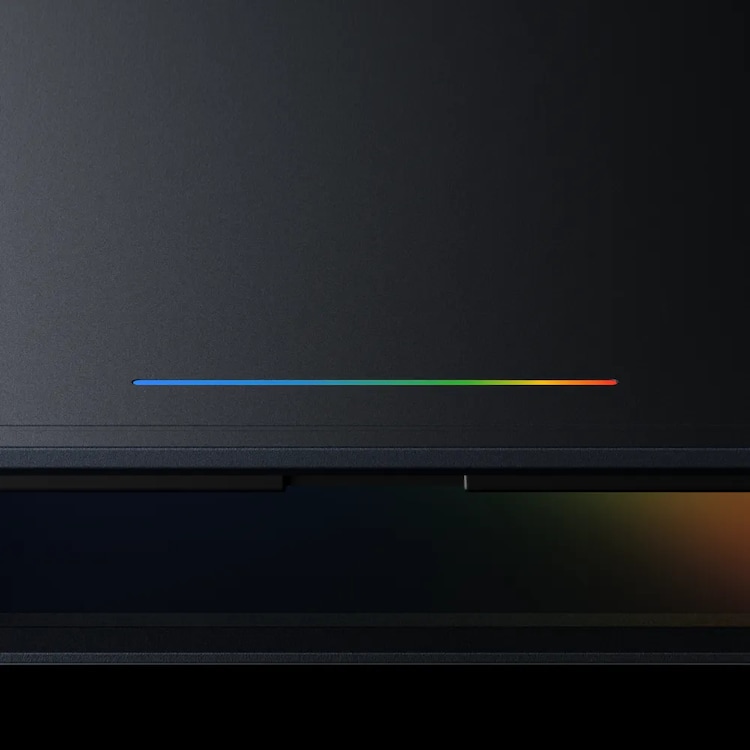
OLED displays can reach resolutions of up to 2.8K or 3K, depending on the model. Other mandatory features include a backlit keyboard, haptic trackpad and fingerprint scanner.
Googlebooks must also have at least 16GB of RAM and 256GB of SSD storage. Google says the machines are designed to offer up to 14 hours or more of video playback, or more than 14 hours of active use, depending on the model.
The launch devices use either Intel Core Ultra Series 3 or Snapdragon X Elite processors. Their integrated neural processing units are rated at more than 40 TOPS or 45 TOPS of on-device AI performance.
Five Googlebook models announced
Google has introduced five models at launch, with hardware partners Acer, Asus, Dell, HP and Lenovo.
The Acer Googlebook 14 is the only convertible model in the initial line-up and can be used as either a laptop or tablet. It starts at $899, approximately Rs 86,000, and comes with a 14-inch 2.8K OLED touchscreen, Intel Core Ultra 5 or 7 processors, at least 16GB RAM, 256GB storage and a 71Wh battery.
The Asus Googlebook 14 starts at $1,299, roughly Rs 1.24 lakh. It weighs around 1kg and has a 14-inch 3K OLED touchscreen with 500 nits of brightness, a haptic touchpad and Intel Core Ultra 5 or 7 processors.
The Dell XPS Googlebook is the compact option, featuring a 13-inch 2.5K display and a Snapdragon X Elite processor. It comes with 16GB or 32GB RAM and at least 512GB storage. Its starting price is $999, around Rs 95,000.
The HP Googlebook 14 starts at $1,299, approximately Rs 1.24 lakh, and uses a Snapdragon X Elite processor. It includes at least 16GB RAM, 256GB storage and a 14-inch 2.8K OLED touchscreen.
The Lenovo Googlebook 15 also starts at $1,299. It features a 15.3-inch 2.8K OLED touchscreen, Dolby Atmos audio, an Intel Core Ultra 5 processor, 16GB RAM and 256GB storage.
Desktop apps and Android applications
Googlebooks are not limited to browser-based computing.
The platform supports the desktop version of Chrome and its extensions, alongside Android applications available through the Google Play Store. Google says many of these applications have been optimised for larger screens and keyboard-and-mouse input.
Users will also be able to run applications including Adobe Photoshop, Adobe Lightroom and CapCut. The devices can support offline viewing for streaming services and Android gaming.
For developers, Google says every Googlebook includes Google Antigravity for building and deploying applications on the device. There is also a Linux terminal environment that supports development tools such as Claude Code and the Antigravity CLI.
Security is based on architecture derived from ChromeOS. Google says this includes Titan hardware root of trust, on-device malware detection and a Level 5 security-certified pKVM hypervisor designed to isolate the Linux environment.
Google AI Pro subscription included
Google is also bundling its AI services with the new laptops.
Every Googlebook comes with 12 months of Google AI Pro, which includes 5TB of cloud storage and access to Gemini Advanced tools. Buyers will also receive additional promotional benefits, including three months of YouTube Premium and access to services such as Adobe Photoshop, depending on the bundle.
Google says the devices will receive regular feature drops and software updates for up to 10 years.
India launch date remains unknown
While Google has opened pre-orders in selected markets, Indian buyers will have to wait for further details.
The company has announced sales beginning October 4 in the US, followed by October 5 availability in Canada, the UK, Ireland, France, Germany and Australia. An India launch date was not specified in the report.
The absence of an India launch date means the US dollar prices cannot yet be treated as official Indian retail prices. The approximate rupee figures reported above are conversions rather than announced India prices.
Google enters a crowded premium laptop market
With Googlebooks, Google is expanding beyond its traditional Chromebook positioning and entering a segment dominated by established PC and laptop makers.
The company is differentiating its new devices through a combination of premium hardware, Android integration and Gemini-powered features. Rather than positioning AI as an additional application, Google has built several AI functions directly into the operating system.
The strategy also gives Google an opportunity to connect its Android smartphone ecosystem with a more capable desktop computing environment.
Whether users adopt Googlebooks at scale will depend on factors including pricing, application compatibility, battery life, AI features and the availability of the devices across markets.
Conclusion
Google’s Googlebook launch marks a significant expansion of its hardware and software strategy. The five initial laptops combine premium materials, touch displays, modern Intel or Snapdragon processors and built-in Gemini AI capabilities.
The devices are also designed to work closely with Android phones, allowing users to continue tasks, access files and run phone applications from the laptop.
Pre-orders are currently available in selected markets, with US sales beginning October 4. However, Google has not yet announced an India launch date. With prices starting at $899 and going beyond $1,299 for several models, the new laptops are clearly positioned in the premium segment rather than as replacements for Google’s traditional low-cost Chromebooks.