


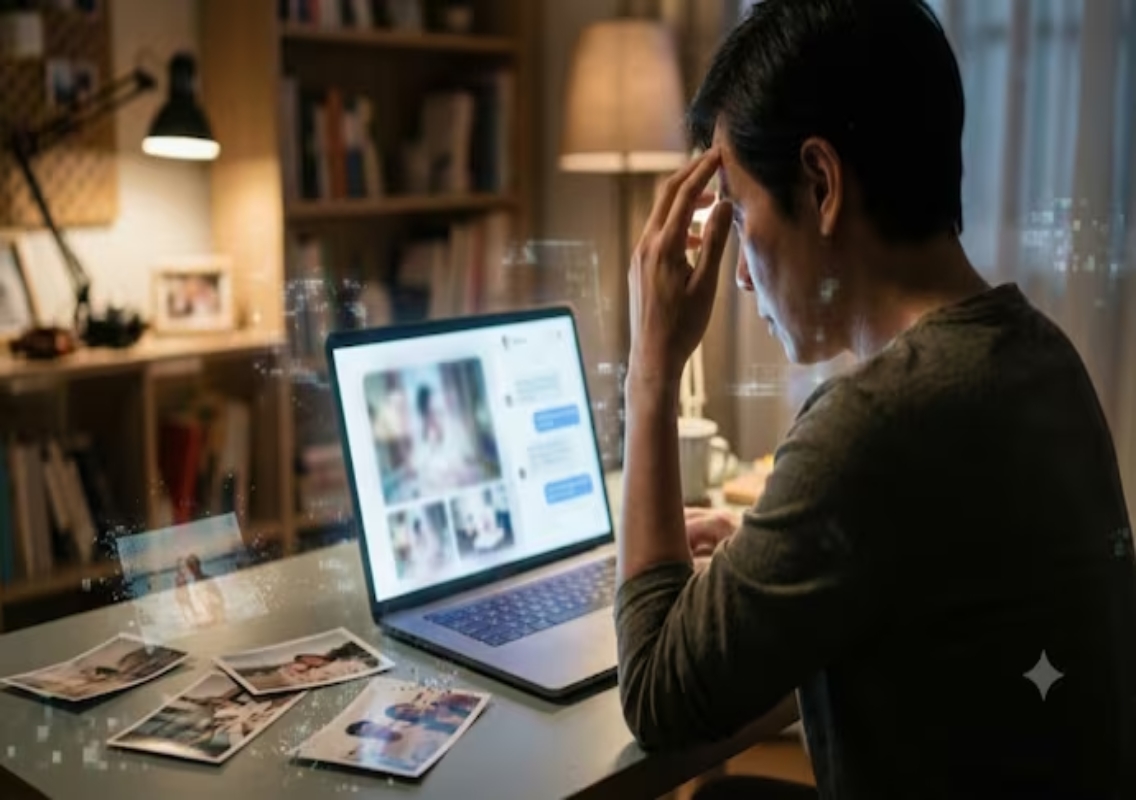


New Delhi: Artificial intelligence is raising new concerns about how people remember events, as research suggests that AI-generated images, misleading text summaries and chatbot conversations can influence human memory. Scientists warn that people may develop false recollections and remain confident about them, even when the information that shaped those memories was artificially generated.
Highlights research from the Massachusetts Institute of Technology (MIT) and Georgetown University examining how AI-generated content can affect people’s ability to recall what they have seen or experienced. The findings suggest that the risks extend beyond believing false information: misleading content may also change what people think they remember.
The research does not mean that every interaction with an AI system will distort memory. Instead, it highlights how misleading information presented through convincing images, summaries or conversations can interfere with the way people reconstruct past events.
MIT research finds chatbots can influence memory
Researchers associated with the MIT Media Lab have investigated how conversational AI can affect people’s recollection of events. In one experiment involving simulated crime-witness interviews, participants who interacted with a generative AI chatbot produced more than three times as many immediate false memories as those in a control condition.
The study found that 36.4 per cent of responses from participants in the generative-chatbot condition were misled during the interaction. The researchers also reported that false memories remained after one week, while participants’ confidence in those memories was still higher than in the control condition.
The findings are significant because memory is not a perfect recording of past events. People reconstruct experiences when recalling them, and the questions they are asked or information they encounter later can influence that process.
A chatbot that introduces an incorrect detail through a leading question or a misleading statement may therefore affect what a person subsequently recalls. If the information is presented naturally and confidently, the person may not recognise that the detail came from the conversation rather than the original event.
The research highlights potential risks in sensitive settings such as legal investigations, where witnesses may be asked to describe events they observed. It also underlines the need for care when using AI tools to discuss personal experiences or reconstruct past incidents.
AI-edited photos can change what people remember
Images can also influence memory. In a separate study involving 200 participants, MIT researchers examined what happened when people viewed original photographs and later encountered different versions of the same images.
Participants were divided into groups that encountered unchanged images, AI-edited photographs, AI-generated videos or videos created from AI-edited images. The researchers found that AI-altered visuals increased false recollections, with AI-generated videos based on edited images producing the strongest effect. This condition resulted in approximately twice the false recollections of the control condition and also increased confidence in incorrect memories.
The results suggest that a manipulated image or video may do more than persuade someone that a scene is authentic. It may also influence how that person later remembers the original scene.
For example, if an object is added to a photograph or a detail is changed using an AI editing tool, someone who sees the altered version may later recall that detail as part of the original image. This is an illustration of the potential effect, rather than a claim that every edited photograph will produce such a response.
The findings are particularly relevant as AI tools make it easier to alter photographs and turn still images into realistic-looking videos. People may encounter modified visuals in social media posts, private messages or online discussions without knowing whether the material accurately represents an event.
Misleading AI summaries can affect recall
The concern is not limited to pictures and videos. Text summaries can also shape what people remember.
Research from Georgetown University examined how misleading summaries affected participants’ recollection of video content. India Today’s report cited findings in which accuracy for remembering a detail, such as a traffic sign, fell from 83.6 per cent to 44.8 per cent after participants encountered a misleading summary.
A summary is intended to condense information, but an inaccurate account can introduce details that were not present in the original material or leave out information that matters. When readers later try to recall the source, they may confuse what they actually saw with what they read afterwards.
This creates a challenge for people who depend on AI tools to summarise lengthy videos, news reports, meetings or other material. A summary can sound coherent and authoritative without accurately representing the original content.
Readers should therefore treat AI-generated summaries as aids rather than substitutes for original evidence, especially when the details could affect important decisions.
Why AI warning labels may not be enough
One possible safeguard is to tell users when content has been generated or modified by artificial intelligence. However, the research highlighted in the report suggests that disclosure alone may not prevent misleading information from affecting memory.
In the Georgetown University findings, warning participants that a summary was AI-generated did not eliminate the effects of misleading content. The MIT experiments similarly point to the possibility that exposure to altered visuals can affect recollection even when the material is not an accurate record of the original scene.
This does not establish that warnings are useless in every situation. Rather, it indicates that people may need to verify the content itself instead of relying only on a label describing how it was produced.
AI systems can generate plausible but incorrect information, sometimes presenting it in the same fluent style as accurate material. Users who assume that a confident answer or realistic image must be reliable may find it difficult to distinguish evidence from fabrication.
How people can protect themselves from false memories
The findings point to several practical precautions for people using AI tools or encountering potentially manipulated content online.
- Check the original source: When a detail matters, compare an AI-generated summary with the original video, photograph, document or recording.
- Be cautious with leading questions: Avoid treating a chatbot’s suggestions about a past event as evidence that the event happened.
- Keep original photographs and records: Original files, timestamps and contemporaneous notes can help distinguish documented details from later interpretations.
- Verify important claims independently: For legal, medical, financial or other consequential matters, seek reliable primary records or qualified professional advice rather than relying solely on an AI response.
- Pause before sharing emotional content: Images or videos designed to provoke outrage, fear or excitement deserve careful scrutiny before being accepted as authentic.
These steps cannot eliminate every risk, but they can help people separate what they directly observed from what they encountered later through AI-generated material.
AI’s growing role raises questions about trust
The emerging research highlights a distinction between misinformation and false memory. Misinformation can lead people to believe an inaccurate claim, while false memory involves recalling an event or detail incorrectly. The two can overlap when misleading content becomes incorporated into a person’s recollection.
Researchers are continuing to examine how these effects develop, how long they persist and which safeguards are most effective. The reported experiments provide evidence of a potential risk, but they do not establish that all AI systems or all users are affected equally.
As generative AI becomes more common in everyday communication, the ability to check information against reliable evidence will remain important. AI can help people organise information and understand complex material, but its output should not automatically be treated as a faithful record of what happened.
The central lesson is that a convincing image, a polished summary or a confident chatbot response is not necessarily proof. When accuracy matters, people should return to the original evidence rather than rely entirely on what they believe they remember.