







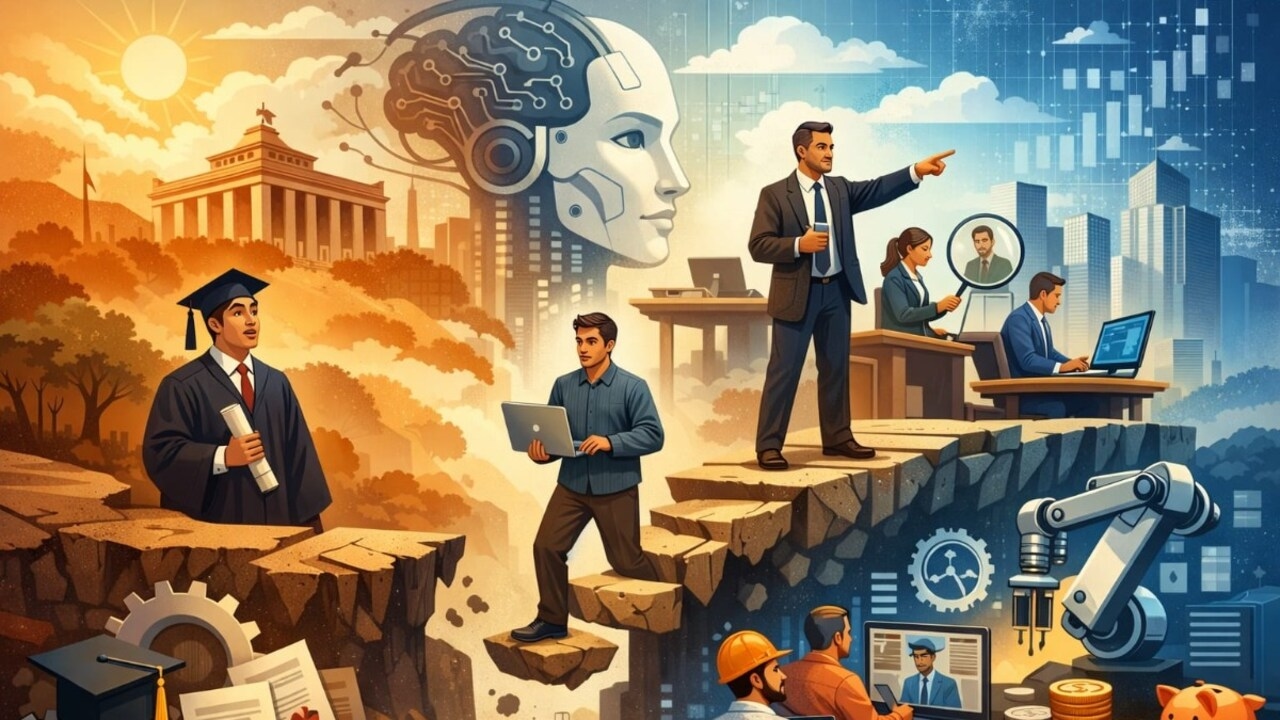


India’s rapid rise as one of the world’s largest AI learning economies is now exposing a deeper workforce challenge — employees may be learning artificial intelligence tools faster than organisations are becoming truly ready to use them at scale.
According to the Coursera Job Skills Report 2026, enrolments in Generative AI courses among enterprise learners in India surged by 234 per cent year-on-year.
At the same time, enrolments in critical thinking skills reportedly grew by 120 per cent, reflecting growing recognition that technical AI capability alone is not enough for long-term workforce transformation.
AI adoption rising faster than workforce readiness
Experts say India’s challenge is no longer AI awareness or adoption, but workforce readiness.
The report highlighted that while companies across sectors are aggressively investing in AI learning programmes, deep capability development remains uneven.
According to estimates by NASSCOM, India’s AI talent demand could cross one million roles by 2026.
However, government estimates reportedly suggest that only around 16 per cent of India’s IT workforce currently possesses AI-relevant skills.
Industries reshaping skilling strategies
The report pointed out that AI-driven skilling is now expanding beyond large technology firms into sectors such as banking, manufacturing, healthcare, and MSMEs.
Companies are increasingly focusing on:
- AI-assisted workflows
- Automation tools
- Predictive systems
- Human-AI collaboration
Large firms including Tata Consultancy Services, Wipro, and Accenture have already launched enterprise-wide AI reskilling initiatives.
Meanwhile, government programmes such as the IndiaAI Mission and FutureSkills Prime are expanding digital capability-building across industries.
Leadership and governance challenges emerging
Experts say the next phase of AI transformation will depend less on tools and more on leadership, organisational systems, and workforce adaptability.
The report noted that businesses are now confronting difficult questions around:
- Human and AI collaboration
- Workforce fatigue from constant reskilling
- Accountability in AI-driven decisions
- Redesigning workflows without reducing trust or human judgment
Industry leaders are expected to discuss these issues extensively at People Matters TechHR India 2026 scheduled in New Delhi this August.
Human-centred transformation seen as key
The article argues that organisations succeeding in the AI economy will not necessarily be those investing most aggressively in AI tools, but those investing more carefully in workforce adaptability, leadership capability, and human-centred transformation.
Experts believe India still holds strong advantages because of its young workforce, digital fluency, and scale, but warn that these strengths alone may not guarantee leadership in the global AI economy unless workforce readiness improves substantially.