







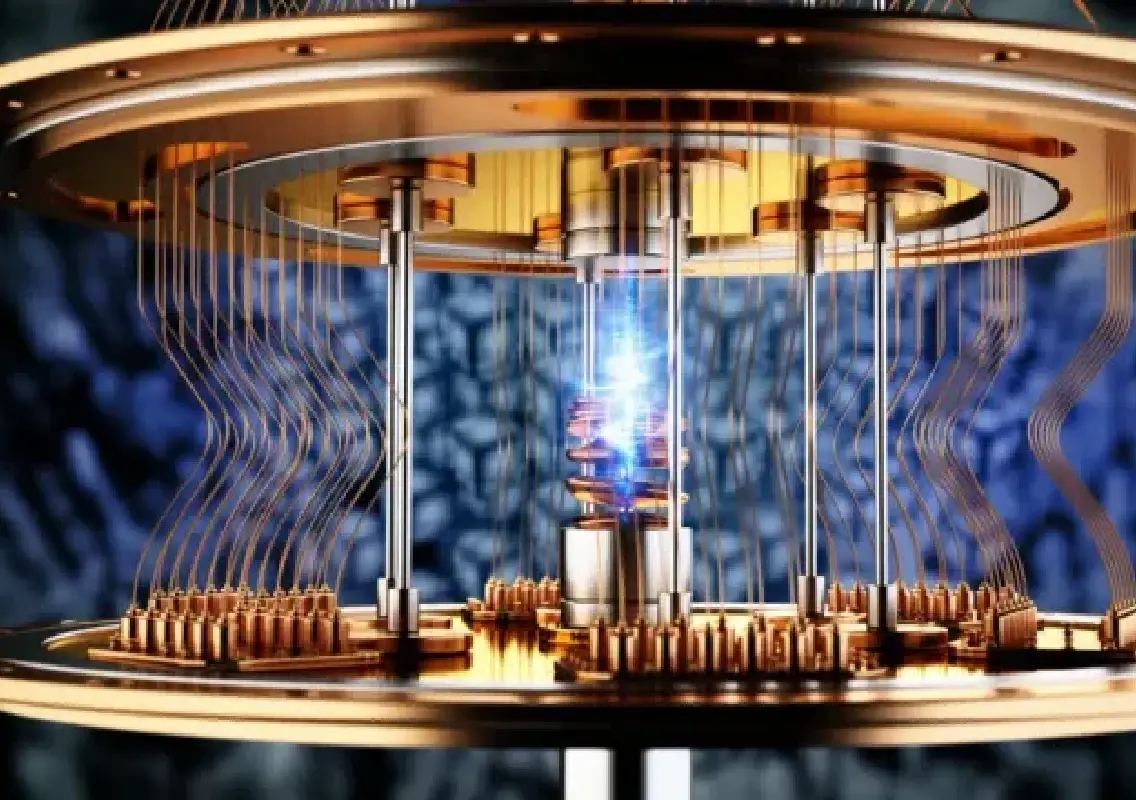


In a landmark moment for India’s deep-tech ambitions, the country’s first commercially available 8-qubit superconducting quantum computer will soon be installed at a private university in Bengaluru.
The system is being deployed through a partnership between Bengaluru-based quantum computing firm QpiAI and Alliance University. The centre will be housed at the university’s upcoming Electronics City campus under a 50:50 co-investment model.
Hands-on quantum access for students
The structured academic roadmap will begin with circuit design and simulations before moving to application-driven projects. Students will initially work on smaller problems using the 8-qubit platform, with future pathways to 16- and 64-qubit systems.
Unlike classical computers that use binary bits (0 or 1), quantum systems operate using qubits, enabling them to solve complex problems such as molecular modelling, optimisation, and material discovery more efficiently.
The superconducting system uses specialised circuits made of aluminium or niobium, cooled to extremely low temperatures to eliminate electrical resistance and stabilise qubits.
Industry and national impact
The centre is expected to serve over 200 global technology companies, defence and aerospace PSUs, and India’s 8,000-plus start-ups. Early applications include hydrogen atom modelling, small molecule simulations, and manufacturing scenario prototyping.
QpiAI, which integrates quantum computing with artificial intelligence, raised $32 million last year in a funding round led by Avataar Ventures and the National Quantum Mission.
Quantum future in Devanahalli
The company is also establishing a Quantum Supremacy Center in Devanahalli, planned to house 100 quantum computers and 15 application-specific labs. The facility aims to drive breakthroughs in drug discovery and chemical modelling, positioning Karnataka as a global quantum innovation hub.
With talent returning from Europe, the US, Israel and Germany, Bengaluru is steadily strengthening its status as India’s quantum capital.