







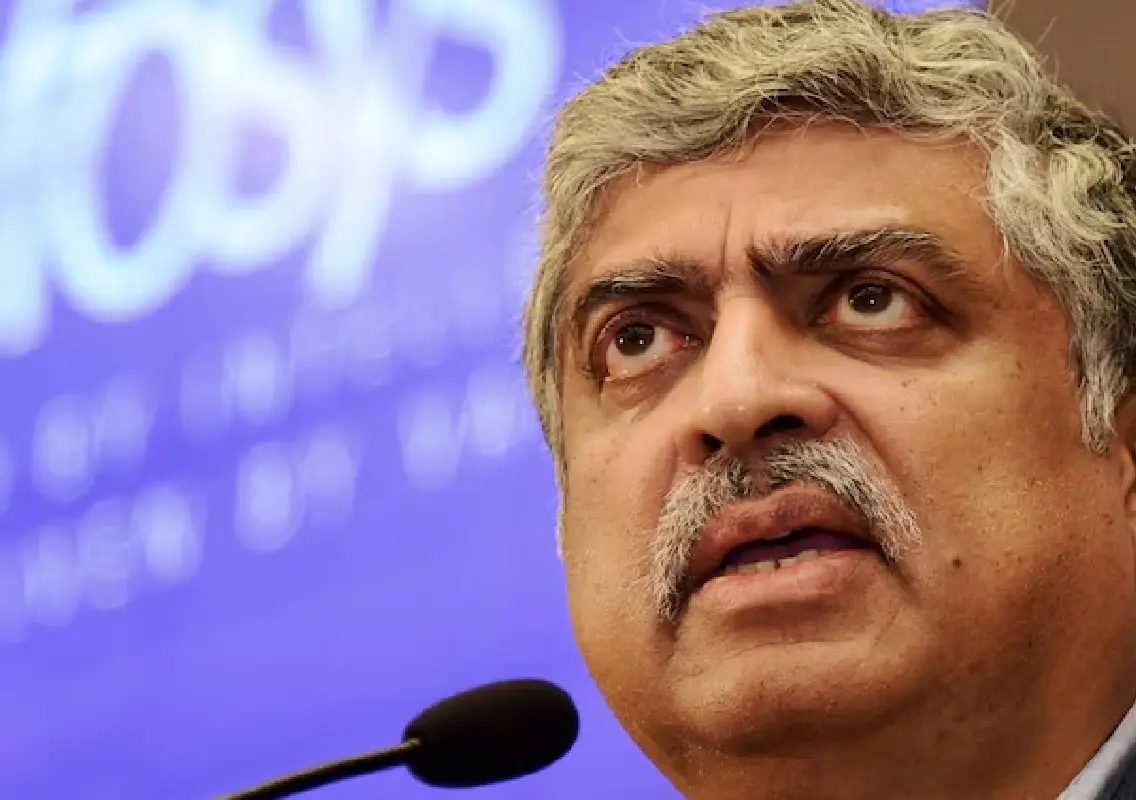


Infosys Chairman Nandan Nilekani cautions that 90 million tech jobs globally face disruption, while highlighting five emerging AI roles set to reshape the IT industry.
Nandan Nilekani, Chairman of Infosys, has warned that nearly 90 million technology-related jobs worldwide could face disruption due to rapid advances in artificial intelligence.
Speaking about the future of global IT services, Nilekani emphasised that while automation may replace repetitive roles, it will also create entirely new opportunities in AI-driven ecosystems. He described the transformation as a “once-in-a-generation shift” for the technology industry.
90 million roles may face disruption
According to Nilekani, traditional coding, testing and maintenance jobs are particularly vulnerable as AI tools become capable of generating software, detecting bugs and managing workflows with minimal human intervention.
He stressed that the impact will not be limited to India but will extend globally across IT services, consulting and back-office operations.
However, he clarified that disruption does not necessarily mean elimination. Instead, many roles will evolve, requiring workers to reskill and adapt to AI-assisted environments.
Five emerging AI roles to watch
Nilekani outlined five new categories of jobs expected to gain prominence:
- AI trainers – Professionals who train large language models and fine-tune AI systems for industry-specific applications.
- Prompt engineers – Specialists who design effective prompts to maximise AI output accuracy and efficiency.
- AI ethicists and governance experts – Experts ensuring responsible, transparent and fair AI deployment.
- Data curators – Professionals managing high-quality datasets required to train and refine AI systems.
- AI integration architects – Engineers who embed AI tools seamlessly into enterprise systems and workflows.
He noted that countries investing in digital infrastructure, talent development and AI governance will lead the next phase of global IT transformation.
Opportunity for India
For India, which remains a global IT hub, the shift presents both risk and opportunity. Nilekani urged companies and professionals to prioritise upskilling in AI, cloud computing and data science.
He added that organisations must move from labour-based models to innovation-led growth, leveraging AI to enhance productivity rather than merely reduce costs.
The message was clear: while AI may redefine millions of roles, those who adapt and acquire new capabilities will remain central to the future of technology.