







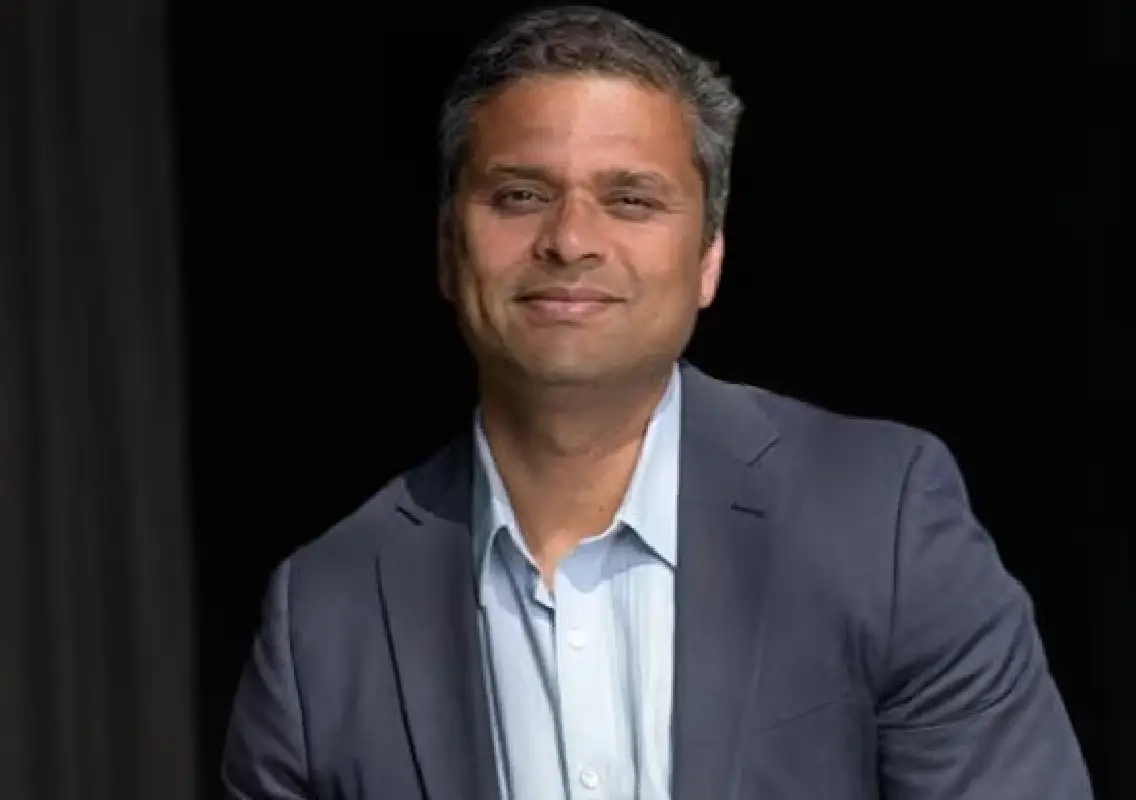


Sachin Katti, Intel’s Chief Technology and Artificial Intelligence Officer, has stepped down from the semiconductor giant to join ChatGPT creator OpenAI, marking yet another major talent shift in the global artificial intelligence ecosystem.
Katti to work on OpenAI’s AGI infrastructure
Katti announced his move through a post on social media platform X, stating that he will work on building OpenAI’s compute infrastructure for artificial general intelligence (AGI) — a theoretical form of AI capable of human-like intelligence.
“Very grateful for the tremendous opportunity and experience at Intel over the last four years leading networking, edge computing and AI,” Katti wrote in his post.
OpenAI President and Co-founder Greg Brockman confirmed the appointment, expressing excitement about collaborating with Katti. “Incredibly excited to work with him on designing and building our compute infrastructure, which will power our AGI research and scale its applications to benefit everyone,” Brockman wrote on X.
Intel confirms departure
An Intel spokesperson confirmed Katti’s exit and said that CEO Lip-Bu Tan will assume interim leadership of the company’s AI and Advanced Technologies Groups, previously headed by Katti.
“AI remains one of Intel’s highest strategic priorities, and we are focused on executing our technology and product roadmap across emerging AI workloads,” the spokesperson said. “We thank Sachin for his contributions and wish him all the best.”
Background: Katti’s journey at Intel
Katti joined Intel in early 2023, initially leading the Network and Edge Group. In April 2024, Tan appointed him as Chief Technology and AI Officer, adding responsibility for Intel’s overall AI strategy, product roadmap, Intel Labs, and its collaborations with startups and developers.
During his tenure, Katti oversaw Intel’s efforts to strengthen its AI portfolio, including the development of Gaudi chips and new energy-efficient data centre GPUs. However, Intel’s Gaudi chip line underperformed in 2024, bringing in only $500 million in revenue, below internal expectations.
Intel’s evolving AI strategy
Under Tan’s leadership, Intel has been restructuring its data centre and AI business to regain competitiveness in a market dominated by Nvidia, AMD, and emerging custom silicon makers.
At the 2025 OCP Global Summit, Intel unveiled a 160-GB energy-efficient data centre GPU, part of its new annual GPU release strategy. The company aims to provide open systems and software architecture to accelerate AI development globally.
Katti’s academic and entrepreneurial background
Outside corporate roles, Katti is an adjunct professor of electrical engineering and computer science at Stanford University, where his research focuses on networking, edge computing, and AI automation.
He was also the co-founder and CEO of Kumu Networks, a Sunnyvale-based startup known for innovations in wireless communication systems.
Recent high-profile exits from Intel
Katti’s departure follows a string of senior-level exits from Intel. These include Global Channel Chief John Kalvin, Vice-President of Data Centre AI Product Management Saurabh Kulkarni, and 25-year veteran Rob Bruckner, who was recently appointed to lead the Platform Engineering Group.
As competition intensifies in the AI and semiconductor sectors, Intel’s leadership changes underscore the challenges the company faces in retaining top AI talent while executing its ambitious technology roadmap.
Conclusion
Katti’s move to OpenAI signals the increasing cross-pollination between hardware and AI companies, as the race toward AGI accelerates. His expertise in edge computing and AI systems is expected to play a critical role in building OpenAI’s next-generation infrastructure.