







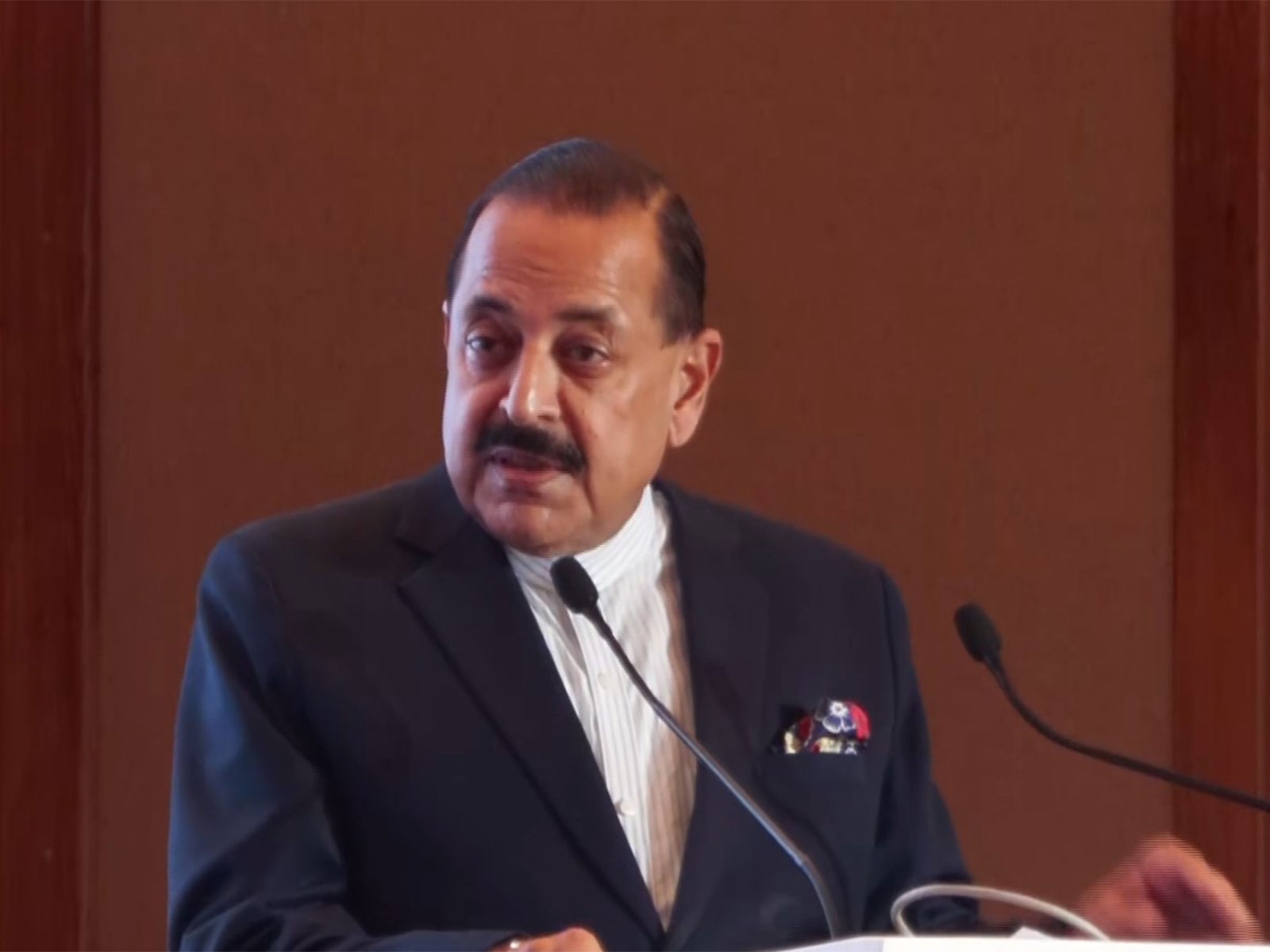


New Delhi: Robotics is set to move beyond surgical procedures and become an increasingly important tool across medical specialities, including diagnostics, treatment and therapy, Union Minister of State for Science and Technology Jitendra Singh said on Friday.
Addressing the inaugural session of the International Conference of the Society of Robotic Surgery in New Delhi on October 2, Singh said robotics, along with artificial intelligence (AI) and nanoscience, could create a broader ecosystem for precision healthcare and personalised medicine.
The Minister said robotics should not be viewed as a technology confined to surgery and would increasingly find applications across different branches of medicine.
“It’s a tool. It will happen everywhere,” Singh said, adding that while the current focus remains on robotic surgery, the future could see the emergence of robotic medicine, robotic endocrinology and robotic cardiology, similar to the expanding use of AI across medical specialities.
Robotics could reshape multiple medical specialities
Singh said medicine is entering a new phase driven by a combination of technologies, including AI, biotechnology, nuclear medicine, quantum technologies, nanomedicine and robotics.
He said the convergence of these technologies could support a shift towards precision medicine, where treatment is increasingly tailored to individual patients rather than being based only on the disease they have been diagnosed with.
According to Singh, two patients diagnosed with the same disease may require different approaches depending on factors such as their genetic profile, environmental conditions, lifestyle and dietary patterns.
The emphasis on individualised treatment, he said, would require healthcare systems to make greater use of technologies capable of processing large volumes of information and supporting more precise medical decision-making.
The Minister’s comments come as robotics is increasingly being discussed not only in the context of complex surgical procedures but also as part of a wider technology ecosystem for healthcare delivery.
Genome India could support precision medicine
Singh also referred to the Genome India Programme while discussing the role of genomics in future healthcare.
He said 10,000 individuals had already been sequenced under the programme and expressed hope that India could eventually move towards gene sequencing for every newborn.
Such an expansion would generate a massive volume of genetic information, particularly given India’s population of more than 1.4 billion.
Singh said the optimal use of AI and robotics would be important if genetic sequencing were to be carried out on such a large scale.
The integration of genomic information with other patient data could, in the model outlined by the Minister, help healthcare professionals better understand individual risks and develop more personalised approaches to diagnosis and treatment.
The Minister linked this vision to the broader development of precision medicine, where genetic, environmental and lifestyle factors could increasingly form part of clinical decision-making.
Nanomedicine could improve drug delivery
Singh also highlighted nanomedicine as another area with potential to address longstanding healthcare challenges.
Referring to efforts towards developing oral insulin, he said advances at the nano level could help overcome some limitations associated with conventional drug delivery.
Such developments, he suggested, could open up new possibilities for treatment by enabling medicines to be delivered in different ways.
The reference to oral insulin formed part of a broader discussion on how developments in nanoscience, biotechnology and other emerging technologies could complement robotics and AI in the future healthcare ecosystem.
Rather than treating these technologies as separate areas, Singh said their convergence could contribute to a more precise approach to healthcare delivery.
Tele-robotics could take specialist care to patients
Another area highlighted by Singh was tele-robotics and its potential to improve access to specialist healthcare.
India’s geographical diversity means that patients in remote or underserved locations can face difficulties accessing specialists. Singh said remotely enabled technologies could help bridge some of these geographical barriers.
Sharing his experience with robotic ultrasonography, Singh said he had performed an ultrasound on a person located around 10,000 kilometres away in Antarctica.
He used the example to illustrate the possibilities offered by remotely enabled medical technologies.
“Instead of the patient being referred to the doctor, it will be the doctor being referred to the patient,” Singh said.
Tele-robotics, he added, could allow specialist expertise to reach patients across geographical boundaries and reduce the need for patients to travel long distances for advanced medical care.
The approach could be particularly relevant for specialist services where expertise is concentrated in major cities and medical centres.
India’s changing disease profile adds to technology needs
Singh also pointed to changes in India’s disease profile while discussing the need for more personalised healthcare.
He said infectious diseases continue to coexist with metabolic and lifestyle-related disorders in the country. At the same time, diseases traditionally associated with later stages of life are increasingly being seen among younger people.
This changing pattern, he said, creates additional challenges for healthcare systems and highlights the need for technologies that can support more targeted diagnosis and treatment.
AI, robotics, genomics and nanomedicine could potentially contribute to this transition by helping healthcare systems handle increasingly complex medical requirements.
The emphasis, however, is not limited to technology adoption. The broader objective outlined by Singh is to use emerging technologies as tools for delivering healthcare that is more precise and tailored to individual needs.
From robotic surgery to robotic medicine
The comments at the Society of Robotic Surgery conference represent a broader vision of how robotics could evolve within healthcare.
Robotic surgery remains the most visible application of medical robotics, particularly in procedures requiring precision and controlled movements. Singh, however, argued that the technology’s potential extends much further.
He pointed to possible future applications in areas such as endocrinology and cardiology, while also highlighting diagnostics, therapy and remotely delivered specialist care.
The convergence of robotics with AI, genomics and nanoscience could therefore create a healthcare ecosystem in which technology supports clinicians across multiple stages of patient care.
For India, Singh said, the country’s scale and geographical diversity make these technologies particularly relevant.
As healthcare needs become increasingly complex, the Minister said AI, robotics and tele-robotics could support the country’s transition towards precision and personalised medicine.