










Menlo Park: Meta CEO Mark Zuckerberg unveiled a new lineup of hardware products at the company’s annual Connect event, with artificial intelligence and wearable technology taking centre stage.
Among the biggest announcements were the Ray-Ban Meta Audio, a new pair of camera-free smart glasses, and the Muse Charm, Meta’s first dedicated AI hardware device designed to provide access to its Muse AI agent without requiring a smartphone.
Meta also showcased a new generation of its camera-equipped Ray-Ban smart glasses and previewed its next-generation Meta VR Glasses, which are designed to deliver a virtual reality experience in a glasses-like form factor.
Zuckerberg said Meta’s longer-term focus remains on the metaverse while the company continues expanding its hardware ecosystem around AI agents.
Ray-Ban Meta Audio glasses remove the camera
Meta introduced the Ray-Ban Meta Audio glasses in collaboration with EssilorLuxottica.
Unlike the existing Ray-Ban Meta smart glasses, the new Audio models do not have a camera. Instead, they focus on audio features, including music and podcast playback, voice calls and access to Meta’s AI voice assistant.
Meta said audio has been one of the most popular features on its smart glasses since their introduction and that there is demand for a version without a camera.
The launch also comes amid privacy concerns surrounding camera-equipped smart glasses, which can be used to record images and video in public spaces. Meta has previously included a recording indicator light on its camera-equipped models.
The new Audio glasses, however, do not provide bystanders with the same visual recording indicator because they do not contain a camera and are designed only for audio recording.
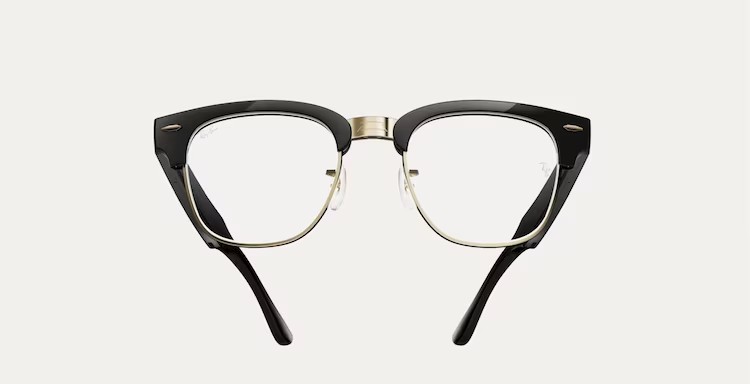
Meta says the glasses can provide up to 12 hours of battery life on a single charge, while the charging case can extend total use to 48 hours.
At around 43 grams, the glasses are designed to be lightweight. Meta is also introducing additional styles, including Clubmaster and Burbank, along with adjustable or swappable nose pads, adjustable temple tips and prescription lens support.
The Ray-Ban Meta Audio glasses will start at $349, approximately Rs 33,400, and are scheduled to begin shipping on October 13.
Muse Charm brings Meta AI to a keychain device
Meta also introduced the Muse Charm, its first dedicated hardware product built around the company’s Muse AI agent.
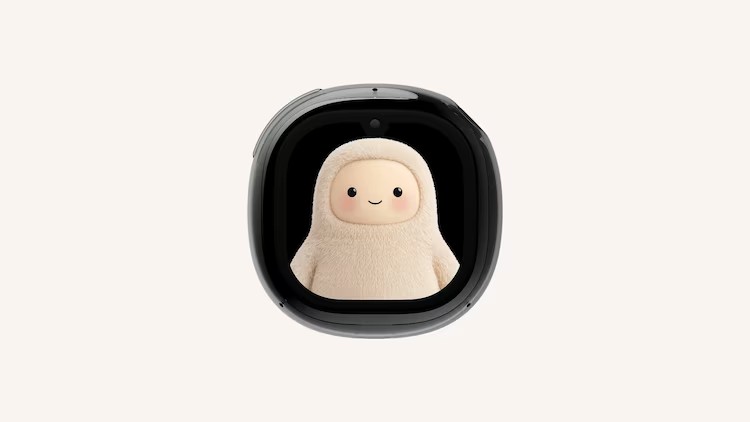
The small handheld device is roughly the size of an AirPods case and is designed to be attached to a keychain or carried in a pocket.
The device features an approximately 2-inch touchscreen, 5G connectivity, built-in speakers and microphones and a fingerprint sensor.
Meta describes the Muse Charm as a way to access the full Muse experience without having to reach for a smartphone.
The Muse AI agent appears on the device’s small screen through a digital avatar known internally as Jolly.
Zuckerberg said the device is designed to provide a quick way to interact with Muse and show the AI agent what is happening around the user.
Muse itself is designed to function as a personal AI agent capable of assisting with tasks such as booking flights and shopping online.
Meta has not yet announced a price for the Muse Charm. Zuckerberg said the company is still finalising the internal component layout, with plans to have the device ready to ship during the December holiday season.
Meta also announced that Muse will become the primary AI interface for its smart glasses, allowing users to access the agent through their glasses in a similar way to how they would interact with it on a smartphone or the Muse Charm.
Meta VR Glasses target lighter VR experience
Meta also unveiled its next-generation Meta VR Glasses, marking the company’s first major VR hardware announcement since the Quest 3S.
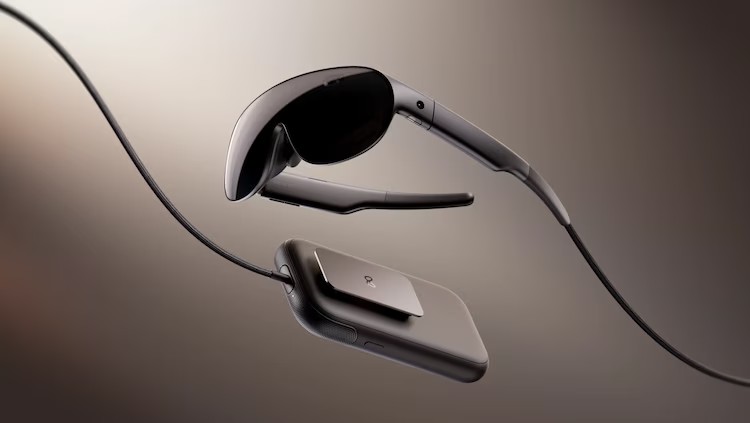
Unlike traditional VR headsets, the new device resembles a conventional pair of glasses, with Meta focusing on a slimmer and lighter design.
The glasses weigh approximately 100 grams, considerably reducing the bulk associated with traditional VR headsets.
Meta says the VR Glasses will support streaming platforms including Prime Video, Disney+ and YouTube, with some services offering virtual or 3D enhancements. Certain sports applications will also support streaming at up to 8K resolution.
The device can respond to eye, voice and hand gestures, with sensors tracking the user’s eyes and hand movements to reduce reliance on physical controllers.
Meta said around 75 games will support hand gestures at launch, while existing Quest titles will remain compatible with Touch Plus controllers.
The VR Glasses can also connect to a Windows PC or Mac. Users will be able to participate in video calls with holographic avatars through services including WhatsApp and Zoom.
External puck powers Meta VR Glasses
To keep the glasses themselves relatively slim, Meta has moved the processor, battery and storage into a separate external puck connected to the device.
The puck is powered by Qualcomm’s Snapdragon Reality Elite chipset and can provide up to three hours of continuous high-resolution media playback. It also supports 45W fast charging.
The glasses use magnesium alloy frames and pancake lenses.
According to Meta, the hardware features full-colour passthrough video, a 5K display, Dolby Vision, Dolby Atmos spatial audio and IMAX Enhanced certification.
The Meta VR Glasses are scheduled to go on sale in spring 2027 for $1,299, approximately Rs 1.24 lakh. Meta has not confirmed an India launch.
Zuckerberg described the product as a new type of VR device designed to combine the sense of presence associated with virtual reality with the form factor of ordinary glasses.
Ray-Ban Meta Gen 3 gets camera and battery upgrades
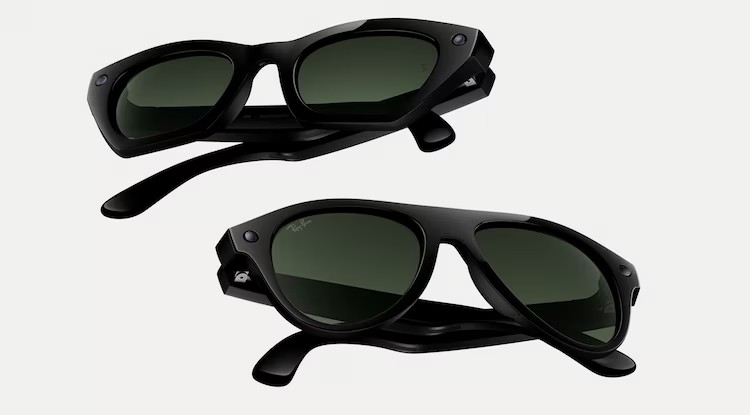
Meta also refreshed its camera-equipped smart glasses with the Ray-Ban Meta Gen 3.
The third-generation glasses feature a slimmer design, a dedicated button for activating Meta AI and a six-microphone array.
Meta says the new models can offer up to nine hours of battery life and feature a 12-megapixel camera capable of recording 3K video.
The glasses will also introduce a dynamic photo feature that allows users to select from several captured images or ask Meta AI to recommend a shot.
Meta said Dolby Atmos spatial audio support for video recordings will also be added soon.
The new models are available in styles including Aviator and cat-eye Zena, alongside the existing Wayfarer design.
The Ray-Ban Meta Gen 3 starts at $449, approximately Rs 43,000.
Ray-Ban Meta Display expands to more markets
Meta also announced that its Ray-Ban Meta Display glasses will expand to additional markets, including the UK, Canada, Germany and France.
The glasses are also gaining new features for navigation.
These include cycling and public transport directions through the heads-up navigation system, along with landmark-based prompts for walking routes.
Meta is also adding holographic avatars to WhatsApp video calls and web applications through the Meta AI app.
Meta expands its AI hardware ecosystem
The latest announcements highlight Meta’s broader effort to integrate AI into everyday wearable devices.
The camera-free Ray-Ban Meta Audio focuses on audio and AI interaction, while the Muse Charm offers a dedicated way to access the company’s AI agent without a phone.
At the same time, Meta is continuing to develop more immersive hardware through its VR Glasses and expanding the capabilities of its camera-equipped Ray-Ban lineup.
With the new products, Meta is increasingly positioning AI as a central interface across its hardware ecosystem while continuing to invest in the longer-term vision of spatial computing and the metaverse.