







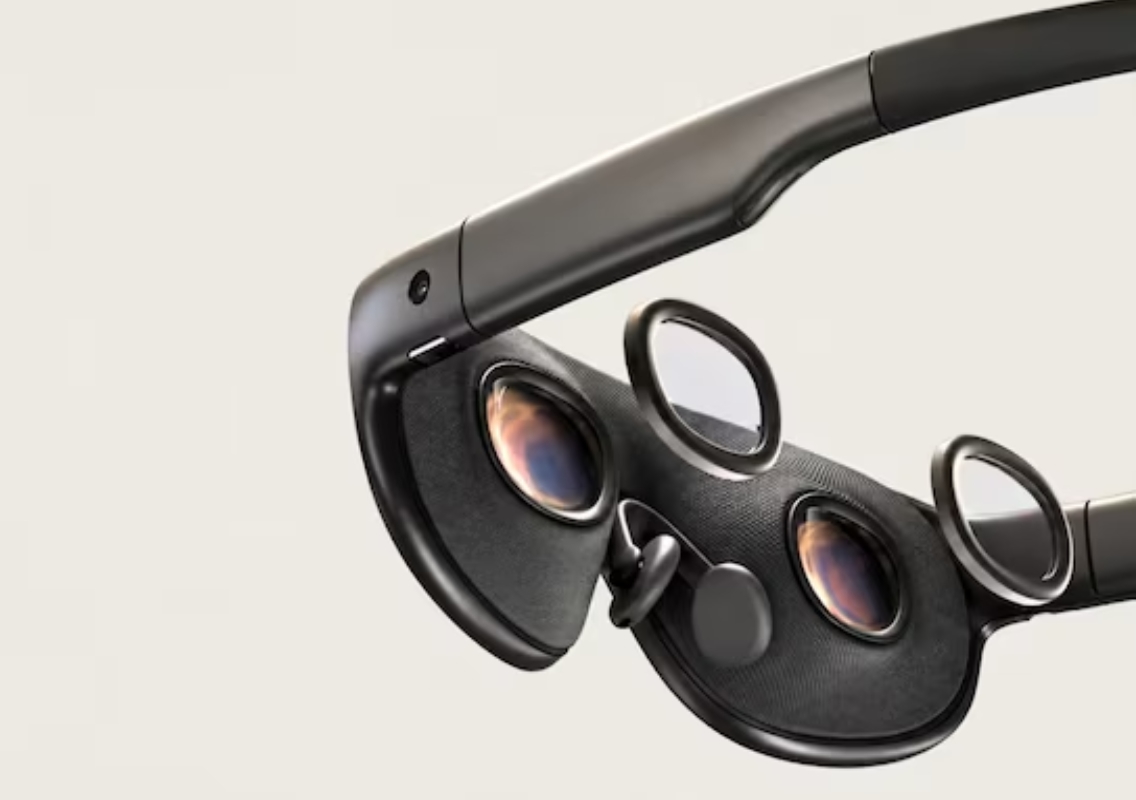


New Delhi: Meta’s purported next-generation virtual reality headset, reportedly codenamed Phoenix, has surfaced online through leaked visuals from the company’s Horizon OS firmware, offering a first look at what could be one of its slimmest mixed-reality devices yet. The leaked material points to a glasses-like design, removable prescription lens inserts and a setup process that may involve scanning a QR code.
The visuals were reportedly discovered by Luna and highlighted by UploadVR after Meta updated a Horizon OS package related to prescription lenses. The package was released in August but initially contained limited material. An update in September appears to have revealed much more about the unannounced device.
While the leak provides a clearer picture of the headset’s physical design, Meta has not officially announced Phoenix. Its final name, price, launch date and complete specifications remain unknown.
Meta Phoenix appears much slimmer than traditional VR headsets
The most noticeable feature in the leaked visuals is the headset’s slim profile.
Unlike conventional VR headsets that typically use a relatively large facial interface surrounding the user’s eyes and face, Phoenix appears to have a frame that resembles a pair of glasses. The leaked design shows separate nose pads and a comparatively narrow structure.
Sensors are also visible around the sides and underneath the arms of the device. Their exact purpose has not been confirmed, but the placement is consistent with a device designed to track the user’s movements and interaction with the virtual environment.
The design suggests that Meta may be attempting to reduce one of the biggest drawbacks associated with current VR hardware: size and weight.
Traditional VR headsets can be uncomfortable to wear for extended periods because of their bulk and the weight positioned in front of the user’s face. A significantly slimmer design could make a future Meta headset more practical for longer sessions if the company can maintain the required processing power, battery life and sensing capabilities.
However, the leaked visuals alone cannot establish how light Phoenix will actually be or how comfortable it will be in everyday use. Those details will only become clear if Meta formally announces the product.
Prescription lens inserts could make Phoenix more accessible
Another important detail visible in the leaked material is support for removable prescription lens inserts.
One of the animations reportedly shows prescription inserts being placed in front of the headset’s own lenses. This could make the device more convenient for users who require corrective lenses, potentially reducing the need to wear conventional spectacles underneath a headset.
Prescription support is becoming increasingly important as VR and mixed-reality devices move beyond gaming and into productivity, entertainment and other everyday applications.
The leaked animation also provides a glimpse at the possible setup process. In one visual, a person appears to hold a card displaying a QR code in front of the headset. This has led to speculation that the code could be used to pair or configure the device during initial setup.
Meta has not confirmed what the QR code is intended for, so this aspect of the leak should be treated as speculation rather than a confirmed feature.
Phoenix could use an external computing puck
The headset’s compact appearance may come with a significant design trade-off.
Reports surrounding Phoenix suggest that the device could rely on an external computing puck connected to the headset by a cable. The newly leaked visuals appear to show a cable extending from the end of the left temple.
An external computing unit could allow Meta to reduce the amount of hardware positioned directly on the user’s head. Components that would otherwise contribute to the headset’s thickness could potentially be moved into the separate computing device.
This approach could help Meta achieve the slim form factor shown in the leaked images. At the same time, a wired connection and external computing hardware could affect portability and convenience.
It remains unclear how large the computing puck would be, how it would be powered and whether users would need to carry it separately during normal use.
These are among the questions that remain unanswered because the current information comes from leaked firmware material rather than an official product announcement.
Phoenix may use cameras instead of transparent lenses
Despite its glasses-like appearance, Phoenix is reportedly not expected to function like transparent smart glasses.
Instead, reports suggest that the device could use cameras to capture the user’s surroundings and then display that view digitally on its internal screens. This would make it a mixed-reality headset rather than a conventional pair of transparent spectacles.
In such a system, cameras capture the real-world environment while the headset’s displays recreate that environment for the wearer. Digital objects can then be placed over the view of the physical world.
This approach is already familiar in modern mixed-reality devices, but the major difference with Phoenix could be its physical design. Meta appears to be exploring how much slimmer this type of technology can become without abandoning cameras, displays and other sensors required for immersive experiences.
The leaked visuals reportedly show sensors positioned around the arms and underside of the headset, supporting speculation that eye, hand and environmental tracking could play an important role.
Stanley and Loma reportedly linked to Phoenix
Phoenix is reportedly not an entirely new project. Reports indicate that Meta has worked on the device under different internal codenames, including Stanley and Loma.
The reported positioning is particularly interesting because the headset could occupy a premium segment of Meta’s mixed-reality portfolio. It has been compared with the high-end positioning of the company’s Quest Pro, although Phoenix is expected to pursue a very different physical design.
The emphasis appears to be on reducing the bulk associated with conventional headsets while retaining the capabilities required for mixed reality.
However, it is important to distinguish between reported information and confirmed specifications. The current leak does not establish the final hardware configuration, performance, battery capacity or pricing.
Meta Connect 2026 could provide more clues
The timing of the leak has also attracted attention because Meta Connect 2026 is approaching.
The company’s event schedule includes a session titled “A practical guide to controller-free interaction”. That session is particularly notable in the context of reports that Phoenix could rely heavily on eye and hand tracking.
The connection does not confirm that Phoenix will be unveiled at the event. It simply adds to speculation surrounding Meta’s plans for future mixed-reality hardware.
If Meta does showcase a new headset, the company could provide answers to several questions currently left open by the leak, including the product’s official name, pricing, release timeline and technical specifications.
Until then, the leaked firmware remains the primary source of information about Phoenix’s design.
Meta has yet to officially confirm Phoenix
The latest visuals certainly make Phoenix one of the more intriguing unreleased mixed-reality devices being discussed. The combination of a slim, glasses-like frame, prescription lens support and reported external computing hardware suggests that Meta may be experimenting with a substantially different approach to VR and mixed reality.
At the same time, consumers should be cautious about treating leaked information as final. Firmware visuals can reveal design intentions, but they do not necessarily represent the finished retail product. Hardware specifications, pricing and even the final appearance can change before launch.
For now, Meta has not officially confirmed Phoenix, its final specifications or its release date. The leak nevertheless indicates that the company is continuing to explore ways of making immersive computing hardware slimmer and more wearable.
If the reported design eventually reaches consumers in a similar form, Phoenix could represent an important step in Meta’s effort to move mixed reality beyond bulky headsets and towards devices that look and feel closer to everyday eyewear.