







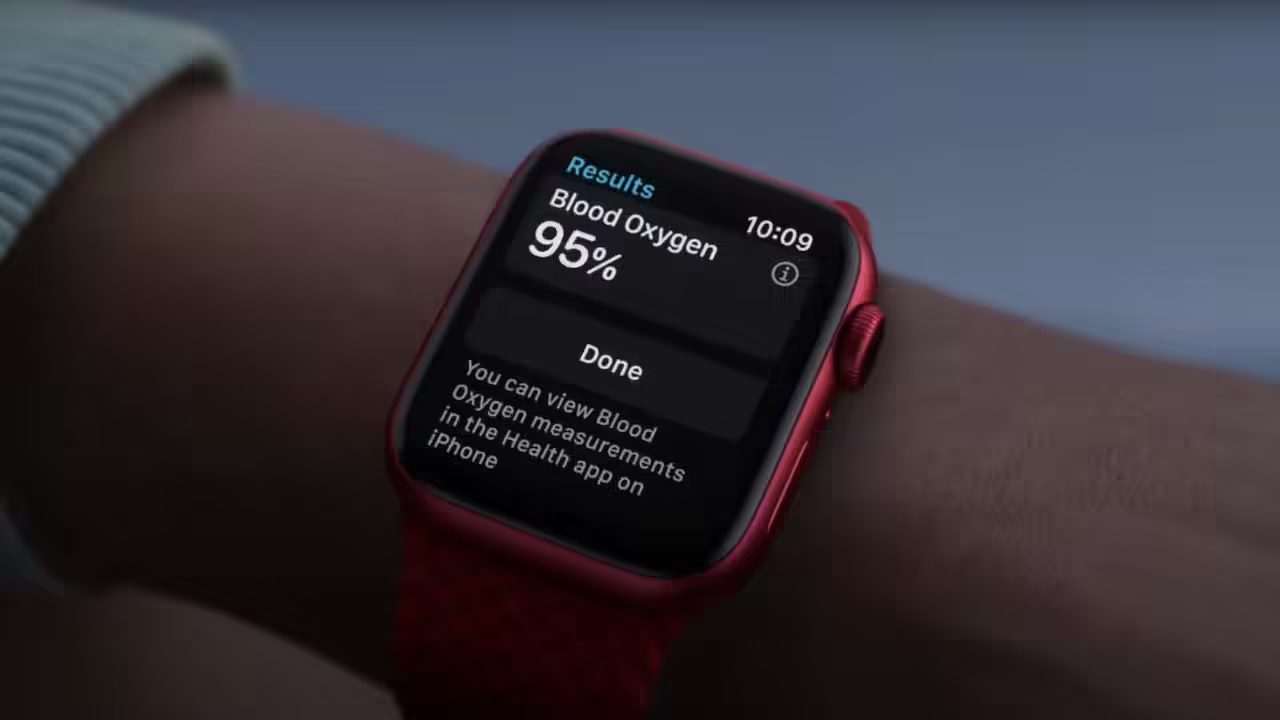


Researchers at MIT and Empirical Health have developed a new artificial intelligence (AI) model capable of predicting multiple medical conditions using large-scale data from everyday wearable devices. The breakthrough offers a promising new direction for health monitoring, especially for conditions that require early detection.
A new architecture for real-world health data
The AI model is built on the Joint-Embedding Predictive Architecture (JEPA), first introduced by Yann LeCun, former Chief AI Scientist at Meta. Unlike traditional models that guess missing values, JEPA helps machines understand what data means by mapping visible and hidden information into a shared space.
(See also: NK report on AI health innovations | Apple Watch – Wikipedia)
When parts of the data are masked or incomplete — common in wearable recordings — JEPA enables the model to infer the missing information based on surrounding context. Meta released its own JEPA-based system, I-JEPA, in 2023, calling it a foundation for AI systems that can build internal models of the world.
Since its publication, the JEPA framework has become central to emerging “world model” research. LeCun recently left Meta to establish a new company dedicated to advancing these models, which he argues are key to achieving Artificial General Intelligence (AGI).
Training the model with Apple Watch data
The study, titled JETS: A Self-Supervised Joint Embedding Time Series Foundation Model for Behavioural Data in Healthcare, used Apple Watch recordings from 16,522 individuals — a dataset covering nearly 3 million person-days of activity.
The dataset included 63 different time-series measurements, grouped into five domains:
- cardiovascular health
- respiratory health
- sleep patterns
- physical activity
- general statistics
However, just 15% of participants had medical labels, meaning most of the dataset could not be used with traditional supervised AI systems. Instead, JETS first learned from all the raw, unlabelled behavioural data, and only later fine-tuned itself using the labelled subset.
To prepare the data, researchers converted each observation into a “token” — a structured unit representing the day, the measurement, and the type of metric. These were masked and fed into a predictor model that attempted to reconstruct the missing elements.
How well the model performed
After training, the researchers evaluated JETS against several existing AI systems, using AUROC and AUPRC — two standard measures that assess how well a model separates positive cases from negative ones, rather than measuring accuracy alone.
Notable performance results included:
- 86.8% for predicting high blood pressure
- 70.5% for atrial flutter
- 81% for chronic fatigue syndrome
- 86.8% for sick sinus syndrome
While JETS was not the top performer in every category, researchers say the benefits of the approach are clear: it draws meaningful insights from data that is often incomplete, inconsistent, or irregular — a common challenge for wearables. In some cases, health signals were recorded only 0.4% of the time, yet the model still learned usable patterns.
A step towards accessible, everyday health prediction
The study demonstrates how AI can extract life-saving potential from data people already generate through devices like the Apple Watch, even when they do not wear the device every day. As wearables become more widely adopted, researchers believe models like JETS could support early health interventions, personalised care, and preventive screening at scale.
The work also signals a major shift in AI research, highlighting the growing importance of world-model architectures capable of learning from the imperfect data that dominates real life.