


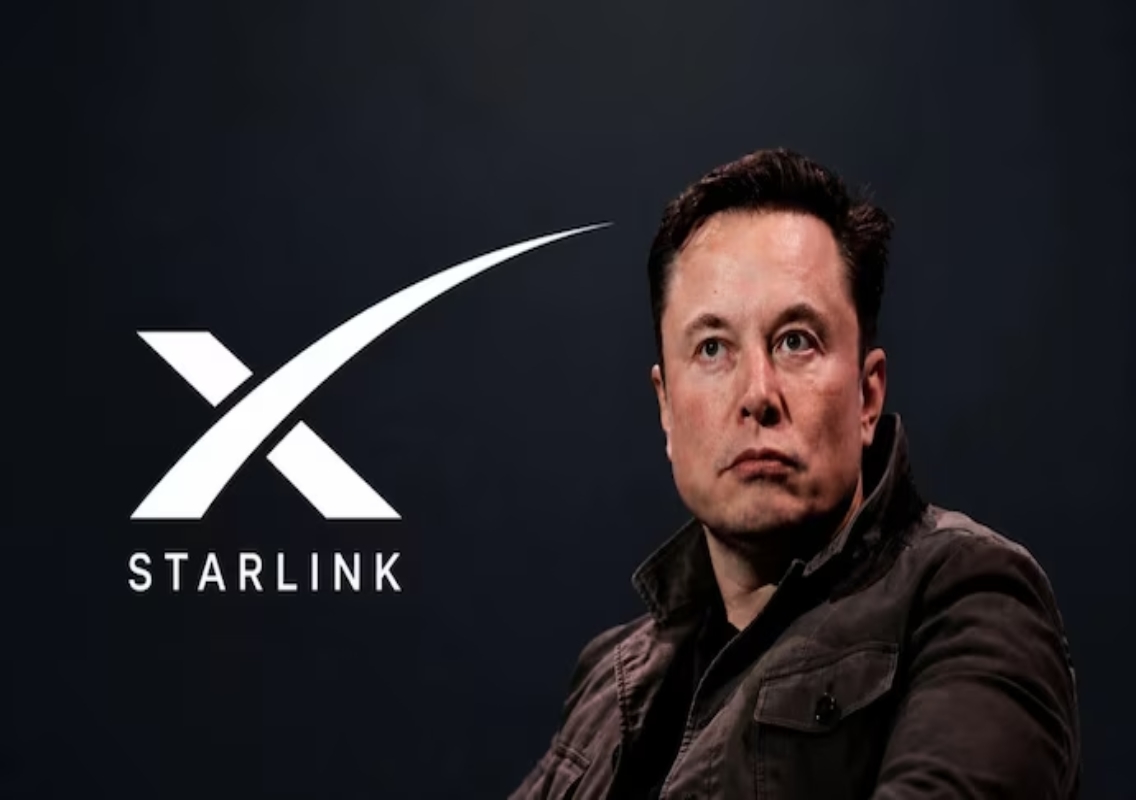


Brussels: SpaceX and Tesla chief executive Elon Musk has praised the European Union (EU) for requiring Apple to adopt USB-C charging across its product lineup, even as major European telecom operators move towards developing satellite-to-phone connectivity that could challenge his Starlink business.
The contrasting developments highlight Europe’s growing influence over the global technology industry. While the EU’s common-charger rules have pushed device manufacturers towards a shared charging standard, its efforts to strengthen Europe’s satellite communication capabilities could increase competition for Starlink.
In a post on his social media platform X, Musk credited European regulators for requiring Apple to use USB-C across its products. His remarks, reported by India Today on October 20, 2026, come as four major European telecom companies explore a joint satellite connectivity initiative intended to reduce reliance on foreign providers.
The developments illustrate how regulatory decisions, competition and digital infrastructure are shaping the technology sector, from everyday smartphone accessories to satellite networks designed to connect users beyond conventional mobile coverage.
Musk backs EU’s common-charger policy
Musk’s comments focused on the EU’s decision to standardise charging ports across a range of electronic devices.
“Have to give the EU regulators credit where it’s due for making all Apple products use USB-C,” Musk wrote on X, according to India Today.
Apple had traditionally used its proprietary Lightning connector on many iPhones and other devices. The company began moving its iPhone lineup to USB-C with the iPhone 15 series in 2023, ahead of the EU’s mandatory deadline for smartphones.
The USB-C standard allows compatible devices to use a common physical connector for charging and, where supported, data transfer. It can reduce the need for consumers to purchase different charging cables when they own devices from multiple manufacturers.
The EU’s approach also demonstrates how regulations introduced in one major market can influence product designs worldwide. Rather than maintaining separate versions of devices for different regions, manufacturers may find it more practical to adopt a common standard across their global product ranges.
Musk’s praise is notable because technology companies have often criticised regulations that require changes to established products or business practices. In this instance, however, he publicly acknowledged the benefits of the EU’s decision.
Why Europe introduced USB-C charging rules
The EU introduced its common-charger legislation to reduce electronic waste, improve consumer convenience and limit unnecessary spending on charging accessories.
The rules made USB-C mandatory for covered categories of electronic devices sold in the EU, including smartphones, tablets, digital cameras, headphones and portable speakers. The requirements for these categories took effect on December 28, 2024.
The European Commission has estimated that discarded and unused chargers contribute around 11,000 tonnes of electronic waste annually. It has also projected that the common-charger approach could save consumers approximately €250 million each year by reducing unnecessary charger purchases.
The legislation was subsequently extended to laptops, with the relevant requirements taking effect in April 2026.
For consumers, a common connector can make it easier to reuse existing chargers and cables across compatible devices. It may also simplify travel, reduce accessory purchases and encourage manufacturers to consider compatibility when designing products.
However, USB-C does not mean that every charger provides the same charging speed or that all cables support identical data-transfer capabilities. Performance depends on the device, charger, cable and supported technical standards.
The legislation primarily establishes a common charging interface rather than making all charging equipment function identically.
European telecom companies prepare to challenge Starlink
While Musk has welcomed the EU’s approach to smartphone charging, Europe is also working towards reducing its dependence on Starlink for satellite connectivity.
Four major telecom operators — Deutsche Telekom, Orange, Telefónica and Vodafone — have joined forces to explore a satellite-to-device connectivity initiative. The companies are examining ways to provide mobile connectivity through satellites, potentially extending service to areas where conventional mobile networks are unavailable or difficult to deploy.
According to reporting by the Financial Times, the operators have signed a letter of intent to explore a joint bid for access to radio spectrum in the 2 GHz band. The initiative is linked to the EU’s broader discussion about reserving spectrum for European satellite connectivity providers.
The proposed approach would allow the companies to explore partnerships with existing satellite operators rather than necessarily developing an entirely new satellite constellation.
Satellite-to-device technology aims to connect compatible mobile devices directly to satellites. Depending on the technology and service, this could support messaging and other communications in locations beyond the reach of terrestrial mobile networks.
Such connectivity could be useful in remote communities, rural areas, maritime environments and locations where natural disasters or infrastructure failures disrupt conventional telecommunications.
The project remains a developing initiative, and its commercial prospects will depend on spectrum access, technical implementation, investment and regulatory approvals.
Why Starlink matters to the satellite internet market
Starlink, operated by SpaceX, has become a major player in satellite internet through its large constellation of low-Earth-orbit satellites.
Unlike conventional broadband services that depend on extensive terrestrial infrastructure, Starlink uses satellites to provide internet connectivity to users equipped with compatible terminals. Its network can serve locations where fibre-optic connections or mobile towers are difficult or expensive to establish.
Starlink’s growing presence has made satellite communications an important part of discussions about digital access, telecommunications competition and strategic infrastructure.
However, Europe’s proposed satellite-to-phone initiative differs from traditional satellite broadband services. Direct-to-device connectivity seeks to communicate with compatible mobile devices, while conventional Starlink broadband generally relies on dedicated user terminals.
The technologies may overlap in some areas, but they do not necessarily offer identical services or performance.
A European-led satellite-to-device system could give telecom operators additional options for extending coverage and could create an alternative to relying exclusively on foreign satellite providers.
For European policymakers, the issue also concerns the resilience and control of critical communication infrastructure.
Europe’s push for greater digital independence
The satellite initiative reflects Europe’s broader interest in strengthening its technological independence.
European policymakers have increasingly focused on reducing dependence on infrastructure controlled by companies outside the region, particularly where communications, data and essential services are concerned.
Satellite connectivity is relevant to this objective because it can support communications during emergencies and extend coverage into areas that are difficult to serve through terrestrial networks alone.
The proposed collaboration among Deutsche Telekom, Orange, Telefónica and Vodafone could combine the operators’ existing customer relationships and telecommunications expertise with satellite technology supplied by a partner.
However, the initiative would face substantial challenges. Satellite-to-device services require suitable spectrum, compatible technology, network integration and coordination with existing mobile services. Operators would also need to establish commercially viable arrangements for delivering coverage and managing service quality.
The availability of an alternative network would not automatically eliminate the need for Starlink or other satellite providers. Instead, it could broaden the range of options available to European consumers, businesses and public authorities.
What the developments mean for consumers
The USB-C rules and the proposed satellite initiative address different consumer needs, but both demonstrate how technology policy can affect the products and services available to the public.
For device owners, standardised charging ports can reduce accessory costs and simplify the use of compatible chargers. For mobile users, satellite-to-device services could eventually improve connectivity in areas where traditional networks provide limited coverage.
The benefits of the satellite initiative, however, will depend on its eventual design and deployment. Consumers would need to consider coverage, compatible devices, service availability and pricing before relying on such services.
The proposed European network also remains at an exploratory stage. It should not yet be treated as a fully operational replacement for Starlink.
Meanwhile, Musk’s comments on USB-C show that regulatory policies can receive support even from technology leaders whose businesses operate in highly competitive and closely regulated markets.
A changing landscape for global technology
Musk’s praise for the EU’s common-charger rules comes at a time when European telecom companies are exploring ways to compete in the satellite connectivity market.
The two developments demonstrate Europe’s ability to influence both consumer electronics standards and the strategic direction of telecommunications infrastructure.
The USB-C legislation has already changed the charging landscape for covered devices sold in Europe. The proposed satellite-to-device collaboration, by contrast, will require further technical, commercial and regulatory work before its impact becomes clear.
For consumers, the immediate benefits of common charging standards are easier to identify, while the potential advantages of a European satellite network will depend on its eventual implementation.
Ultimately, the developments highlight an important shift in the technology industry: competition is no longer limited to individual devices or internet subscriptions. It increasingly involves the standards, spectrum access and infrastructure that determine how people connect to technology.