


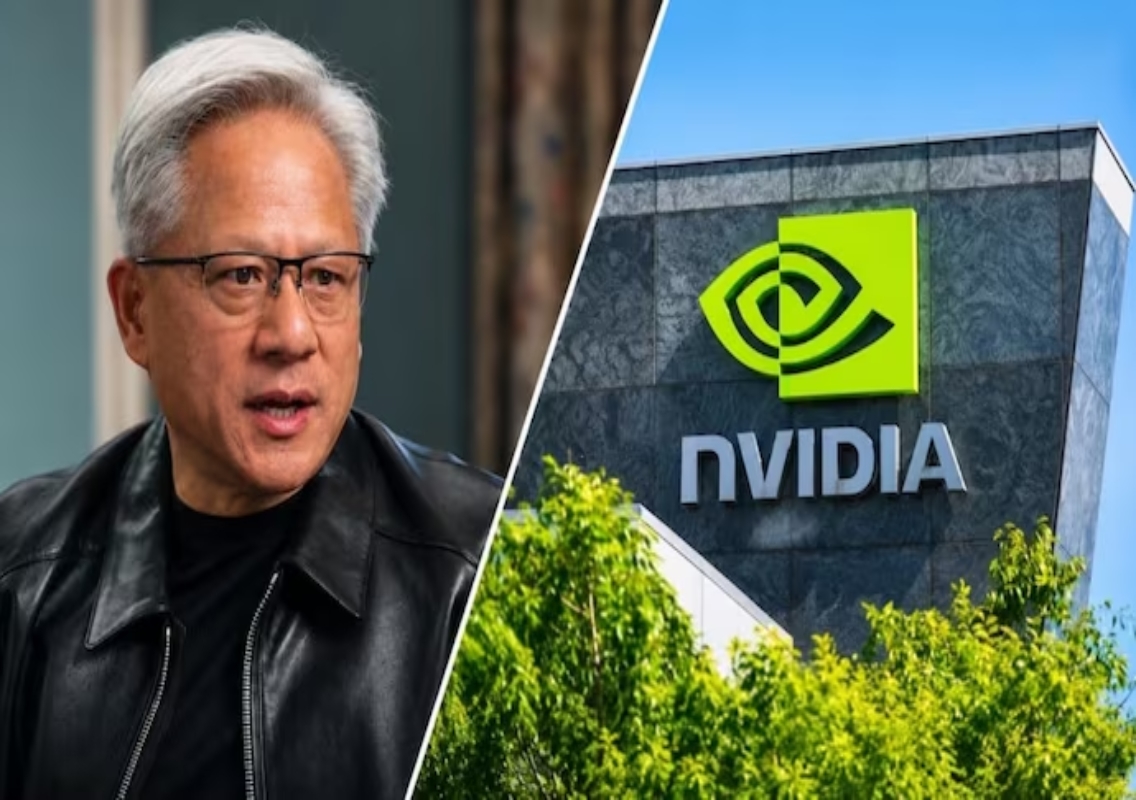


New Delhi: A discussion on Nvidia’s internal employee suggestion platform calling for the company’s board to consider staff views on Jensen Huang’s leadership has attracted more than 1,600 comments, with many employees reportedly urging the company to give its former chief executive a second chance.
The development comes after Huang resigned as Nvidia’s president, CEO and board member on November 12, following scrutiny over reports of extramarital relationships and questions surrounding national security concerns. The company has appointed Chief Financial Officer Colette Kress as interim CEO while its board searches for a permanent successor.
The internal discussion began with a post submitted by a long-serving Nvidia engineer before Huang’s resignation. The employee had asked the board to consider the views of staff before making a decision about the chief executive’s future.
After Huang stepped down, the post attracted more than 1,600 comments. Several contributors reportedly called for the board to reconsider his departure and explore the possibility of bringing him back.
The discussion highlights the uncertainty inside Nvidia following the sudden exit of the executive who led the company from its founding in 1993.
Nvidia employees call for a second chance
The original internal post was not simply a demand to reinstate Huang. It called on the board to share the findings of its investigation with employees and formally seek their views on whether he should continue as CEO.
However, following his resignation, the discussion reportedly shifted towards support for his return.
One anonymous employee wrote: “If you believe in the mission, bring back THE boss,”. Another argued that people could make mistakes and that Huang deserved another opportunity because of his contributions to the company.
A separate employee reportedly sent an email to the entire workforce demanding greater transparency about the circumstances surrounding Huang’s departure.
The staff member expressed support for the former CEO while arguing that backing his leadership did not mean treating him as infallible. The message called for fairness and a clearer explanation of the events that led to his exit.
The more than 1,600 comments indicate considerable engagement with the issue among employees who participated in the internal discussion. However, the figure does not represent 1,600 individual employees or a formal company-wide vote. Nor does it establish that the entire Nvidia workforce supports Huang’s reinstatement.
Employees reportedly surprised by sudden exit
Huang’s resignation appears to have caught some employees off guard. Several staff members had expected the board to complete its investigation and consult employees before making a major leadership decision.
The internal suggestion-box post itself had asked the board to communicate its findings and seek staff sentiment about Huang continuing as CEO.
Instead, Huang resigned while the inquiry was under way. The departure prompted questions among employees about the reasons behind the timing and the board’s decision-making process.
Approximately two dozen Nvidia employees posted messages supporting Huang on LinkedIn in the period following his departure. The publication said it had not identified posts from Nvidia employees publicly supporting his resignation during the same period.
These accounts provide a picture of some employees’ reactions, but they should not be interpreted as a comprehensive assessment of sentiment across Nvidia’s global workforce.
Nvidia and its newly appointed board chairman, Harvey C. Jones, had not immediately responded to WIRED’s requests for comment on the internal discussion at the time of its report.
What led to Jensen Huang’s resignation?
Huang’s departure followed a series of reports about his personal relationships and concerns raised over a possible foreign intelligence effort.
On November 8, Huang sent an email to Nvidia employees acknowledging that he had been unfaithful to his wife and apologising to his family and colleagues. He accepted responsibility for his actions and said he would cooperate with the company’s independent investigation into national security concerns raised by media reports.
The Nvidia board had announced an independent inquiry on November 8 after reports suggested that Huang had been the target of a foreign intelligence effort. The company said at the time that it had no reason to believe that its secrets or US national security had been compromised, but that the investigation would examine the available information.
Some reports linked the controversy to Alice Huang, a Singapore-based businesswoman associated with Megaspeed International, which reportedly purchased Nvidia hardware for Chinese clients. Allegations concerning possible links to Chinese intelligence remain allegations and have not been established as proven facts.
Separate media reports also alleged relationships involving Nvidia employees. These claims have contributed to scrutiny of Huang, but they should not be treated as independently established findings.
On November 12, Nvidia officially announced that Huang had resigned from all three positions with immediate effect. The company did not publicly attribute the resignation to a single specific allegation in its transition announcement.
Colette Kress takes charge as interim CEO
Following Huang’s departure, Nvidia appointed Colette Kress, who has served as the company’s executive vice-president and chief financial officer since 2013, as interim CEO.
Kress will continue to oversee the finance function while taking on the additional leadership responsibility. The board has begun searching for a permanent chief executive and said it would consider both internal and external candidates.
Harvey C. Jones, a longtime Nvidia investor, was appointed the company’s first-ever chairman of the board.
The leadership transition marks a major change for Nvidia. Huang co-founded the company in 1993 and spent more than three decades building it into a leading supplier of graphics processors and artificial intelligence computing hardware.
His departure comes at a time when Nvidia plays a central role in the global AI industry, making the leadership question important not only for employees but also for investors, customers and technology partners.
Will Nvidia consider bringing Huang back?
The internal comments have created visible pressure for the board to explain its decision and consider employee sentiment. However, there is no public indication that Nvidia’s directors have agreed to reverse Huang’s resignation or are formally considering his reinstatement.
The board has already announced a search for a permanent CEO, with Kress serving in the interim. Any change to that transition would require a decision by the company’s directors.
The employee discussion also raises a broader question about how companies balance the contributions of a founder with governance responsibilities and investigations involving senior leadership.
For Nvidia, the immediate priorities are likely to include maintaining operational continuity, completing the independent investigation and reassuring employees and business partners during the leadership transition.
The more than 1,600 comments show that Huang continues to have supporters inside the company. Whether that sentiment influences the board’s decisions remains uncertain.