


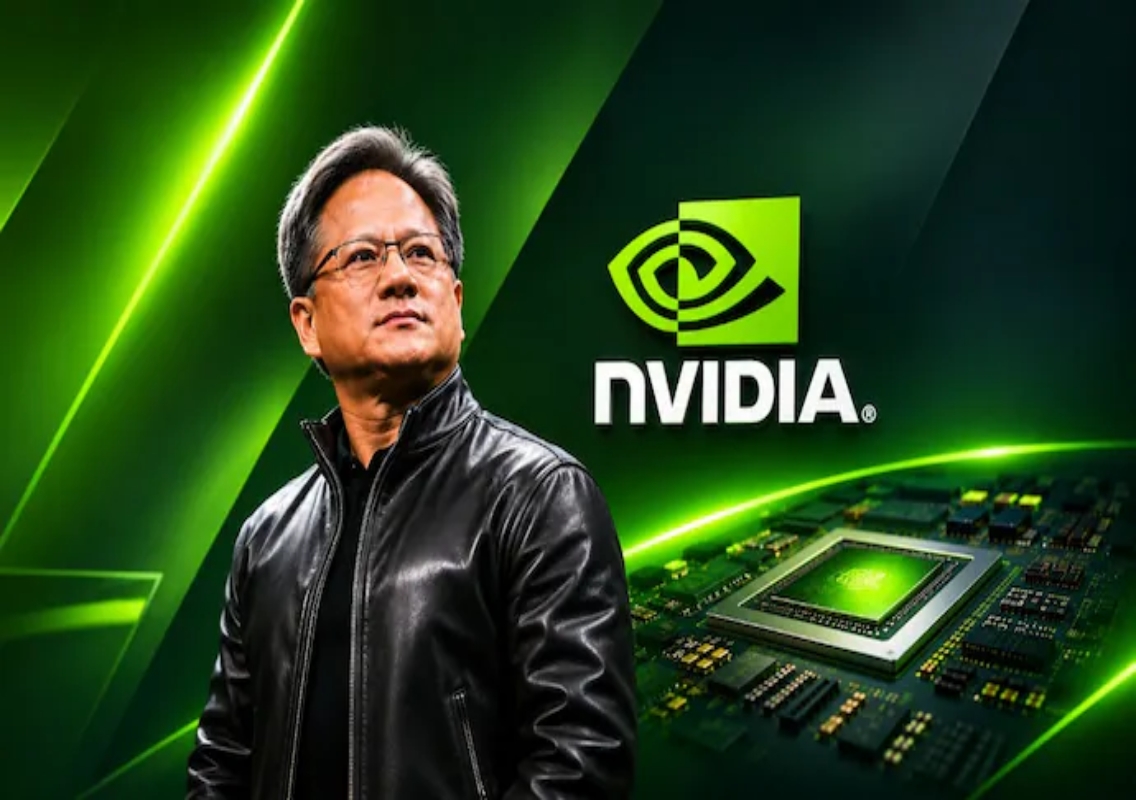


New Delhi: Nvidia has begun searching for a permanent chief executive after co-founder Jensen Huang resigned from his positions as president, CEO and board member on November 12, following mounting controversy over reports of two extramarital relationships, including one involving a businesswoman suspected by US authorities of having links to Chinese intelligence.
The company’s board announced that Chief Financial Officer Colette Kress would take over as interim CEO while the search for a permanent successor continued. The board said it would consider both internal and external candidates.
The leadership change marks the end of Huang’s 33-year tenure at the company he co-founded in 1993. His departure comes at a particularly important time for Nvidia, which has become one of the world’s most influential suppliers of artificial intelligence chips.
The controversy has also unsettled investors, with Nvidia shares facing significant selling pressure amid concerns about leadership continuity, corporate governance and the company’s exposure to US-China technology tensions.
Why did Nvidia begin searching for a new CEO?
Reports about Huang’s personal relationships triggered scrutiny of his leadership and raised questions about potential conflicts involving Nvidia’s business interests.
One of the reported relationships involved Alice Huang, a Singapore-based business executive associated with Megaspeed International, a company involved in cloud computing and AI infrastructure. US authorities reportedly suspect that she may have links to Chinese intelligence.
The US Justice Department has not concluded that Alice Huang was a spy. The allegations remain subject to investigation and should not be treated as established findings.
A separate report also alleged a relationship between Jensen Huang and Kimberly Powell, an Nvidia executive. The reports intensified pressure on the company’s board to examine the circumstances and their possible implications for the business.
Nvidia’s board had reportedly considered Huang’s future before his resignation. Reuters reported that directors met on November 11 to discuss the situation, marking a significant development after the board had earlier expressed confidence in Huang and the company’s leadership team.
Colette Kress takes charge as interim CEO
Colette Kress, who joined Nvidia in September 2013, has been appointed interim chief executive. She will continue to serve as the company’s CFO while overseeing operations during the transition.
Kress has played a central role in Nvidia’s financial management during its transformation into a major AI technology company. Her responsibilities have included financial planning, investor relations and managing the company’s financial strategy during a period of rapid expansion.
The board has also appointed Harvey C. Jones as Nvidia’s first-ever chairman. Jones is a longtime board member and former chief executive of Synopsys.
The company said the search for a permanent CEO would include both internal and external candidates. No permanent successor had been announced in the company’s November 12 statement.
The transition will be closely watched because Huang had been the public face of Nvidia for more than three decades. His leadership helped transform the company from a graphics-chip manufacturer into a major supplier of processors and computing systems used in artificial intelligence development.
Nvidia shares face pressure amid investor uncertainty
The leadership crisis has weighed on Nvidia’s stock as investors assess the implications of Huang’s departure.
The shares had fallen between 4% and 8% in extended trading following the latest developments, while the stock had lost a substantial portion of its value during the controversy.
Nvidia shares fell 4.3% on November 12 after Huang’s resignation was announced. The stock had also experienced considerable volatility in the preceding sessions as reports about the board’s deliberations and the allegations emerged.
The market reaction reflects concerns about more than the departure of an individual executive. Nvidia’s position in the AI industry is closely associated with its product strategy, customer relationships and ability to maintain its technological lead.
Huang’s departure therefore raises questions about how the company will manage its next phase of growth and whether the new leadership structure will maintain continuity in its strategic decisions.
China connection raises questions about chip exports
The controversy has also drawn attention to Nvidia’s business dealings involving China and the US restrictions on advanced semiconductor exports.
The reported relationship involving Alice Huang has attracted scrutiny because of her association with Megaspeed International and allegations concerning access to advanced Nvidia processors.
US authorities have been examining whether restricted AI chips were diverted to China through intermediaries or overseas infrastructure arrangements. The allegations have raised wider questions about export-control enforcement and the security implications of advanced computing technology.
However, the existence of an investigation does not establish that Nvidia or Huang knowingly violated export regulations. The company and the individuals involved have denied wrongdoing, according to reports.
The issue is particularly sensitive because Washington has sought to limit China’s access to advanced AI computing hardware, citing national security concerns. Any evidence of illegal diversion could have implications for the wider semiconductor industry and international technology trade.
What lies ahead for Nvidia?
Nvidia’s immediate priority will be to ensure operational continuity while the board identifies a permanent chief executive. The company must also maintain confidence among investors, employees, customers and business partners during the leadership transition.
Its upcoming quarterly earnings announcement, scheduled for November 17, will provide another important opportunity for investors to assess the company’s financial performance and business outlook under the interim leadership.
Kress is expected to play a prominent role in communicating the company’s financial position and strategy during the transition.
The challenge for Nvidia is to separate the management crisis from its wider business operations. Demand for AI computing infrastructure remains a major driver of the semiconductor industry, and the company faces continuing competition from other chipmakers.
The board’s choice of a permanent successor will therefore be important not only for Nvidia’s governance but also for its long-term technology strategy. For now, Kress will lead the company as Nvidia begins the process of replacing the only chief executive it has had since its founding.