







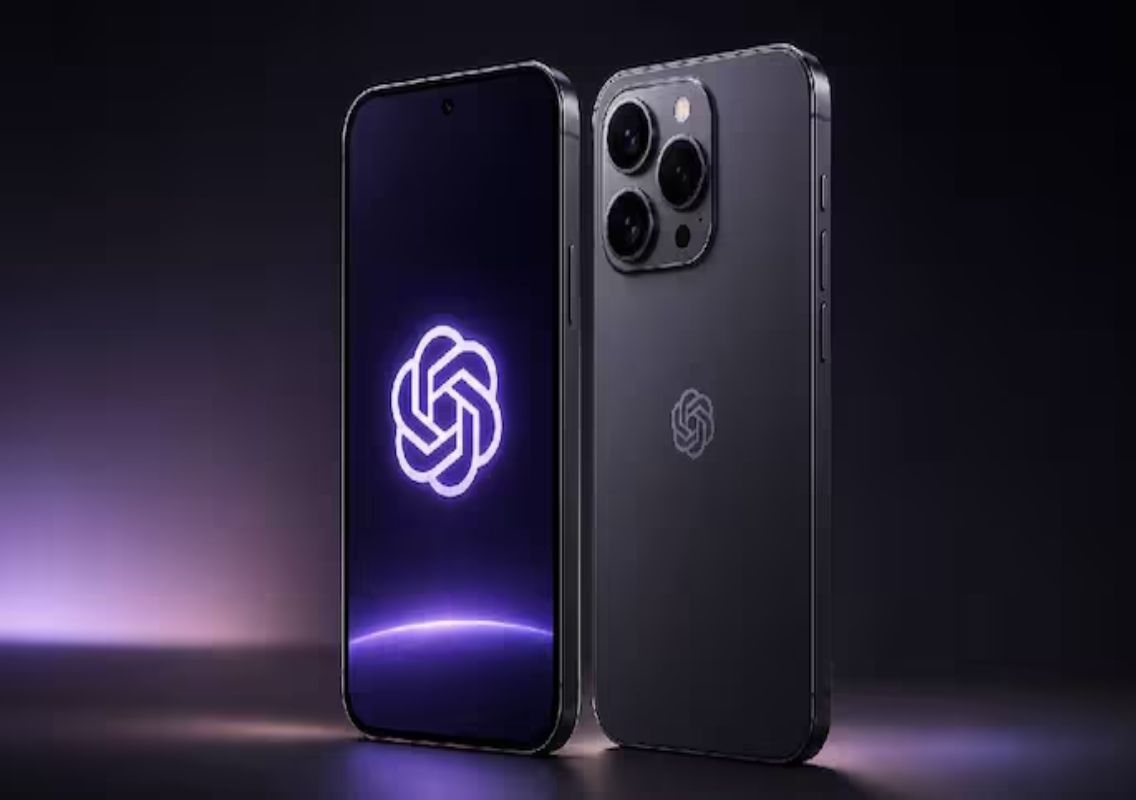


San Francisco: OpenAI is reportedly preparing to enter the smartphone market with an ambitious plan to build an AI-first device, potentially challenging industry leaders such as Apple and Samsung Electronics.
According to insights shared by analyst Ming-Chi Kuo on X, OpenAI is working with chipmakers MediaTek and Qualcomm to develop smartphone processors tailored for advanced artificial intelligence capabilities. The company has also reportedly partnered with Luxshare as its exclusive system co-design and manufacturing partner, with mass production expected to begin by 2028.
Shift towards AI-first smartphones
OpenAI’s reported entry into hardware signals a major shift in how smartphones could evolve in the coming years. While recent smartphone upgrades have largely been incremental, the company appears to be aiming for a fundamental transformation.
At the core of this effort is the concept of an “agentic” smartphone — a device powered by AI agents capable of performing tasks on behalf of users. Instead of manually navigating multiple apps, users would rely on AI to interpret their intent and execute actions seamlessly.
This approach could redefine smartphones as systems that prioritise outcomes rather than applications, fundamentally changing how users interact with their devices.
Why OpenAI is entering hardware
The move into smartphones may seem unexpected given OpenAI’s lack of experience in hardware manufacturing. However, several strategic reasons underpin this decision.
Firstly, controlling both hardware and software would allow OpenAI to deliver a tightly integrated AI experience. Unlike traditional smartphones where AI features are layered on top of existing systems, an AI-native device could be designed from the ground up for intelligent interactions.
Secondly, smartphones provide continuous access to real-time user data such as location, activity, and preferences, making them ideal platforms for contextual AI.
Finally, smartphones remain the largest consumer device category globally, with an estimated 300–400 million high-end units sold annually. This scale makes them a crucial platform for deploying AI technologies at mass adoption levels.
How the device could work
The proposed OpenAI smartphone is expected to rely on a hybrid AI architecture that combines on-device processing with cloud-based computation.
On-device AI would handle tasks requiring real-time responsiveness and privacy, such as understanding user context and executing simple commands. This would require efficient processor design, optimised memory usage, and lightweight AI models.
More complex tasks, such as large-scale computations or advanced reasoning, would be processed in the cloud. This balance would help maintain performance while preserving battery life — a critical factor in mobile devices.
Such an approach reflects a broader industry trend towards distributed AI systems, where workloads are shared between local hardware and remote servers.
Role of MediaTek and Qualcomm
The involvement of MediaTek and Qualcomm highlights the importance of specialised chip design in enabling next-generation AI devices.
Both companies bring extensive experience in mobile processors, which will be essential in creating chips capable of supporting continuous AI workloads. These processors are expected to prioritise energy efficiency, real-time processing, and seamless integration with AI models.
Specifications for the device are likely to be finalised by late 2026 or early 2027, giving partners time to align on performance and manufacturing requirements.
Opportunity for Luxshare
For Luxshare, the collaboration represents a significant opportunity to strengthen its position in the global electronics manufacturing ecosystem.
The company has long aimed to compete with major suppliers in the smartphone supply chain. Securing a key role in OpenAI’s hardware initiative could elevate its standing, particularly if AI-driven smartphones trigger a new wave of upgrades across the industry.
Potential impact on the smartphone market
If successful, OpenAI’s entry could disrupt a market currently dominated by Apple and Samsung. The introduction of AI agent-led experiences may push competitors to rethink their own strategies and accelerate innovation.
The concept of replacing app-based navigation with AI-driven execution could also reshape software ecosystems, potentially creating new opportunities for developers and service providers.
Additionally, OpenAI could explore new business models, such as bundling hardware with subscription-based AI services, further differentiating its offering.
Conclusion
While still in the early stages, OpenAI’s reported smartphone project signals a bold attempt to redefine the future of mobile technology. By focusing on AI as the primary interface, the company aims to move beyond incremental improvements and introduce a fundamentally new user experience.
If realised, the AI-first smartphone could mark the beginning of a new era where devices are not just tools, but intelligent agents capable of understanding and acting on user intent — potentially reshaping the global smartphone landscape.