









Bengaluru: Home services startup Pronto is facing growing scrutiny after reports suggested the company may be exploring the use of household activity data to train artificial intelligence and robotics systems, sparking serious concerns around privacy, consent and surveillance inside private homes.
According to a report by Entrackr, Pronto, which offers on-demand domestic services such as cleaning, laundry assistance, utensil washing and gardening support, could be building a large-scale data collection ecosystem tied to Physical AI and robotics training.
The report cites investor documents allegedly reviewed from Glade Brook Capital, which reportedly stated that Pronto aims to “formalise India’s vast informal labour markets and in the process generate data to help train physical AI and robotics.”
The revelation has intensified debates about how technology companies collect and use consumer data, especially when that data comes directly from inside personal living spaces.
Household work may become AI training material
As per the report, Pronto is experimenting with methods to gather household workflow data that can help robotics systems learn domestic tasks in real-world environments.
The company reportedly confirmed conducting a limited pilot programme where customers voluntarily agree to allow certain jobs to be recorded. Under the pilot, workers may carry small outward-facing cameras that capture tasks being performed during service visits.
Customers reportedly receive access to the footage afterwards, while the startup claims the recordings are intended to train AI systems capable of performing activities such as washing utensils, folding clothes and navigating cluttered indoor spaces.
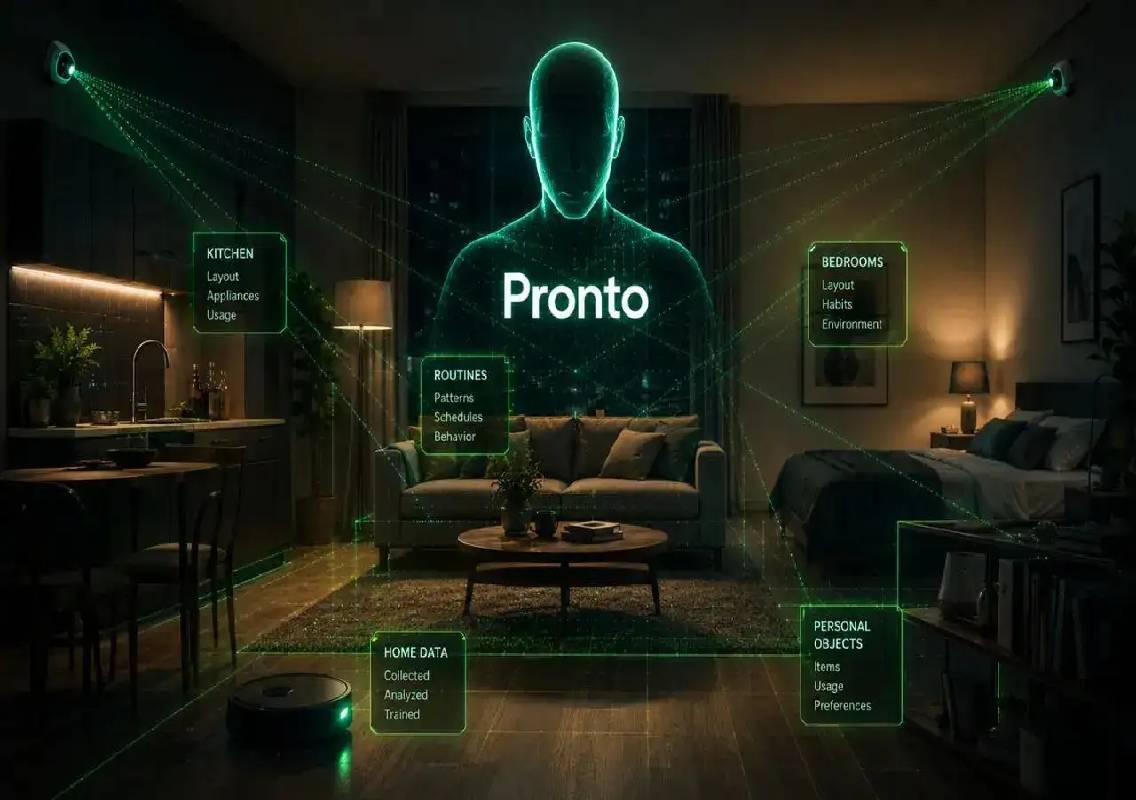
Unlike conventional digital data collection involving online browsing or app usage, the concern here revolves around cameras operating inside homes. This potentially includes footage of kitchens, bedrooms, furniture layouts, daily routines and personal belongings becoming part of machine-learning datasets.
The report further claimed that investor firm Glade Brook Capital stated Pronto is already “piloting real world training data with leading physical AI labs.”
Privacy and consent concerns emerge
Although Pronto has reportedly described the programme as strictly opt-in, privacy experts believe the situation raises broader legal and ethical questions.
The company claims faces and personally identifiable information are automatically blurred and that all footage is deleted within 48 hours. However, critics argue that the issue extends beyond temporary storage or visual anonymity.
Legal experts point to India’s Digital Personal Data Protection Act, which requires user consent to be specific, informed and purpose-driven. Observers argue there is a significant difference between consenting to recordings for service monitoring and consenting to household activities being used to train AI and robotics systems.
That distinction could become central if such practices expand commercially in the future.
Questions are also being raised about ownership and control of the collected data. Critics are asking whether users fully understand the long-term implications of agreeing to recordings and whether such data could eventually be shared with third-party robotics or AI firms.
Some privacy advocates argue that domestic environments contain uniquely sensitive information that may be difficult to truly anonymise, even with blurred visuals and limited storage periods.
Growing investor focus on Physical AI
The developments come at a time when global technology investors are increasingly shifting focus toward robotics and Physical AI following the rapid growth of generative AI platforms.
Unlike text-based AI systems, robotics models require exposure to real-world physical environments and repetitive human actions to improve performance and functionality.
This has significantly increased the value of real household behavioural data for companies developing next-generation robotics systems.
According to the report, Pronto currently handles more than 25,000 orders daily. Analysts believe that even limited recording pilots at such operational scale could generate massive datasets useful for AI training.
Industry experts say startups operating in domestic services may become attractive partners for robotics firms seeking access to real-world behavioural information.
Debate over worker participation and data ethics
Pronto has reportedly defended its larger vision by saying the initiative could allow workers to “participate in the AI economy directly.”
Supporters of such projects argue that structured data collection may eventually help create advanced domestic robotics systems capable of reducing repetitive labour and improving efficiency.
However, critics warn there is a fine line between participation and exploitation, especially when sensitive household activities are involved.
Digital rights advocates are likely to push for stronger safeguards, clearer disclosures and transparent user agreements if similar AI training initiatives continue expanding within India’s rapidly growing home services industry.
The controversy surrounding Pronto also highlights a wider global debate about how far technology companies should go in collecting intimate real-world data to build future AI systems.