







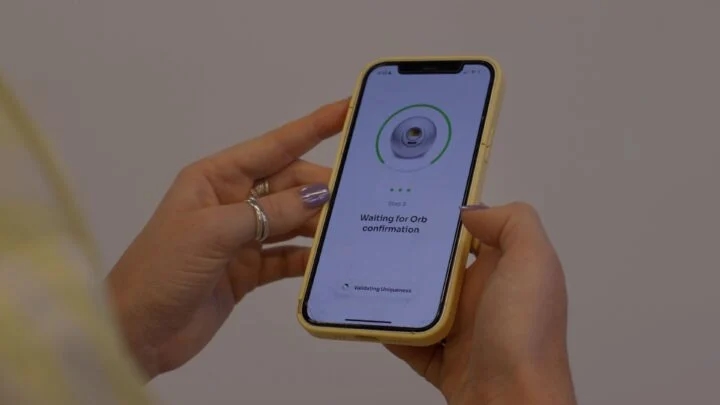


World, the biometric identity verification project co-founded by OpenAI CEO Sam Altman, has unveiled a major update to its app, introducing end-to-end encrypted messaging and an expanded crypto-based payment system, as the platform seeks wider global adoption amid growing concerns over AI-driven digital impersonation.
The updated version of the app was announced at a small gathering at World’s headquarters in San Francisco on Thursday, where Altman and Alex Blania, co-founder and CEO of Tools for Humanity, outlined the vision behind what developers are now calling a “super app”.
Building ‘proof of human’ in an AI era
World was created in 2019 by the startup Tools for Humanity and publicly launched its app in 2023. The project aims to offer a digital proof-of-human system, allowing platforms and individuals to distinguish real people from bots and AI-generated identities.
“It’s really hard to both identify unique people and do that in a privacy-preserving way,” Altman said, explaining that the idea for World emerged from discussions on the need for new economic and identity models in a web3-driven future.
The core of World’s system is its World ID, a digital identity created after a user’s iris is scanned and converted into a unique, encrypted code.
World Chat brings encrypted messaging
One of the headline additions is World Chat, an in-app messaging service that uses end-to-end encryption, which the company says is comparable to privacy-focused platforms such as Signal.
A key feature of World Chat is colour-coded chat indicators, which inform users whether the person they are messaging has been verified through World’s authentication system. According to the company, this is designed to encourage verification while giving users greater confidence about who they are communicating with.
World Chat was first introduced in beta in March and has now been rolled out more broadly as part of the latest update.
Expanded crypto wallet and payments
The updated app also significantly expands World’s digital wallet functionality. While the app already supported crypto storage, users can now:
- Send and receive cryptocurrency more easily
- Request payments in a Venmo-like interface
- Receive salaries directly into virtual accounts
- Transfer funds from linked bank accounts and convert them into crypto
Importantly, users do not need to be World ID-verified to access these payment features, lowering the entry barrier for new users.
A more social ‘World’ experience
Tiago Sada, World’s Chief Product Officer, said the addition of messaging was driven by user feedback.
“What we kept hearing was that people wanted a more social World app,” Sada said, describing World Chat as a secure alternative to mainstream messengers such as WhatsApp or Telegram, but with stronger privacy protections.
How World ID works
World’s identity verification process involves scanning a person’s iris using the company’s Orb, a spherical device that generates a unique digital identity while discarding raw biometric data, according to the company.
The verified World ID can then be used across the World ecosystem and potentially integrated into third-party services in the future.
Originally branded as Worldcoin, the project has attracted both interest and controversy over privacy, consent, and data security, particularly in developing countries.
Scaling remains the biggest challenge
Altman has previously stated that he hopes the project will eventually verify one billion people worldwide. However, Tools for Humanity says it has so far verified fewer than 20 million users.
To address concerns about accessibility, the company announced Orb Minis in April — smaller, handheld devices that allow users to scan their own eyes without visiting a company facility. Blania has indicated that these devices could eventually be adapted into mobile point-of-sale systems or licensed to device manufacturers.
Implications for India and beyond
For India, where digital identity systems like Aadhaar are already deeply embedded in daily life, World’s approach represents a very different, decentralised model focused on global identity and AI-era trust rather than state-backed verification.
As AI-generated content becomes more sophisticated, tools that claim to verify “real humans” are likely to attract both adoption and scrutiny. Whether World’s expanded app can strike the right balance between privacy, usability, and trust will determine how far it scales — especially in populous, digitally active markets like India.