







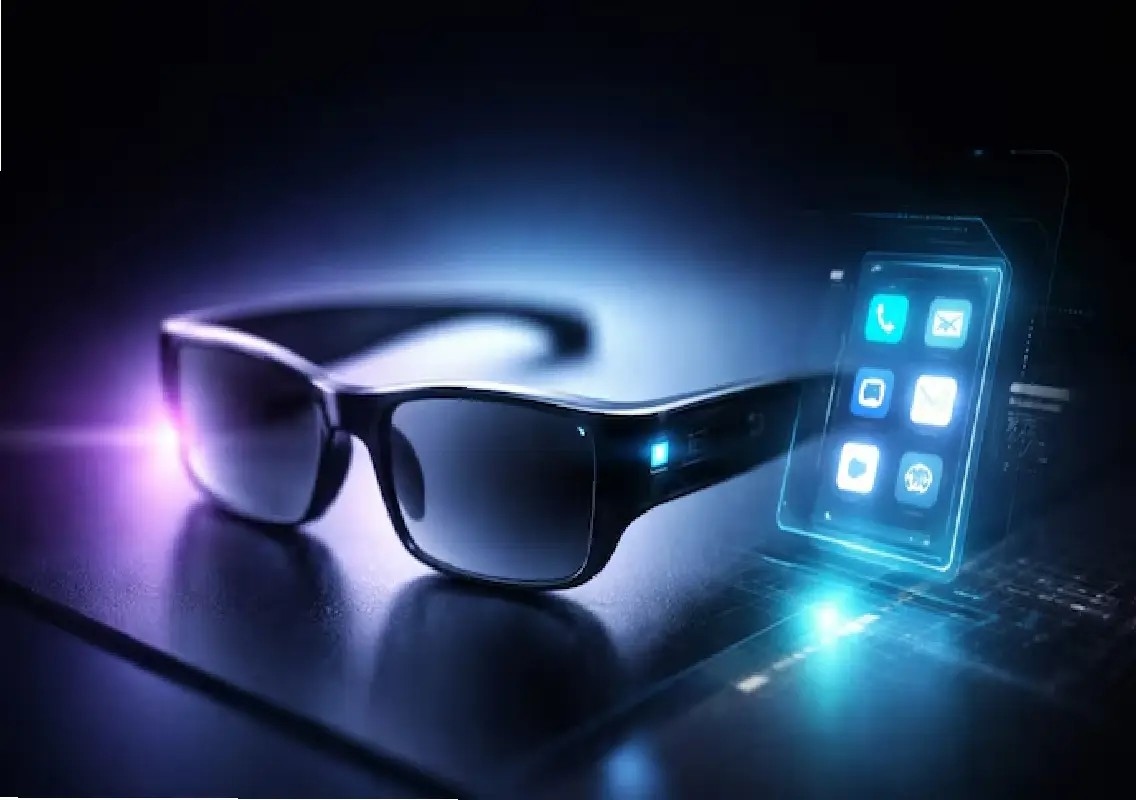


As competition intensifies in the global smart glasses market, Samsung is reportedly preparing to enter the segment with a new device codenamed “Jinju”. The move comes at a time when major players like Apple and Google are also gearing up to launch their own extended reality (XR) products, while Meta currently leads the space.
Leaks hint at Ray-Ban-style design
According to a report by Android Authority, leaked images suggest that Samsung’s upcoming smart glasses could closely resemble Ray-Ban Meta smart glasses. The Jinju model is expected to follow a similar design philosophy, potentially offering a lightweight, stylish wearable rather than a bulky headset.
The device could launch as early as later this year, aligning with Samsung’s recent XR product timelines. Pricing is expected to range between $379 and $499 (approximately ₹35,800 to ₹47,200), making it competitive in the emerging category.
Premium model planned for 2027
The report also points to a more advanced version, codenamed “Haean”, which may debut in 2027. This premium model is expected to feature a micro-LED display, offering enhanced visual capabilities compared to the base variant.
The Haean model could be priced between $600 and $900 (around ₹56,700 to ₹85,100), placing it in a higher-end segment of the market.
Hardware and features (expected)
If leaks are accurate, the Jinju smart glasses may be powered by Qualcomm’s Snapdragon AR1 processor and include a 12-megapixel Sony IMX681 camera. Other expected specifications include:
- 155mAh battery
- Wi-Fi and Bluetooth 5.3 connectivity
- Directional audio with possible bone-conduction technology
- Lightweight design at around 50 grams
- Photochromic lenses
Notably, the Jinju model is likely to launch without a built-in display, similar to Meta’s current generation smart glasses.
Android XR and Gemini integration
Samsung’s smart glasses are expected to run on Android XR, a platform co-developed with Google. This system is already being used in Samsung’s Galaxy XR headset, indicating a broader ecosystem strategy.
A key highlight could be the integration of Google Gemini, enabling voice-based interactions and AI-driven features. Users may be able to:
- Capture photos using voice commands
- Access real-time translation
- Get weather updates
- Navigate using maps
Google’s earlier XR prototypes suggest that the interface could revolve heavily around Gemini, with limited but essential app support such as Maps and Photos.
Launch timeline still uncertain
While there is no official confirmation from Samsung, industry watchers expect a possible preview at upcoming events like Google I/O or Samsung’s Unpacked event later this year. A full commercial release may follow a few months later, similar to the rollout strategy used for its XR headset.
Conclusion
Samsung’s potential entry into the smart glasses market signals growing momentum in the XR space. With strong competition from global tech giants and increasing integration of AI tools like Gemini, the segment is poised for rapid innovation.
If the leaks hold true, Samsung’s Jinju glasses could offer an accessible entry point for consumers, while the Haean model may cater to premium users seeking advanced features. The coming months will be crucial in determining how the competition shapes up in this evolving market.