


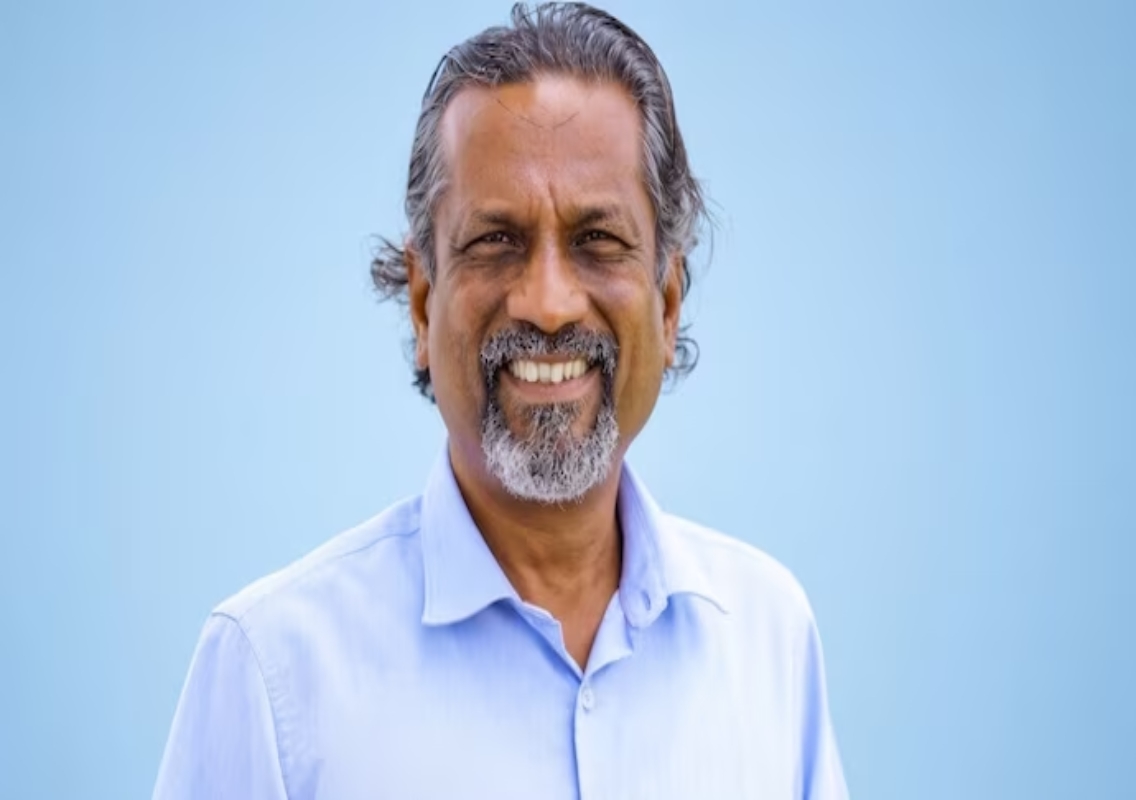


New Delhi: Zoho founder Sridhar Vembu has signalled that the company will avoid major artificial intelligence (AI) infrastructure investments for now, warning that the current AI boom may be driven partly by speculative spending rather than sustainable business demand.
Vembu said Zoho would continue investing in foundational AI research and development (R&D), but would wait for market conditions to become more stable before committing substantial capital to infrastructure. His remarks come as technology companies around the world invest heavily in data centres, computing chips and other resources needed to develop and operate AI systems.
Responding to a post by American venture capitalist Chamath Palihapitiya on X, Vembu explained that Zoho has generally avoided business strategies that depend on large financial bets funded by external capital.
“As a rule, we have stayed away from monster-bets-on-other-people’s-money approach to business,” Vembu wrote.
He added that the company was continuing its AI research efforts but would wait for what he described as a less “bubblicious” period before making major infrastructure investments. The comments indicate a cautious approach to spending rather than a withdrawal from AI development.
Why Vembu is cautious about the AI boom
AI has attracted enormous investment from technology companies, venture capital firms and businesses seeking to integrate automated systems into their operations. The spending supports the development of large language models, AI assistants, coding tools and enterprise applications.
However, the financial returns from these investments remain a subject of debate. Building and operating advanced AI systems requires substantial computing power, specialised processors, memory, electricity and data-centre capacity. Companies must eventually generate enough revenue or productivity gains to justify these costs.
Vembu’s position reflects concern that businesses could commit too much capital before the long-term commercial value of their investments becomes clear. His comments distinguish between investing in the technology itself and spending heavily on the infrastructure required to support it at scale.
The Zoho founder has previously expressed concerns about the financial risks associated with the AI investment cycle. His latest remarks suggest the company intends to preserve its ability to develop AI capabilities while avoiding major capital commitments during a period of uncertainty.
This approach could allow Zoho to assess how AI demand develops before making long-term infrastructure decisions. It does not, however, establish that the AI market as a whole is in a bubble; that remains a contested assessment rather than a settled fact.
Chamath Palihapitiya questions the quality of AI spending
Vembu’s response followed comments from Palihapitiya, who questioned how sustainable the current level of AI spending would be if a substantial portion of the money came from companies that rely on venture capital.
Palihapitiya claimed that just 1 per cent of companies account for 90 per cent of AI spending. He further argued that 80 per cent of that spending comes from unprofitable companies backed by venture capital.
These figures were presented as part of his argument about the concentration and financing of AI expenditure. They should be understood as claims made by the investor, rather than independently established measurements of the entire AI market.
Palihapitiya also suggested that around 70 to 75 paise of every dollar spent on AI comes from AI companies using venture capital funding. His concern is that spending by companies dependent on external financing may not provide the same evidence of durable demand as expenditure from profitable businesses paying for services from their own operating revenue.
He compared the current situation with the early years of cloud computing, when venture-backed start-ups were among the customers driving demand for services such as Amazon Web Services (AWS).
The comparison raises a question for the AI industry: whether the present investment cycle will translate into recurring customer spending and sustainable earnings once funding conditions change.
For Vembu, these concerns appear to reinforce the case for keeping Zoho’s infrastructure spending measured while continuing to build its technical capabilities.
Zoho plans to continue AI research
Despite his concerns about the investment environment, Vembu has not indicated that Zoho intends to step away from AI research. Instead, he has drawn a distinction between foundational R&D and large-scale infrastructure expenditure.
Foundational research can include developing methods, models and technical capabilities that improve how AI systems operate. Infrastructure investments, by contrast, can involve significant commitments to computing hardware, data centres and supporting facilities.
By maintaining its research programme while delaying major infrastructure spending, Zoho can continue working on AI without immediately matching the capital expenditure plans of larger technology companies.
This is particularly relevant as companies compete for access to processors, memory, electricity and data-centre capacity. Expanding infrastructure requires substantial planning and long-term financial commitments, while the pace of technological change can make it difficult to predict which systems and hardware will deliver the strongest returns.
Zoho’s approach suggests it wants to preserve flexibility until the commercial outlook becomes clearer. The company has not announced a blanket suspension of AI investment, nor do Vembu’s comments establish a specific date by which major infrastructure spending will resume.
The strategy is therefore best understood as a wait-and-watch approach to capital expenditure, with continued investment in research and development.
Debate grows over returns from AI infrastructure
Vembu’s comments add to a wider debate about whether the rapid expansion of AI infrastructure can be justified by the revenue and productivity gains it ultimately delivers.
Technology companies are building data centres and investing in specialised chips to meet growing demand for AI training and inference. Inference refers to the process through which a trained model generates an answer or performs a task in response to an input.
Supporters of the investment boom argue that AI could transform software development, customer service, research and business operations. They expect wider adoption to create new revenue streams and improve productivity over time.
Sceptics, meanwhile, question whether all companies spending heavily on AI will achieve returns sufficient to cover their costs. If customer demand grows more slowly than expected, some infrastructure investments could take longer to become profitable.
These positions are not necessarily mutually exclusive. AI may deliver significant long-term benefits even if some companies overinvest or some projects fail to generate the expected returns.
For Zoho, the immediate priority appears to be balancing technological development with financial caution. The company’s decision to continue AI research while postponing major infrastructure bets reflects its stated preference for avoiding large, externally financed commitments during uncertain market conditions.
Vembu’s latest remarks underline an important distinction in the AI debate: confidence in the technology’s long-term potential does not automatically mean every investment being made in its name is financially sustainable.