







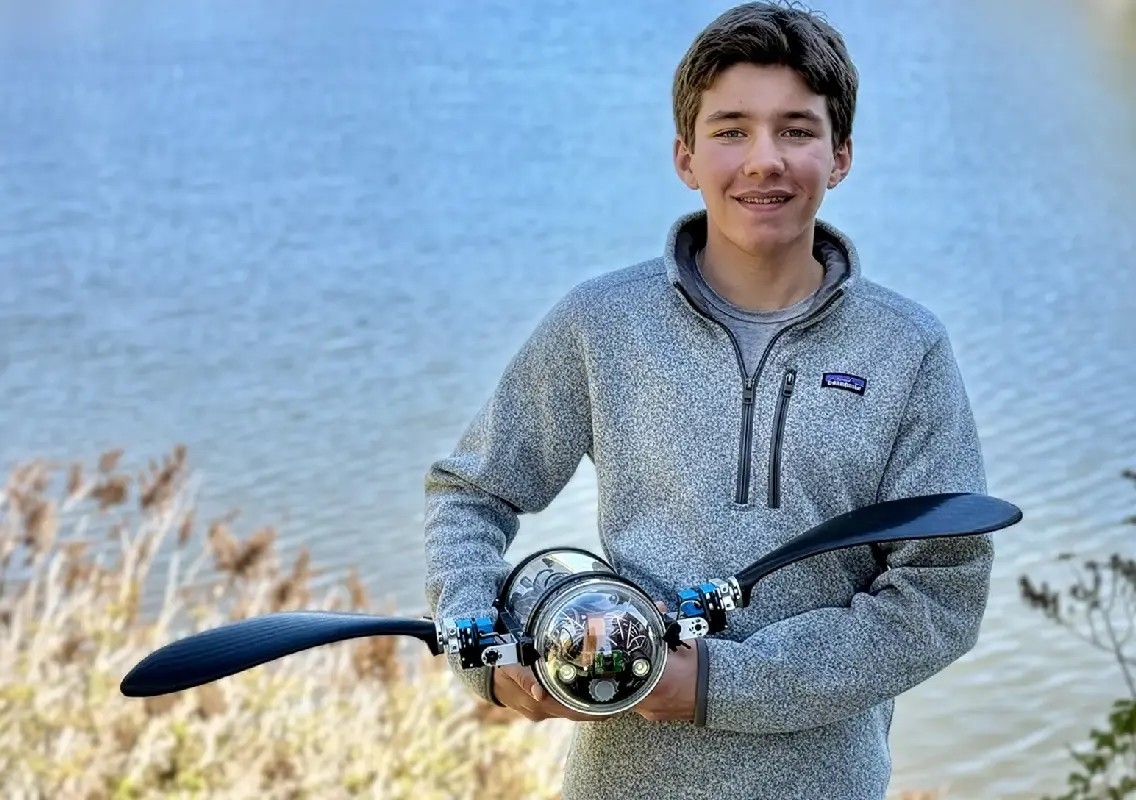


A 15-year-old student from Canada has captured global attention after developing an AI-powered robotic turtle designed to help scientists monitor fragile underwater ecosystems without harming marine life.
Evan Budz created the device, called BURT (Bionic Underwater Robotic Turtle), after observing how smoothly real turtles move underwater with minimal disturbance to their surroundings.
Robot inspired by real sea turtles
The autonomous robot mimics the swimming style of a green sea turtle and uses artificial intelligence to scan aquatic environments for ecological threats. During testing, the robot reportedly detected simulated coral bleaching with 96 per cent accuracy.
Unlike traditional underwater drones that use propellers, BURT moves using flippers, reducing damage to delicate marine ecosystems. The robot was designed using 3D printing technology and powered by a Raspberry Pi microcomputer.
The device also includes cameras, sensors, GPS navigation and obstacle detection systems to operate independently underwater.
Built in a backyard pool
Much of the robot’s testing reportedly took place in Evan’s grandparents’ swimming pool, where he created artificial coral reef models to train the AI system. The robot was later tested in Lake Ontario.
The young innovator has also developed a holographic imaging system capable of identifying microplastics in water using neural networks.
BURT earned first prize at the European Union Contest for Young Scientists in Latvia, where Evan received a €7,000 award for the project.
The invention is being praised online as an inspiring example of how young minds are combining artificial intelligence, robotics and environmental protection to solve real-world challenges.