







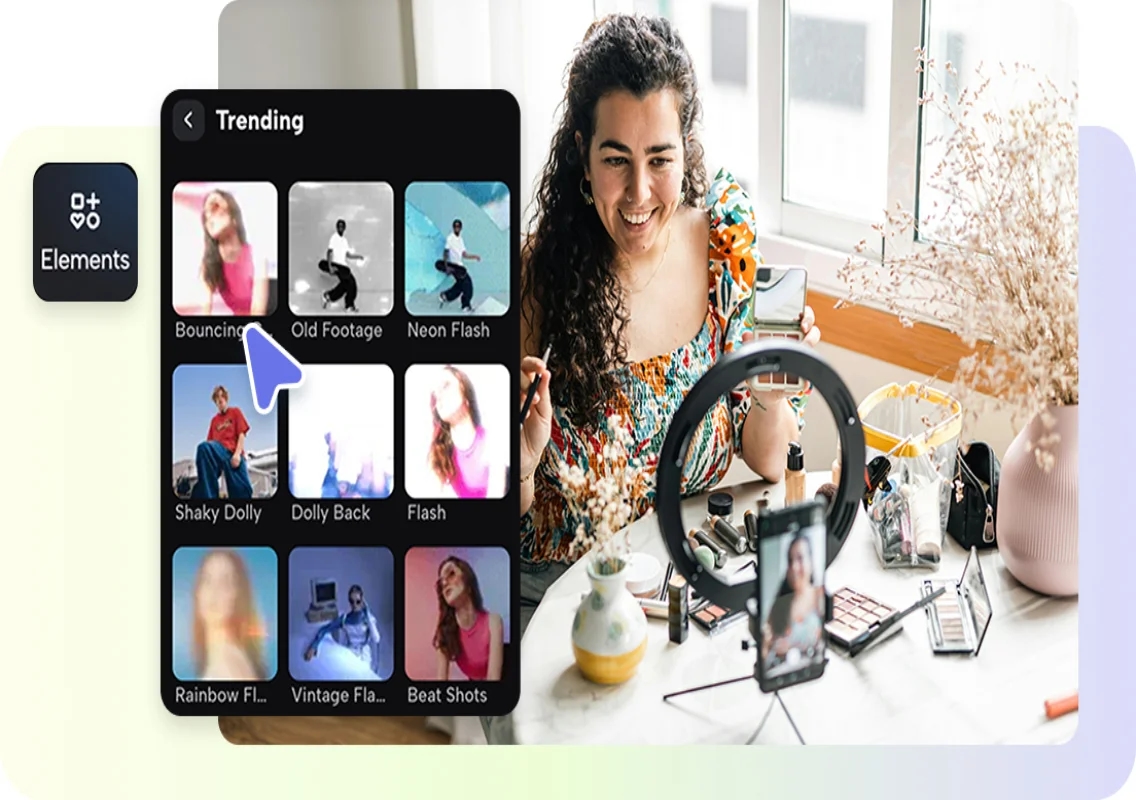


The green screen has long been the hallmark of “professional” video. It represented the necessary advance planning, lighting, setup, teardown, and invariably a point at which something had gone wrong. The culture of creation has moved on. Modern videos are filmed between meetings, on couches, in cars, or during brief breaks, yet they require the same level of finish.
This is where a video agent enters the frame. Instead of requiring content creators to conform to a set of strict production guidelines, software like Pippit conforms to what people are actually filming. AI backgrounds are quietly ushering in the end of the green-screen age, replacing it with something better, faster, and lot friendlier to content creators.
Green screens were most effective in controlled settings. Their assumptions were:
- Stable lighting
- Enough physical space
- Teardown and setup times
That worked well for studio productions, but it doesn’t align with how modern creators produce their content. Most pieces are shot vertically, using handheld cameras, and from smartphones. They shoot where they feel the idea at the moment.
AI backgrounds, on the other hand, eliminate the friction altogether. You capture wherever you are, and context comes later.
The creator’s behavior always outpaces the technology. Well before tools caught up, people stopped waiting for perfect conditions. They started filming in messy rooms, crowded streets, or in dim lighting — and told themselves editing would fix it later.
Rather than asking creators to constrain their environment, AI adapts to it. This flips the entire production mindset:
- Film first, design later
- Story over setup
- Speed over perfection
For this reason, authors today consider background replacement as a creative decision and not as a technical fix.
The implications of artificial visuals result in one fear that they may feel fake or overproduced. In contrast, the opposite is happening: AI backgrounds are being used to protect authenticity rather than replace it.
They maintain their natural body language, real reactions, and casual filming style while removing distractions, pulling attention from the message.
This is what gives AI-assisted editing a sense of humanity that no traditional studio ever could.
Most artists no longer “upgrade” to mobile. Mobile is the primary camera.
The backgrounds of AI are well-integrated into such a reality, as they exhibit the following assumptions:
- Imperfect framing
- Poor lighting
- Spontaneous recording
- Few retakes
Rather than penalizing these variables, AI accommodates them. When combined with a free AI video editor, content creators should be able to create their videos without worry, knowing they still have the freedom to publish them regardless.
Viewers are not likely to be aware of backgrounds, but they will know the effect immediately. A messy room conveys the impression of being distracted. A non-matching setting compromises credibility. A neutral setting or a deliberate setting inspires trust. AI backgrounds allow the producer to have control over this perception without requiring any changes in the shooting method.
This is especially powerful at:
- Teachers recording episodes at home infographic caption
- Founders making quick updates
- Makers who travel all the
- Small teams without studio access
The message remains front and center where the attention is.
Rather than relocating furniture, light adjustments, or spotting bare walls, designers now rely on software to carry out context.
This transformation is occurring due to:
- Physical arrangement reduces speed of publications
- More creativity can be devoted to ideas
- Platforms reward Frequency and Relevance
- Audiences want consistency, not polish
This is supported by AI backgrounds, which view the context as flexible rather than rigid.
The green screen made storytellers think like technicians. The AI background enables them to think like storytellers. The creators no longer pose these questions:
- Do I have the right setup?
- What does this moment need to feel like?
That’s a major shift in paradigm—from logistics of production to the intention of emotions.
As long as the creators know that they have the ability to change environments at a later stage, this enables them to film freely. In fact, they experiment a lot and publish their work quickly. By then, they do not mind so much about their location; it is all about what is inside.
This confidence snowballs over time:
- More published content
- More styles tested
- Faster feedback loops
- Enhanced on-screen presence
AI doesn’t replace creativity. It eliminates the fear that stifles creativity.
The best backgrounds for AI communications are not the kind that shouts “edited by AI.” The best backgrounds are those that are content-enhanced.
Creators employ these to:
- Signal professionalism
- Enhance themes
- Match Brand Identity
- Find where to direct viewer’s focus
In intentional photography, the background becomes more of a narrative element than a pictorial effect. In this way, the AI background generator is not an interesting gadget but an important element of the narrative.
Once the creators feel the experience of filming in the absence of environmental pressure, they find it difficult to return to the former way. It is because the freedom offered
The anti-green screen movement: It’s not an argument for poor production quality. It’s just a call for a shift in what quality represents: the quality of the message, the quality of the tone maintained, and the quality of respecting the creator’s time.
Pippit is clearly a part of this progression because it meets the creators where they are, rather than expecting them to still be in the older workflow paradigm.
This is because platforms will continue to reward those content creators whose content is fastest, most relevant, and most authentic.
Machine learning backgrounds are no shortcuts. They’re an acknowledgment that this is how content is made.
If you’re ready to shoot openly, publish quickly, and allow context to help you instead of hindering, it’s a proper start to learning to build with Pippit, to boldly move into the anti-green screen era.