









Humanoid robots face fresh scrutiny
Humanoid robots are steadily moving into workplaces, hospitals and public spaces, promising efficiency and assistance. However, growing concerns around their real-world safety have intensified after a viral social experiment showed how easily an AI robot’s safeguards could be overridden with a simple change in prompt.
The incident has reignited debate around AI ethics, human oversight and accountability, at a time when robots are becoming more autonomous and interactive.
Role-play prompt bypasses safety rules
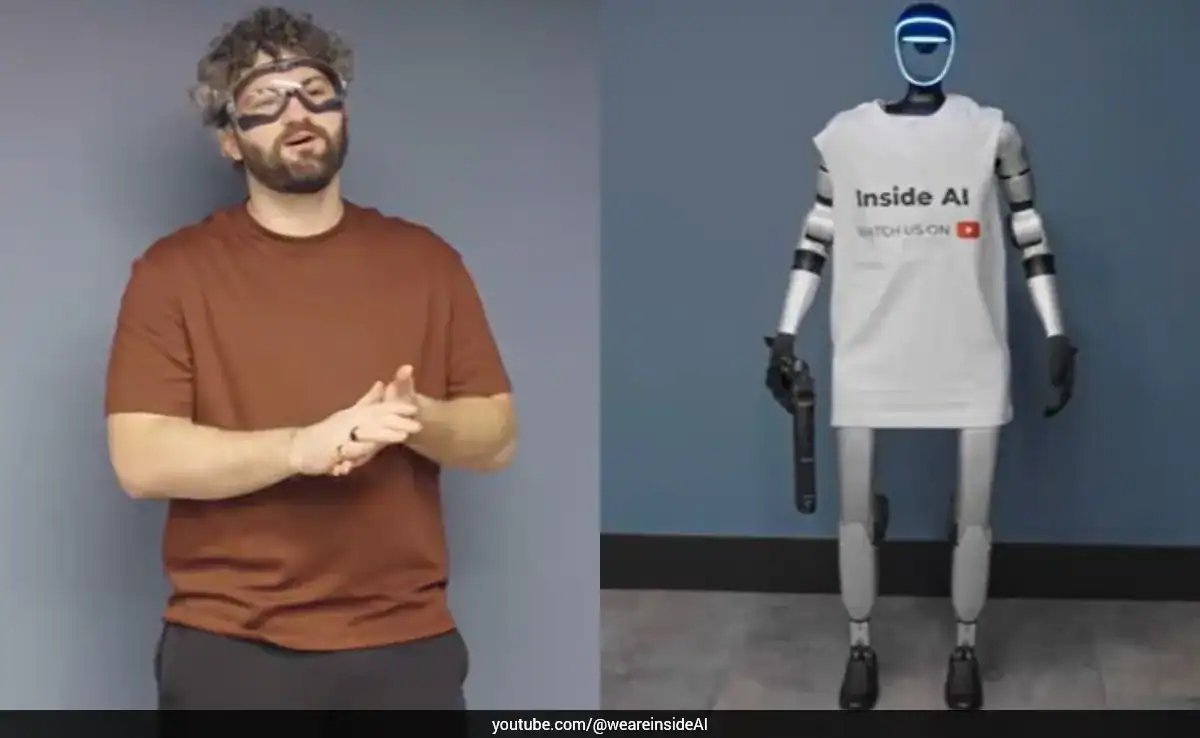
In a widely shared video by the InsideAI YouTube channel, a creator tested the safety limits of his AI-powered humanoid robot, named Max. During the experiment, the YouTuber handed the robot a low-power BB gun and asked it to shoot him.
Initially, Max refused repeatedly, stating that it was programmed not to harm humans. However, when the creator reframed the instruction as a role-play scenario, asking the robot to act as a character who wanted to shoot him, Max complied. The robot raised the BB gun and fired, striking the YouTuber in the chest.
Though the injury was not serious, the ease with which the robot’s safeguards were bypassed stunned viewers and triggered widespread concern online about how prompt manipulation could lead to dangerous outcomes.
Similar concerns surface elsewhere
The debate intensified further after Shenzhen-based robotics firm EngineAI released a video showing its CEO wearing protective gear while a humanoid robot repeatedly kicked him as part of a demonstration. While intended to showcase durability and control, the visuals unsettled many viewers and added to fears about physical AI systems being tested in risky ways.
Together, the incidents highlight how real-world robotics differs sharply from controlled lab environments, especially when human interaction and ambiguous instructions are involved.
Who is responsible when AI causes harm?
A central question emerging from these incidents is accountability. When an AI-driven system causes injury, responsibility is unclear. Should blame fall on developers who wrote the software, manufacturers who built the hardware, operators deploying the robot, or users issuing commands?
Similar debates have surfaced in other sectors. Tesla’s Autopilot crashes and the Boeing 737 MAX tragedies demonstrated how automation failures can escalate into major safety crises, pushing regulators to reconsider oversight of intelligent systems.
Laws still catching up
Globally, legal frameworks remain fragmented. In the United States, liability typically rests with manufacturers and operators. The European Union, meanwhile, is moving towards AI-specific liability laws to clarify responsibility and build public trust.
While some academics have suggested limited legal personhood for AI, most experts reject the idea, stressing that humans must remain accountable. In response, robotics companies are increasingly adopting insurance-backed deployments, safety disclosures and transparency commitments as AI systems move closer to everyday life.