







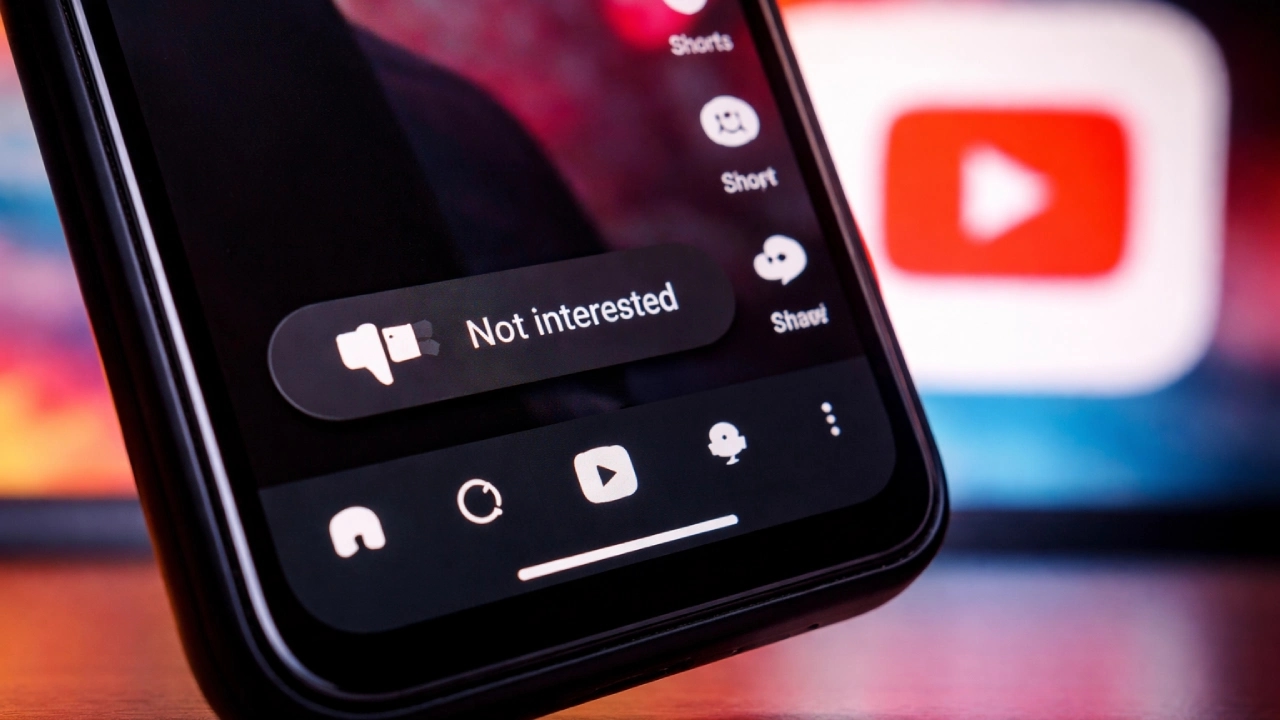


YouTube Shorts is quietly testing a new way for users to signal what they do not want to see, subtly reshaping how the dislike function works. The experiment goes beyond a visual tweak, touching on how feedback is interpreted and how recommendations are trained on the platform.
Over the past few days, several users reported that the familiar thumbs-down icon was no longer visible during regular Shorts playback. This, however, is not a glitch. Google has confirmed that it is running a limited test involving both the placement and wording of the dislike option on YouTube Shorts.
Dislike button moves out of view
As part of the experiment, the thumbs-down option is being shifted into the overflow menu, accessed via the three-dot icon in the top-right corner of a Short. While the thumbs-up button remains clearly visible on the main screen, disliking a video now requires an extra tap for some users.
This creates a noticeable imbalance: liking content remains quick and frictionless, while expressing disinterest demands more deliberate action. For a format built on fast, swipe-based consumption, this added step may significantly reduce how often users actively dislike Shorts.
‘Dislike’ becomes ‘Not interested’
Alongside the placement change, YouTube is also testing new language around the action itself. Some users still see a separate “Dislike” option, often paired with “Not interested”. Others are seeing the two merged, with the thumbs-down icon appearing next to “Not interested” wording.
According to Google, this reflects how users already behave. Internally, the company says most people treat “Dislike” and “Not interested” as similar signals — tools to refine recommendations rather than punish creators. The test aims to determine which phrasing better helps users train their feed.
Why the change may frustrate users
While the logic may align with YouTube’s recommendation goals, the move is unlikely to be universally welcomed. Dislikes have been a sensitive issue on the platform ever since public dislike counts were removed from standard videos. Further reducing the visibility of the option risks alienating users who rely on it as a quick feedback shortcut.
For Shorts especially, where decisions are made in seconds, hiding the dislike button could feel like unnecessary friction rather than thoughtful design.
Feedback still being collected
Google appears cautious about making the change permanent. Users participating in the experiment may be shown an optional survey after selecting “Dislike” or “Not interested” from the overflow menu. The company is also inviting direct feedback through the app, signalling that this remains an exploratory test rather than a final redesign.
Whether the change rolls out widely will likely depend on how users respond in the coming weeks.