







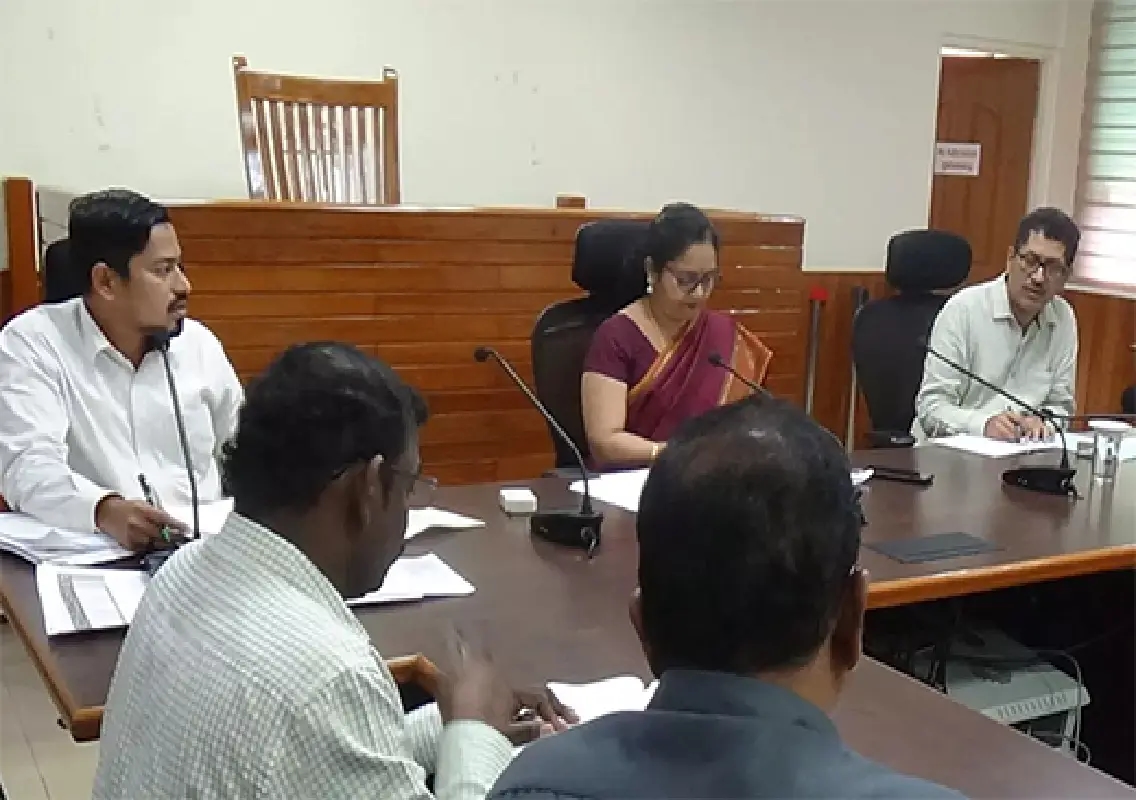


Udupi: The Census of India 2027 will be conducted entirely in a digital format for the first time, with a self-enumeration option available for citizens, District Commissioner Swarup T.K. said during a preparatory meeting held in Manipal.
Chairing the meeting at the Deputy Commissioner’s office conference hall on Friday, Swarup T.K. said the upcoming census will rely on mobile applications and a centralised digital portal to streamline data collection, verification and monitoring processes.
The initiative marks a significant shift from traditional paper-based census operations to a technology-driven system aimed at improving efficiency, accuracy and transparency in data collection.
Two phases planned for census exercise
The District Commissioner said the census exercise will be conducted in two phases.
The first phase will involve house listing operations, which are scheduled to begin on April 16 and continue for a period of 30 days. During this phase, officials will collect details related to households, buildings and basic facilities.
The second phase, which involves population enumeration, is scheduled to commence in February 2027. This stage will focus on collecting detailed demographic data about individuals, including age, occupation, education and other socio-economic indicators.
Officials noted that the information gathered during the census plays a crucial role in policy planning, development programmes and allocation of resources at both the State and national levels.
Mobile applications and portal to manage data
Swarup T.K. said digital tools will play a central role in the census process. Mobile applications will be used by field workers to record household information directly into the system.
The centralised portal will enable real-time monitoring, verification and coordination among officials involved in the census operation.
He said the use of digital platforms will help reduce errors, speed up data processing and improve the overall management of the nationwide exercise.
The self-enumeration option will also allow citizens to voluntarily submit their information online, making the process more convenient and participatory.
Officials asked to complete preparatory work
The District Commissioner directed officials to initiate necessary steps to appoint staff and field workers required for conducting the census operations.
He instructed departments to identify and finalise trainers who will conduct training sessions for census personnel. Training will also be provided to district census officers and enumerators to familiarise them with the digital tools and procedures.
Officials were also asked to prepare the final list of field workers who will be responsible for carrying out house listing and population enumeration.
Emphasis on GPS-based mapping
Swarup T.K. stressed the importance of completing GPS-based mapping as part of the preparatory work for the census.
Accurate mapping of households and localities will help ensure better coverage and avoid duplication or omission during the data collection process.
He emphasised that all preparatory activities must be completed within the stipulated timeframe so that the census can be conducted smoothly.
The District Commissioner also called for close coordination among various departments involved in the exercise to ensure effective implementation.
Officials attend preparatory meeting
Several senior officials participated in the meeting and reviewed the preparations for the census.
Among those present were Additional Deputy Commissioner Abid Gadyal, District Panchayat Planning Director Udaykumar Shetty, Assistant Commissioner Rashmi, Municipal Commissioner Mahantesh Hangaragi and representatives from various government departments.
Officials reiterated their commitment to ensuring that the digital census is conducted efficiently and that all logistical and technical preparations are completed on time.
The upcoming digital census is expected to mark a major step towards modernising India’s data collection systems and improving the reliability of demographic information used for governance and development planning.