







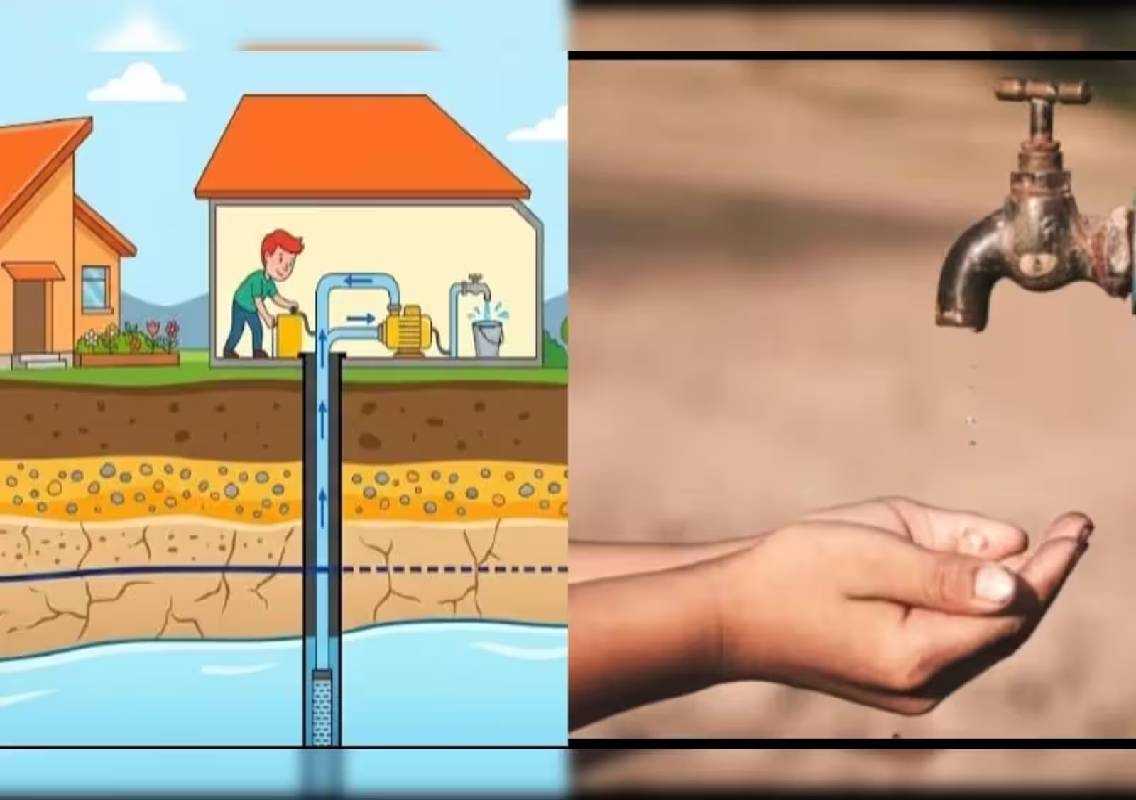


Udupi: Groundwater levels have declined in parts of coastal Karnataka despite the ongoing monsoon, with Udupi district recording a significant rainfall deficit this year. Data from the groundwater department indicate that the water table in Udupi has remained below last year’s levels during several months of the 2026 monsoon, raising concerns over drinking water, agriculture and other water-dependent activities.
Udupi received only 2,559.30 mm of rainfall between January 1 and September 23, 2026, compared with 5,248 mm during the corresponding annual period reported for 2025. The district is therefore facing a rainfall shortfall of 2,689 mm, or 48.76 per cent, according to the report.
The situation is notable because coastal Karnataka is traditionally known for heavy monsoon rainfall. However, this year’s rainfall pattern has been substantially weaker, with the deficit becoming particularly pronounced in September.
Udupi rainfall deficit reaches 48.76 per cent
According to the data cited in the report, Udupi normally receives around 4,535 mm of rainfall annually. Against this average, the district had recorded a shortfall of about 1,976 mm by September 23 this year.
The rainfall deficit has also been particularly severe towards the end of the southwest monsoon season. September has recorded more than 80 per cent less rainfall compared with the corresponding period last year, adding to concerns about groundwater recharge.
The reduced rainfall comes at a time when the district would normally be receiving substantial monsoon precipitation. The lack of sustained rainfall has affected the replenishment of water sources and groundwater reserves.
The rainfall situation is not restricted to Udupi. Dakshina Kannada has also recorded a substantial deficit. According to a separate report, the district had received 2,505.9 mm of rainfall against a normal 3,528 mm by the end of September, representing a deficit of about 29 per cent.
Groundwater remains below previous-year levels
The groundwater figures from Udupi indicate the extent of the concern.
In 2025, the district’s average groundwater depth for January to December was reported at 6.83 metres. Although the groundwater level had fallen to 9.05 metres below ground level in March that year, it improved considerably during the monsoon, reaching 2.73 metres in July.
The pattern has been different in 2026.
Groundwater levels were reported at 10.08 metres in February and 11.02 metres in April. Even after the onset of the monsoon, the expected improvement was not evident.
In June, the groundwater level stood at 7.93 metres below ground level. It improved to 4.82 metres in July and 4.13 metres in August, but these levels remain a matter of concern given the rainfall deficit and the approaching end of the southwest monsoon.
The figures indicate that rainfall during the monsoon has not been sufficient to restore groundwater levels to the extent normally expected.
Dakshina Kannada also sees groundwater decline
Dakshina Kannada has reported a similar trend.
Across the district’s nine taluks, groundwater levels were recorded at an average depth of 10.73 metres in June, 9.11 metres in July and 7.93 metres in August 2026.
The June figure represents a significant decline compared with June 2025, when the groundwater level was recorded at 6.42 metres. The difference was 4.31 metres.
In July, the groundwater level stood at 9.11 metres compared with 7.07 metres during the same month in 2025, representing a decline of 2.04 metres. In August, the level was 7.93 metres compared with 7.44 metres in August 2025.
Some of the deeper groundwater levels were recorded in areas including Mangaluru, Moodbidri and Ullal.
In June, Mangaluru recorded 14.18 metres, Moodbidri 16.97 metres and Ullal 13.80 metres. In July, Ullal recorded 14.20 metres, Moodbidri 13.40 metres and Mangaluru 13.25 metres. In August, the corresponding figures were 13.16 metres in Mangaluru, 12.40 metres in Moodbidri and 12.15 metres in Ullal.
Short spells of rain may affect recharge
The groundwater situation is linked not only to the quantity of rainfall but also to its distribution.
Earlier observations from the India Meteorological Department indicated that Dakshina Kannada experienced shorter and more intense spells of rainfall rather than the prolonged rainfall traditionally associated with the coastal monsoon. Such intense spells can result in greater surface runoff, leaving less water to seep into the ground and replenish aquifers.
Groundwater recharge is therefore dependent on both rainfall quantity and the amount of water that actually percolates into the soil.
Senior geologist Dr Dinakar Shetty of the Groundwater Directorate, Udupi, has stressed the need to conserve every available drop of rainwater. He has also suggested the use of drip irrigation in agriculture to improve water-use efficiency.
District administration steps up preparedness
The Udupi district administration has held meetings with the Agriculture, Horticulture and other concerned departments to assess preparedness for the effects of the rainfall deficit and El Niño conditions.
Officials have been instructed to conserve water by installing shutters on check dams and to give priority to drinking-water requirements. Further measures are expected to be taken depending on how the rainfall situation develops.
The administration’s focus on water conservation comes as concerns grow over the availability of water resources if rainfall remains below normal.
At the same time, weather conditions have shown some signs of improvement. The India Meteorological Department has forecast thundershowers over several parts of Karnataka and issued a yellow alert for Udupi and Dakshina Kannada on September 25. It said the southwest monsoon was active over coastal Karnataka, although the overall seasonal rainfall deficit remains significant.
Water conservation becomes important
The declining groundwater levels underline the importance of conserving rainwater in coastal districts, particularly when rainfall is irregular.
Rainwater harvesting, protection of ponds and streams, maintenance of check dams and efficient irrigation can help improve the amount of water retained within local catchments. Farmers may also need to consider water-efficient irrigation methods where appropriate.
For households, reducing unnecessary water consumption and ensuring that rainwater is channelled into recharge structures can help support local water resources.
The situation also highlights the difference between receiving occasional heavy showers and receiving sufficient rainfall over a sustained period. Short spells of intense rain may produce surface runoff without necessarily providing the same groundwater recharge as prolonged rainfall.
Conclusion
Udupi and Dakshina Kannada are witnessing groundwater levels below several previous-year measurements amid significant rainfall deficits in 2026. While recent weather systems have revived rainfall activity along coastal Karnataka, officials and experts continue to stress water conservation and efficient use of available resources as the monsoon season draws to a close.