







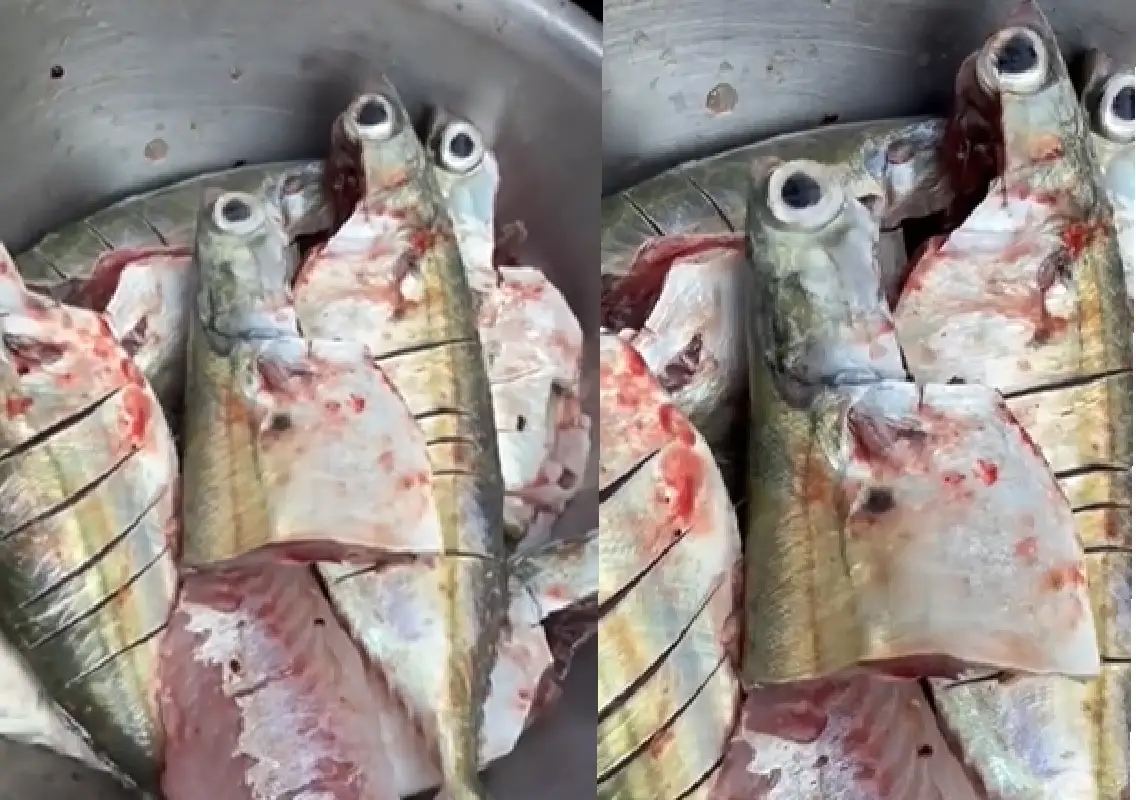


Udupi: In a rare and startling incident, a bangude (mackerel) fish was found to be alive even after being cut at the Malpe fishing harbour in Udupi on Tuesday, leaving fish vendors, customers and onlookers shocked. The unusual occurrence, captured on video, has since gone viral on social media, drawing widespread attention and curiosity.
According to sources at the harbour, the incident took place during routine fish sales in the morning hours, when a customer purchased bangude from a woman fish vendor and requested that it be cut before packing.
Fish found moving after being cut
After cutting the fish, the vendor placed the pieces in a tub along with other fish. To the surprise of those present, one of the cut pieces of the mackerel was seen moving, indicating that the fish was still alive despite having been cut.
Witnesses said the movement was clearly visible and lasted for a short while, prompting immediate reactions from nearby vendors and customers. Many gathered around the tub, astonished by the sight, as such incidents are extremely rare even in busy fishing hubs like Malpe.
Shock and disbelief among vendors and customers
Fish vendors at the harbour said they had never witnessed a similar incident in their years of experience. Some attributed the phenomenon to the fish’s strong nervous reflexes, while others described it as an unusual and unsettling sight.
Customers who were present said the moment created a mix of shock, curiosity and disbelief, with several people recording the incident on their mobile phones.
Video circulates widely on social media
A video of the moving fish piece soon surfaced on social media platforms and spread rapidly, triggering a wave of reactions online. Many users expressed astonishment, while others speculated on scientific explanations behind the incident.
The video has been widely shared across messaging platforms and social networking sites, making the incident a topic of discussion well beyond the harbour.
Experts cite nervous reflexes in fish
Though no official statement was issued, fisheries experts have in the past explained that certain fish species can exhibit involuntary muscle movements even after being cut, due to residual nerve activity and muscle reflexes. Such movements are not uncommon immediately after death but are rarely noticed in such a visible manner.
Conclusion
The rare sight of a cut bangude fish showing signs of movement at Malpe fishing harbour has once again highlighted the surprises nature can present, even in everyday settings. While experts attribute the phenomenon to natural reflexes, the incident has captured public imagination and continues to spark conversation both at the harbour and online.