







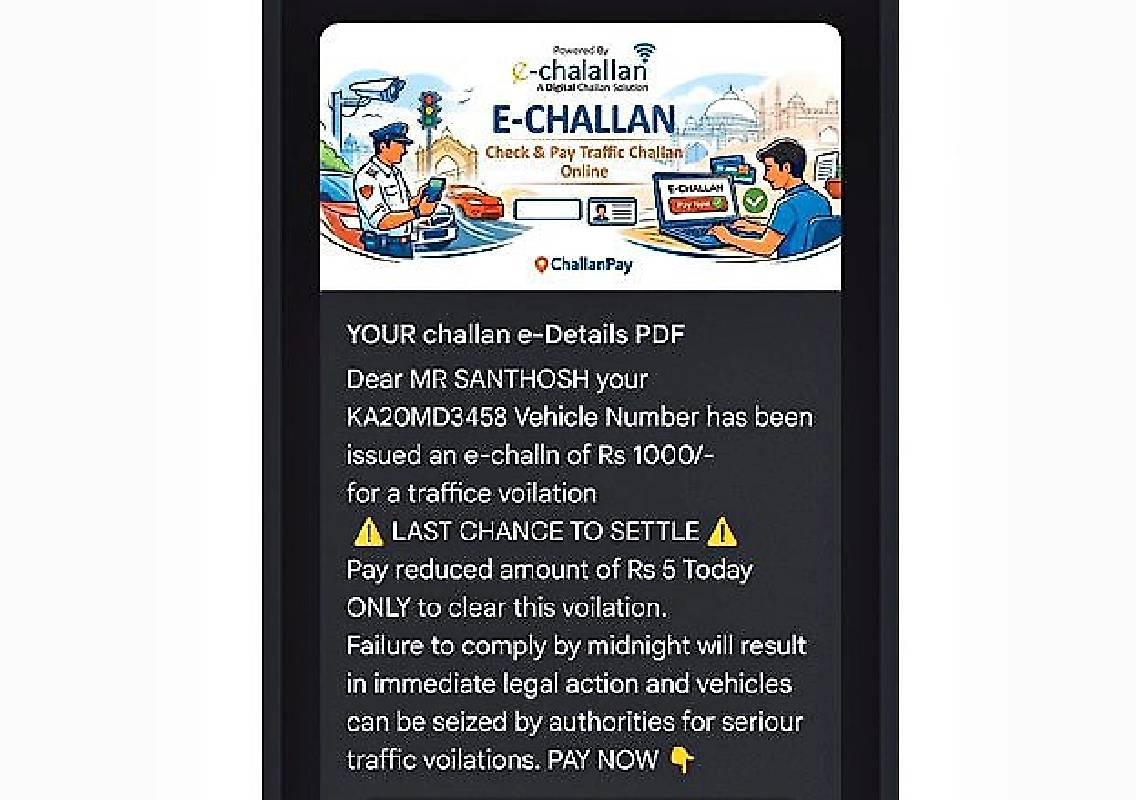


Udupi: Cyber fraudsters are once again targeting citizens with fake traffic e-challan messages sent through WhatsApp, using the appearance of official traffic notices to trick recipients into clicking fraudulent links, according to a report by Udayavani.
The latest scam highlights the growing use of messaging platforms by cybercriminals to make fraudulent communications appear genuine. By claiming that a vehicle owner has an unpaid traffic fine, fraudsters attempt to create urgency and push people towards links that can compromise their devices or financial information.
The warning comes amid a wider rise in fake e-challan scams across India. In a recent case in Ahmedabad, a 61-year-old trader reportedly lost around ₹5.67 lakh after clicking a link in a fake traffic-challan message and installing a suspicious APK file.
Fake e-challan messages sent through WhatsApp
The latest fraud method reportedly involves messages designed to resemble genuine traffic or Regional Transport Office communications.
Recipients are informed that their vehicle has an outstanding challan or traffic violation. The message then directs them to click a link to check details or make a payment.
The use of WhatsApp makes the scam particularly convincing because people regularly receive official-looking notifications and payment requests through messaging applications. Fraudsters can also use familiar terminology, logos and formatting to make their messages appear legitimate.
However, clicking an unknown link can expose the recipient to significant cyber-security risks.
Fraudsters may use malicious APK files
One of the major dangers associated with fake e-challan scams is the distribution of malicious Android application packages, commonly known as APK files.
A victim who follows the link may be encouraged to download an application to view or pay the alleged traffic fine. Once installed, such an application can potentially give criminals access to information stored on the device or facilitate unauthorised transactions.
A recent Ahmedabad case illustrates the danger. Police said a fruit trader received a message about a traffic challan and was directed to download an APK file. After he clicked the link and installed the file, unauthorised transactions were made from his bank account, resulting in a reported loss of ₹5.67 lakh.
The case demonstrates why recipients should treat unexpected links accompanying traffic-fine messages with caution.
How the fake challan scam works
The scam generally relies on creating a sense of urgency.
A message may tell the recipient that a fine is pending and suggest that immediate payment is required to avoid additional penalties or legal action. The recipient is then directed to a website or asked to download an application.
The fraudster’s objective is to make the victim act before verifying whether the message is genuine.
Once a victim clicks the link, several outcomes are possible. The link may lead to a fake payment website designed to collect banking or card information, or it may prompt the user to install an application containing malicious software.
In some cases, victims may also be asked to provide personal information, OTPs or other confidential details.
WhatsApp messages can make scams appear genuine
The use of WhatsApp adds another layer of credibility to the fraud.
People often use WhatsApp for communication with banks, businesses, delivery services and government-related services. Fraudsters exploit this familiarity by presenting fake notices through the platform.
A message mentioning a vehicle number, challan amount or alleged traffic violation may appear convincing even when it has not been issued by an official authority.
Cyber-security experts and enforcement agencies repeatedly advise people not to rely on links received through unsolicited messages when making payments or checking official records.
Instead, users should independently access the relevant official website or application and verify whether a challan actually exists.
Do not download apps from unknown links
One of the most important precautions is to avoid installing APK files received through WhatsApp or other messaging platforms.
Android users should be particularly cautious if a message instructs them to install an application outside the official app store. An unexpected request to download an app to pay a traffic fine should be treated as a major warning sign.
Even if the message contains an official-looking logo or government terminology, users should independently verify its authenticity.
A genuine-looking message does not necessarily mean the sender or website is genuine.
Never share OTP or banking details
Citizens should also avoid sharing sensitive financial information in response to unsolicited challan messages.
Bank account details, card numbers, CVV numbers, passwords and OTPs should never be disclosed to unknown persons or entered into unfamiliar websites.
Fraudsters may use information obtained from an initial interaction to carry out additional attacks or attempt to gain access to the victim’s financial accounts.
If a user has already entered sensitive information or installed an application after following a suspicious link, immediate action is important.
Verify traffic fines independently
The safest way to check whether a vehicle has an outstanding traffic challan is to access the official government or traffic-authority platform independently rather than clicking a link supplied in an unsolicited WhatsApp message.
Users should type the official website address themselves or access it through a trusted government portal.
This simple step can prevent a fraudulent message from directing the user to a fake website or malicious application.
The presence of a vehicle registration number or other apparently accurate information in a message should also not be treated as proof of authenticity.
Cyber fraud threat continues to evolve
The fake e-challan scam is part of a broader pattern in which cybercriminals impersonate trusted institutions to obtain money or personal information.
Recent cyber-fraud cases have involved fake police officers, government officials, banks and other authorities. In one recent case, a retired couple in Maharashtra reportedly lost ₹68.8 lakh after fraudsters impersonated police officials and placed them under a so-called “digital arrest”.
These scams work largely by exploiting fear, urgency and trust.
Fake traffic fines similarly rely on the fear of penalties to persuade victims to act quickly.
Citizens urged to remain cautious
The latest warning serves as a reminder that citizens should not panic after receiving an unexpected traffic-challan message.
A message claiming that a fine is pending should first be independently verified. Users should avoid clicking unfamiliar links, downloading APK files or providing banking information.
Those who suspect that they have been targeted by a cyber scam should report the incident to the appropriate cybercrime authorities as soon as possible and contact their bank immediately if financial information or funds have been compromised.
As cybercriminals continue to adopt familiar communication platforms and increasingly convincing messages, basic digital caution remains one of the most effective ways for citizens to protect themselves.