







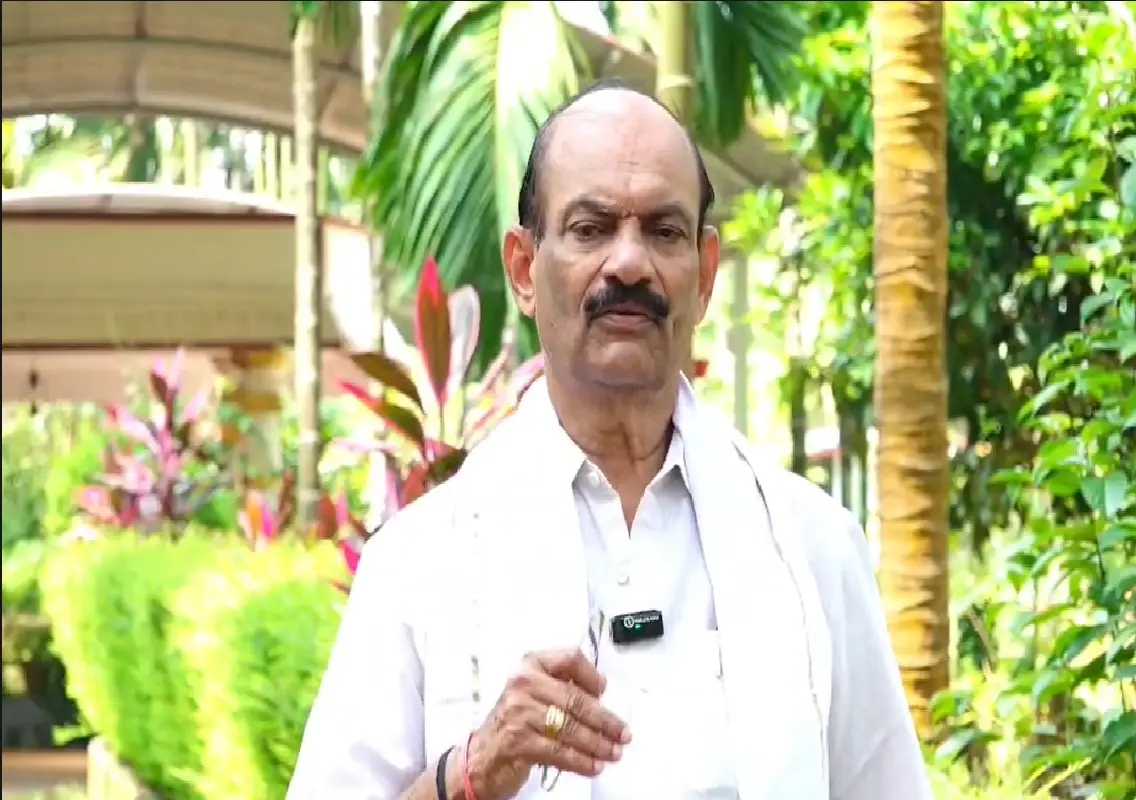


Udupi: For Kolake Irvathur’s Bhaskar Subbaiah Kotian, Kambala is much more than a traditional buffalo race or a sporting competition. It is a family legacy inherited from his father, nurtured over five decades and now being carried forward with the support of his son and four brothers.
With more than 400 awards to his team’s credit, Bhaskar has established a prominent presence in the Kambala arena. Yet, despite the medals and achievements, his greatest satisfaction comes from preserving a tradition that has been an inseparable part of his family for three generations.
Kambala, which represents the culture, heritage and identity of the Tulu-speaking region, has gradually expanded beyond the coastal districts of Dakshina Kannada and Udupi to cities such as Bengaluru and Mysuru. As the traditional sport attracts wider attention, families like Bhaskar’s continue to play an important role in keeping its legacy alive.
For the Kotian family, raising and training Kambala buffaloes is not simply an activity pursued for prizes. It is a responsibility passed down through generations, sustained by family unity, dedication and an enduring attachment to the sport.
A legacy inherited from his father
Bhaskar Subbaiah Kotian says his association with Kambala began with the tradition established by his father.
“We have been maintaining Kambala buffaloes since my father’s time. I have continued this same tradition. I am confident that my son, too, will carry it forward in the future. With the support of my four brothers and my son, we manage our Kambala team,” he says.
The family has remained closely associated with buffalo racing for more than five decades. Their collective involvement has helped sustain the tradition despite the considerable effort and resources required to maintain Kambala buffaloes.
The family has also organised Kambala events twice in Kolake, further strengthening its connection with the traditional sport.
Bhaskar has participated in several categories, including Hagga Hiriya (Senior Rope), Hagga Kiriya (Junior Rope) and Negilu (Plough). He has also expressed his desire to compete in the Kanehalage category with his buffaloes, although the opportunity has not yet materialised.
His team’s consistent performances across different categories have earned it recognition among Kambala enthusiasts.
More than 400 awards and a remarkable record
The Kotian family’s Kambala team has accumulated more than 400 awards through participation in competitions across the coastal region and other parts of Karnataka.
Its achievements in the Hagga Hiriya, Hagga Kiriya and Negilu categories reflect years of preparation, experience and dedication.
One of the team’s most notable accomplishments has been its performance in the Negilu category, where it has secured awards for 12 consecutive years.
The achievement stands out as an indication of the consistency maintained by the family over several seasons.
Currently, the family is raising two buffaloes brought from Bantwal taluk. Named Raja and Shabaris, the pair forms the main attraction of the team’s participation in Kambala events.
The buffaloes are an important part of the family’s sporting identity, and their care and preparation remain central to its activities.
From coastal Kambala to Bengaluru and Mysuru
Kambala was traditionally concentrated in Dakshina Kannada and Udupi districts, where the sport has deep cultural and historical roots. Over the years, however, its popularity has spread to other parts of Karnataka.
The expansion has brought new opportunities as well as challenges for participating teams.
Bhaskar’s team has delivered impressive performances at several prominent Jodukare (dual-track) Kambala events, including competitions in Puttur, Mangaluru (Kudla) and Mysuru Dasara Kambala.
Among its notable achievements are securing first place and a medal at a Kambala event held in Bengaluru and winning the top position at Mysuru.
The growing popularity of Kambala has also changed the nature and scale of competitions. Events that were once largely confined to the coastal region now attract spectators from different parts of the state.
The family members say it is particularly encouraging to see increasing numbers of people, including women, attending Kambala events and showing interest in the traditional sport.
For teams that have spent decades preserving the tradition, this wider recognition is a welcome development.
Tradition matters more than medals
Despite winning hundreds of awards, Bhaskar maintains that financial rewards and medals have never been the primary motivation for his participation.
“Our objective in participating in Kambala is not to win prizes or medals. It is a family tradition. We have continued the legacy started by my father five decades ago,” he says.
He acknowledges that maintaining Kambala buffaloes involves considerable expenditure and effort, with some people questioning whether the activity offers any financial benefit.
However, he has no intention of abandoning the tradition established by his father.
“Some people say that there is no financial gain in raising Kambala buffaloes and that it is a futile endeavour. However, I have no intention of abandoning this tradition that my father began. My son is also prepared to carry it forward after me. In fact, he is the one who attends most of the Kambala events now,” he says.
His son’s active participation gives Bhaskar confidence that the family’s association with Kambala will continue into another generation.
The involvement of his four brothers has also been instrumental in sustaining the team. The shared responsibility of maintaining the buffaloes and participating in competitions has strengthened the family’s bond with the sport.
Growing popularity brings concerns over buffalo welfare
While the increasing popularity of Kambala has been welcomed by enthusiasts, the family also points to certain challenges associated with the changing format of competitions.
Bhaskar observes that Kambala events, which earlier used to conclude within 24 hours, now sometimes extend over two days.
The longer duration can result in greater fatigue for the buffaloes and create logistical difficulties for participating teams.
The animals require considerable attention, care and preparation, particularly when they participate in competitions held at different locations.
With Kambala expanding into newer regions and attracting larger crowds, the family believes that adequate attention must also be given to the health and well-being of the buffaloes.
The growing popularity of the sport, they feel, should go hand in hand with responsible practices that ensure the animals receive proper care.
Three generations united by Kambala
For Bhaskar, one of the greatest achievements of his five-decade journey is seeing his son follow the path established by his father.
The support of his four brothers, the family’s unity and their shared affection for the buffaloes have helped sustain the tradition through changing times.
“Kambala is a tradition that has come down to us from our deities and gods. It has been conducted in an excellent manner thus far, and it should continue in the same way, without any hindrances, in the future as well. Our aspiration is to preserve and nurture this heritage for as long as we possibly can,” the family says.
The sentiment reflects the deeper significance of Kambala for families that have remained connected with the sport across generations.
For Bhaskar Subbaiah Kotian, the more than 400 awards represent years of dedication, but the real reward is the continuation of his father’s legacy.
As Kambala reaches new audiences across Karnataka, the story of the Kotian family stands as an example of how traditional sports survive through the commitment of families who consider heritage more valuable than trophies.
Five decades after his father’s journey began, Bhaskar continues to nurture the tradition, confident that his son will carry it forward for generations to come.