









Udupi: Five of Udupi district’s 155 grama panchayats have earned national recognition under the Panchayat Awards, bringing attention to a range of grassroots initiatives in water management, social security, healthcare, women’s empowerment and infrastructure development.
Their achievements demonstrate how local-level planning and community participation can improve public services and create opportunities in rural areas. At the same time, the award-winning panchayats continue to face challenges such as damaged roads, inadequate electricity supply and limited employment opportunities.
The five panchayats are among six from Karnataka recognised under the Deen Dayal Upadhyay Panchayat Satat Vikas Puraskar (DDUPSVP) for 2025.
Madamakki emerges as water-sufficient village
Madamakki Grama Panchayat in Hebri taluk, located on the edge of forest areas, has been recognised for its efforts towards water sufficiency.
The panchayat supplies piped drinking water to more than 800 households using nine borewells and three public wells.
Water meters have been installed in all 800 households, while monthly charges are collected through ‘Nal-Jal Mitras’. The panchayat also ensures that water quality is tested every month.
Overhead tanks are cleaned once every four months, while measures are taken to minimise water leakage and ensure efficient use of the available resource.
One of the notable aspects of the initiative is the inclusion of poorer families. Even families without RTC documents are reportedly provided with piped water connections.
Under the Mahatma Gandhi National Rural Employment Guarantee Scheme (MGNREGS), more than 100 wells and over 50 check dams have been constructed.
Two Madagas have also been desilted to provide water for animals and birds while helping recharge groundwater. Soak pits and rainwater harvesting have been given importance as part of the panchayat’s broader water conservation efforts.
Electricity and roads remain concerns
Despite its achievements in water management, Madamakki continues to face basic infrastructure challenges.
Several households reportedly remain without electricity connections.
A resident, Saku, highlighted the difficulty faced by families living without electricity, particularly children who need adequate lighting for their studies.
Road connectivity is another concern. Several roads remain unpaved, making transportation particularly difficult during the monsoon.
The contrast between Madamakki’s recognition for water management and its continuing infrastructure challenges highlights the complex nature of rural development.
Hakladi focuses on social security
Hakladi Grama Panchayat in Kundapur taluk has been recognised in the social security category.
The panchayat has achieved 100 per cent coverage of eligible beneficiaries under various pension schemes and has taken additional measures to support persons with disabilities and vulnerable residents.
A total of 1,320 eligible beneficiaries receive monthly pensions under schemes including Sandhya Suraksha and Maithri.
The panchayat has also ensured that rations and pensions are delivered directly to the homes of 12 bedridden patients.
All 102 persons with disabilities in the village have been provided Unique Disability ID (UDID) cards.
The panchayat has distributed 4,800 Ayushman Bharat cards to eligible families and facilitated the construction of 18 houses for SC/ST families.
Damaged road mars achievement
While Hakladi has made progress in social security, residents have raised concerns over road infrastructure.
The road directly in front of the grama panchayat office is reportedly in poor condition, causing inconvenience to motorists and members of the public.
The situation highlights the need to ensure that social welfare achievements are accompanied by improvements in basic infrastructure.
Vandse earns Healthy Panchayat recognition
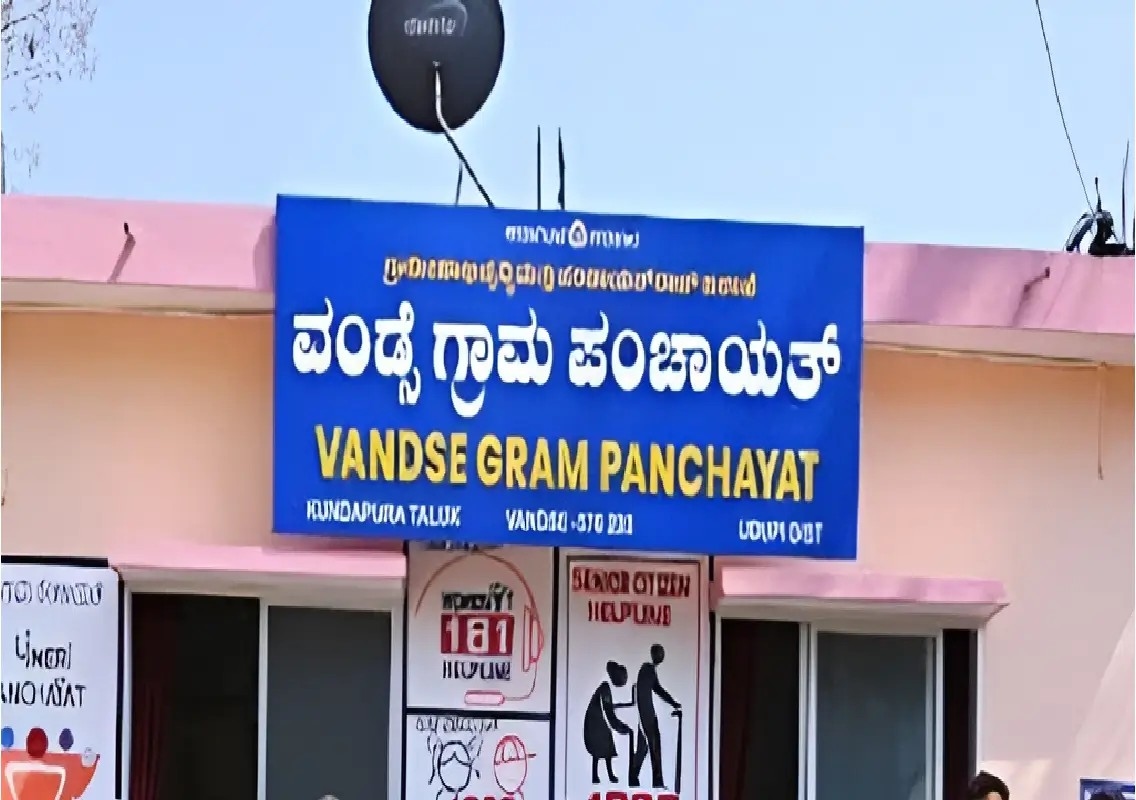
Vandse Grama Panchayat has been recognised for its healthcare initiatives, particularly its community-based palliative care services.
The panchayat has worked with the Niramaya Society to provide support to people suffering from chronic and terminal illnesses, senior citizens, people experiencing depression and those abandoned by their families.
A total of 305 people from Vandse and six surrounding panchayats have been identified for support.
The initiative currently provides continuous services to 71 bedridden people, 122 individuals dependent on others for their daily needs and 112 patients suffering from terminal illnesses.
Two ambulances and a freezer box for preserving bodies have also been provided to support patients and their families.
Government school sees rise in enrolment
Vandse’s community initiatives have extended beyond healthcare.
The panchayat’s efforts in education have coincided with a substantial increase in student enrolment at Vandse Government School.
The number of students has increased from just 89 in 2015 to 334 currently.
The increase indicates growing community confidence in the local government school and demonstrates the potential impact of sustained grassroots involvement in education.
Mudradi works towards poverty-free village
Mudradi Grama Panchayat in Hebri taluk has focused on poverty reduction and women’s economic empowerment.
The panchayat has organised 650 women into 65 active self-help groups under the Sanjeevini scheme.
All members have been provided bank linkage, enabling them to access formal financial services and credit.
Loans amounting to Rs 1 crore have been facilitated to support small businesses and livelihood activities.
Women in the agriculture-dominated region are involved in activities such as pickle-making, preparation of chicken rotti, beekeeping and running beauty parlours.
The panchayat has also created market mechanisms under the Sanjeevini scheme to support the sale of products made by women.
Social security coverage strengthened
Mudradi has also achieved 100 per cent coverage of eligible beneficiaries under various social security schemes.
These include the Union government’s Indira Gandhi National Old Age Pension Scheme as well as state government old-age and widow pension schemes.
The combination of self-help groups, bank linkage, access to loans and social security has helped the panchayat build a broader framework for reducing economic vulnerability.
Sanoor focuses on self-reliant infrastructure
Sanoor Grama Panchayat in Karkala taluk, with a population of 7,371, has been recognised for its work towards self-sufficient infrastructure.
The panchayat faces significant geographical challenges, particularly due to heavy monsoon rainfall in the coastal region.
Annual rainfall often damages roads, making infrastructure maintenance a continuing challenge.
The panchayat had also faced difficulties in identifying suitable land for establishing a Solid and Liquid Resource Management (SLRM) unit and commercial complexes.
Innovation helps overcome land shortage
Despite these challenges, Sanoor adopted scientific planning to improve its infrastructure.
The grama panchayat building was renovated and transformed into a modern facility with improved amenities. The building has now become a centre for transparent administration and public service delivery.
Several initiatives have also been introduced to make services available under the Panchayati Raj system more convenient and transparent for residents.
The approach demonstrates how local bodies can use available resources more effectively when faced with geographical and land constraints.
Five panchayats recognised under national framework
The Union Ministry of Panchayati Raj has recognised the five Udupi panchayats under different categories.
Madamakki has been recognised for water sufficiency, Hakladi for social justice and social security, Vandse for healthcare, Mudradi for poverty-free and enhanced livelihoods, and Sanoor for self-sufficient infrastructure.
Their achievements showcase different aspects of rural development, from ensuring drinking water and social security to strengthening healthcare, supporting women entrepreneurs and improving local infrastructure.
However, the continuing concerns over roads, electricity and employment also underline that development remains an ongoing process.
The national recognition provides visibility to the work being carried out at the grassroots level, while the challenges faced by these villages point to areas where further administrative attention and investment are required.
For Udupi district, the success of five panchayats offers examples of locally driven development that can potentially be adapted and strengthened across other rural communities.