









Udupi: Karnataka’s severe rainfall deficit and falling water availability are forcing farmers to rethink traditional irrigation practices, with methods such as night-time irrigation and drip irrigation gaining importance amid growing drought concerns.
The State has recorded its worst southwest monsoon since 1971, with rainfall 35 per cent below normal, according to the Karnataka State Natural Disaster Monitoring Centre. The India Meteorological Department has also forecast below-normal rainfall for Karnataka during October and November, raising further concerns over water availability.
The shortage has affected reservoirs, groundwater and agriculture across Karnataka. Udupi, traditionally one of the State’s high-rainfall districts, has also experienced a significant decline in rainfall and groundwater levels this year.
The situation has increased the need for farmers to conserve every available drop of water and adopt irrigation methods that reduce evaporation and wastage.
Udupi records sharp rainfall decline
Udupi has experienced an unusually dry year despite its coastal location.
The district received 2,559.30 mm of rainfall between January 1 and September 23, 2026, compared with 5,248 mm during the corresponding period of 2025. This represents a shortfall of 2,689 mm, or 48.76 per cent compared with last year’s rainfall. September was particularly dry, with the rainfall deficit exceeding 80 per cent, according to data cited by Vijay Karnataka.
The rainfall shortage has affected natural water sources and groundwater recharge.
Groundwater levels in the district have remained under pressure even during the monsoon. The decline has raised concerns over drinking water, agriculture and other activities that depend on wells and groundwater.
The situation demonstrates how a deficient monsoon can affect even coastal districts that normally receive substantial rainfall.
Karnataka adds more drought-hit taluks
The drought situation has continued to expand across Karnataka.
The State government added another 40 taluks to the drought-affected list on October 2, taking the total number of drought-hit taluks to 217 out of Karnataka’s 240 taluks. The latest list includes Udupi and Byndoor, along with several taluks in Dakshina Kannada, Chikkamagaluru, Shivamogga and other districts.
The declarations follow assessments of rainfall, crop conditions and ground-level water availability.
The government has been carrying out ground-truthing exercises to assess the impact of the rainfall shortage and determine which areas meet drought-declaration criteria.
The widening drought coverage underlines the scale of the water shortage facing the State this year.
Reservoir storage under pressure
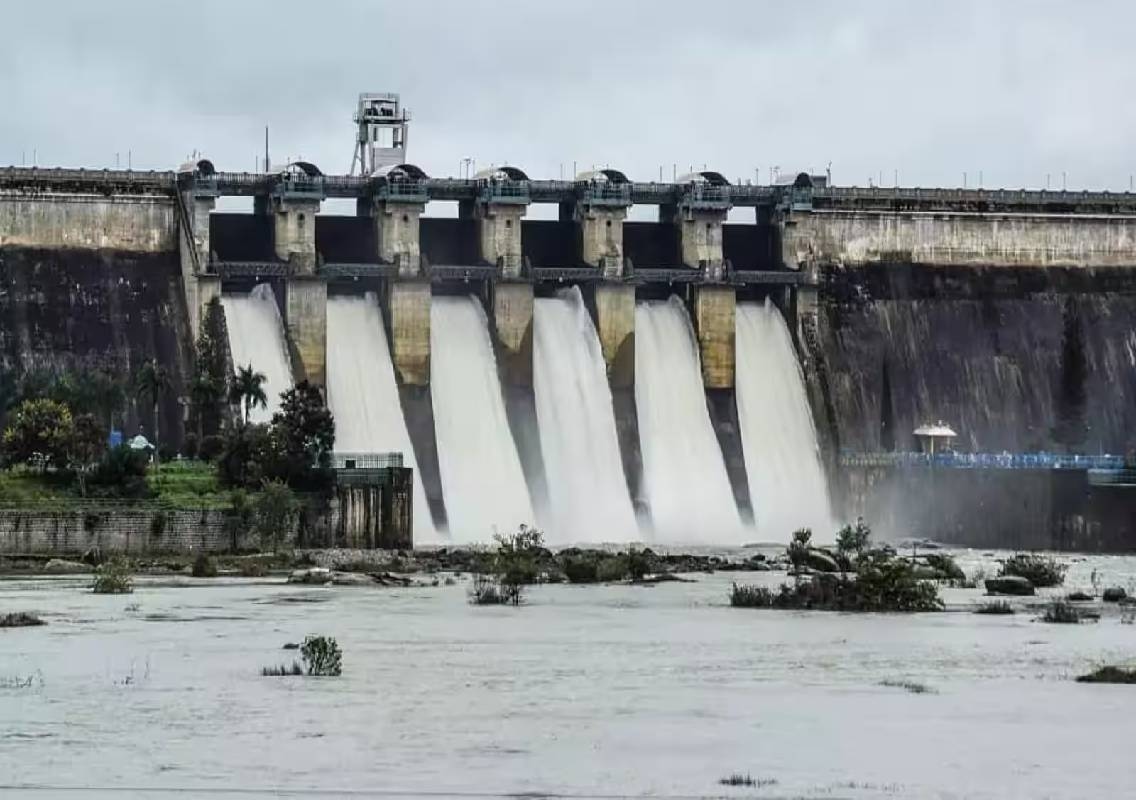
Poor rainfall has also affected inflows into Karnataka’s reservoirs.
Earlier in the monsoon, data from the Karnataka State Natural Disaster Monitoring Centre showed that the 14 major reservoirs had considerably less water than during the corresponding period of the previous year. Their combined gross capacity is 895.65 TMC, while storage in early July was only 212.9 TMC, compared with 595.3 TMC during the same period in 2025.
The continuing rainfall deficit has added pressure on water resources used for irrigation, drinking water and other requirements.
With the southwest monsoon ending with a substantial deficit, farmers are now looking towards available groundwater, tanks, check dams and stored reservoir water to protect standing crops.
Groundwater levels fall in coastal Karnataka
The water shortage is particularly significant because groundwater has also failed to recover adequately in Udupi.
Data cited in recent reports showed groundwater levels remaining below normal during several months of 2026. The district’s groundwater situation did not improve sufficiently even after the monsoon began.
In Udupi, the concern is compounded by the sharp fall in rainfall compared with 2025. The district administration has held meetings involving agriculture, horticulture and other departments to prepare for the impact of the dry conditions. Officials have also been instructed to conserve available water in check dams and similar structures, with drinking water given priority.
The combination of poor rainfall and weak groundwater recharge could make farming more dependent on efficient irrigation.
Farmers turn to night-time irrigation
One of the measures gaining attention is night-time irrigation.
Farmers can reduce evaporation losses by irrigating crops during cooler hours rather than during the hottest part of the day. This can help ensure that a larger share of the water reaches the soil and crop root zone.
The method can be particularly useful when farmers are dependent on limited groundwater or stored water.
Night-time irrigation does not increase the amount of water available, but it can improve the efficiency with which existing supplies are used.
Farmers can also combine the practice with appropriate irrigation scheduling and soil-moisture conservation techniques to avoid unnecessary watering.
Drip irrigation offers another option
Drip irrigation is another water-saving method being encouraged for agriculture.
Unlike conventional irrigation, which may distribute water over a large area, drip systems deliver water close to the roots of individual plants. This can reduce evaporation and runoff while allowing farmers to control the quantity of water supplied.
The method can be especially useful for horticultural crops, plantations and other crops where water can be delivered directly to the root zone.
The adoption of drip irrigation, however, requires investment in pipes, emitters, pumps and maintenance. Government support and technical assistance can therefore play an important role in helping farmers adopt the technology.
Paddy farmers face growing uncertainty
The water shortage has also created difficulties for paddy cultivation in Udupi.
Paddy farmers in parts of the district have faced prolonged dry spells during critical stages of crop development. Recent reports indicated that the crop was entering the ear-formation and grain-filling stages when rainfall weakened, increasing concerns about yields.
The problem is particularly significant for farmers who delayed sowing because of inadequate rainfall earlier in the season.
When rainfall arrives late, the cultivation cycle can become compressed, leaving crops vulnerable if another prolonged dry spell follows.
For rain-dependent farmers, irrigation at the right stage can therefore make a significant difference to crop development.
El Niño adds to the uncertainty
The 2026 drought has also been linked to strong El Niño conditions.
The weather pattern contributed to the weak southwest monsoon, while the prolonged dry conditions have affected agriculture and water resources across Karnataka.
There is some expectation of improved rainfall during the October-December period, particularly over coastal and south interior parts of Karnataka. However, the amount and distribution of rainfall will determine whether it provides meaningful relief to reservoirs, groundwater and crops.
For farmers, conserving available water remains important regardless of the possibility of additional rainfall.
Crop losses add to farmers’ concerns
The rainfall deficit has already resulted in significant agricultural losses across Karnataka.
The State has estimated crop losses of around Rs 46,324.5 crore across approximately 47.09 lakh hectares in the 177 drought-affected taluks assessed earlier. The assessment covers major crops including tur, maize, cotton, sugarcane, soybean and green gram, along with horticultural crops such as onion, arecanut and red chilli.
The State government has indicated that crop-loss assessments are continuing and that the affected area could increase as more taluks are assessed.
An Inter-Ministerial Central Team is scheduled to visit Karnataka to conduct field-level assessments of drought-affected areas.
Water conservation becomes increasingly important
The current situation has highlighted the importance of long-term water management in agriculture.
Farmers can combine efficient irrigation with measures such as rainwater harvesting, farm ponds, check dams, mulching and soil-moisture conservation.
At the administrative level, protecting drinking-water sources, maintaining water-harvesting structures and monitoring groundwater will also be important as the State moves into the post-monsoon period.
Udupi’s experience shows that even districts traditionally associated with abundant rainfall can face serious water stress when rainfall patterns change significantly.
Conclusion
Karnataka’s weak southwest monsoon has created widespread drought conditions, with 217 of the State’s 240 taluks now classified as drought-affected. Udupi has also recorded a sharp rainfall deficit and declining groundwater levels.
As water availability comes under pressure, farmers are increasingly looking at night-time irrigation and drip irrigation to reduce wastage and improve efficiency. With crop losses already mounting and below-normal rainfall forecast for October and November, efficient water management will remain important for Karnataka’s agricultural sector.