







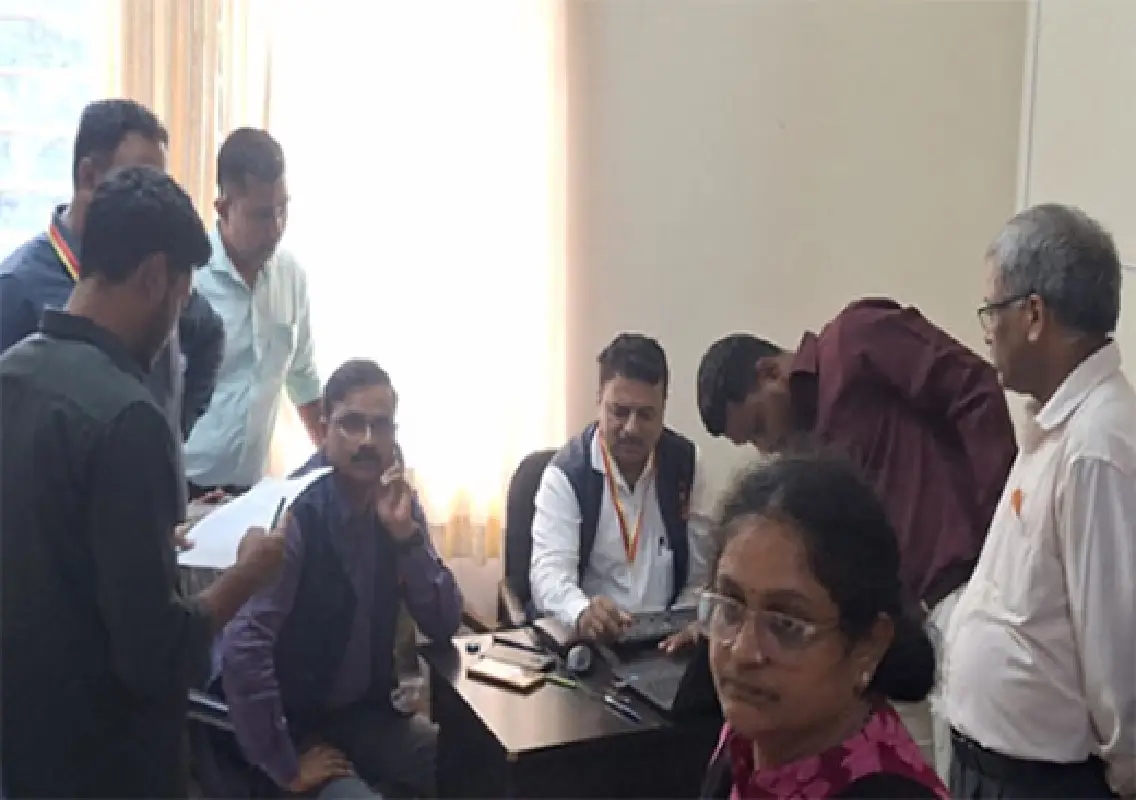


Udupi: The Karnataka Lokayukta on Thursday conducted a raid and inspection at the Kaup Urban Planning Authority following allegations of undue delay in disposing of files related to public interest matters. Officials from the Udupi district Lokayukta examined records after receiving multiple complaints from the public about the pendency of applications and lack of timely action by the authority.
The inspection began on the morning of December 18 and continued for several hours, with Lokayukta police scrutinising files, registers and office procedures. The action was taken in response to repeated public complaints, highlighting concerns over transparency and efficiency in the functioning of the urban planning office.
Allegations of delay in public interest matters
The raid was carried out based on allegations that files related to public interest were being kept pending without valid justification. Complainants alleged that applications submitted by citizens, including those related to development permissions and planning approvals, were not being disposed of within a reasonable timeframe.
Such delays, according to complainants, have caused inconvenience and hardship to the public. In some cases, applicants reportedly had to make repeated visits to the office without receiving clear answers regarding the status of their files.
Lokayukta officials said that prolonged pendency of files often raises suspicion of administrative lapses or possible irregularities, especially when there is no documented reason for the delay.
Complaints raised at public grievance meeting
Similar allegations had earlier surfaced during a public grievance meeting held in Kaup, where several residents voiced their dissatisfaction with the functioning of the Urban Planning Authority. During the meeting, members of the public alleged that their applications had remained pending for months despite complete documentation.
Following these complaints, the Lokayukta took note of the issues raised and decided to verify the claims through a surprise inspection. Officials said that grievance meetings play an important role in bringing systemic issues to the attention of oversight bodies.
Acting on the feedback received from the public, the Lokayukta authorised the inspection to assess whether the delays were procedural or intentional.
Inspection led by senior Lokayukta officials
The raid was led by Deputy Superintendent of Police Halamurthy Rao, along with Inspector Manjunath and other Lokayukta police personnel. The team examined several files related to public interest, including those concerning building permissions and planning-related approvals.
Officials checked whether files were being processed according to prescribed rules and timelines. They also reviewed movement registers to determine how long applications had been pending at each stage and whether any irregular practices were involved.
Sources said the inspection was conducted in a systematic manner, with officials seeking explanations from staff members regarding the status of pending files.
Urban planning authorities under focus
Urban planning authorities play a key role in regulating development and ensuring orderly growth. Any delay in clearing files can have financial and legal implications for citizens, especially those awaiting approvals for residential or commercial projects.
Complaints against urban planning offices are often linked to allegations of inefficiency or lack of accountability. Lokayukta officials noted that timely disposal of applications is a basic administrative responsibility, and failure to do so undermines public trust.
The inspection is part of the Lokayukta’s broader effort to monitor government offices and ensure that public servants perform their duties without favouritism or negligence.
Possible follow-up action
After the inspection, the Lokayukta team is expected to compile a detailed report based on the records examined and observations made during the raid. If violations of procedure or evidence of misconduct are found, further inquiry or disciplinary action may be initiated against those responsible.
In cases where delays are attributed to systemic shortcomings rather than individual wrongdoing, recommendations may be made to streamline processes and improve efficiency.
Officials emphasised that the primary objective of such inspections is to improve governance and ensure better service delivery to the public.
Conclusion
The Lokayukta raid has brought renewed focus on the functioning of the Kaup Urban Planning Authority and the importance of timely disposal of public interest files. Residents hope that the action will lead to greater accountability, faster processing of applications and improved transparency in the office. The incident also underscores the role of public complaints in triggering institutional oversight and corrective measures.