


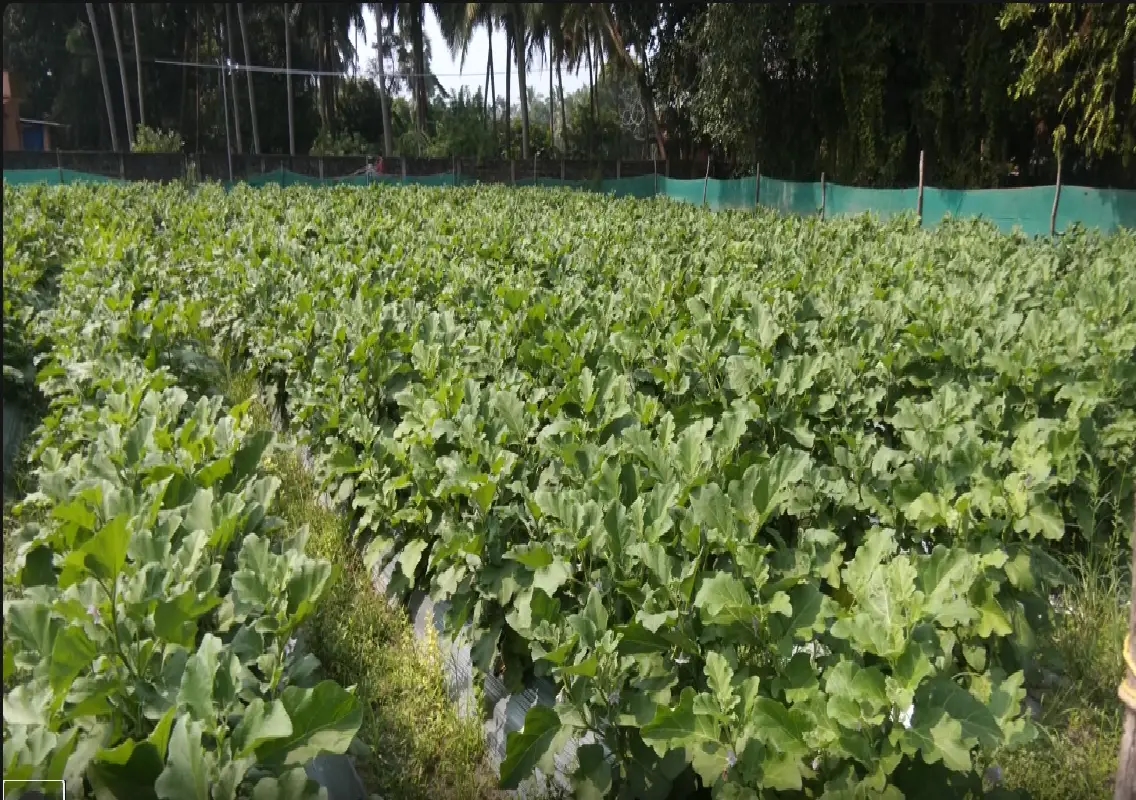


Udupi: The cultivation of the famous Mattugulla brinjal, a symbol of the coastal region’s agricultural heritage, is facing a serious challenge this year, with farmers in Mattu village struggling with inadequate rainfall, water scarcity, river siltation and the threat of saltwater intrusion.
Once cultivated across extensive stretches of farmland in Mattu village near Udupi, the unique variety of brinjal is now being grown by only a handful of farmers this season. Uncertainty over water availability and the possibility of pest attacks have made growers hesitant to take up cultivation on a larger scale.
Mattugulla is renowned for its distinctive green colour, characteristic shape and unique taste, which are closely associated with the soil and growing conditions of the region. The crop has earned a special place in Udupi district’s agricultural identity and is popular among consumers across coastal Karnataka.
Traditionally, planting begins in the first week of September in Mattu. However, the situation has been difficult this year, with farmers facing unfavourable weather and concerns over the availability of fresh water.
Inadequate rainfall worries growers
Farmers have begun agricultural activities amid alternating spells of rain and sunshine, but Mattugulla growers remain apprehensive about investing in the crop.
The rainfall received so far has not met their expectations, creating uncertainty over the availability of water for cultivation. Farmers fear that the shortage could affect the growth of plants and make it difficult to protect the crop from pest infestations.
Lakshmana, a member of the Mattu Gulla Growers’ Association, said that only a few farmers had come forward to cultivate the crop this season, unlike earlier years when large areas of farmland in the village were under Mattugulla cultivation.
He pointed out that water scarcity was not the only concern. Farmers who traditionally depend on the waters of the Pinakini River for irrigation are now facing additional difficulties because of problems affecting the river.
Silt accumulation affects water availability
Farmers have expressed concern over the accumulation of silt in the Pinakini River, which they say is affecting the flow and availability of water.
The river has traditionally served as an important water source for Mattugulla cultivation. However, the reduced flow and difficulties in accessing adequate water have added to the challenges faced by growers.
Farmers have urged the authorities to take up desilting work in the river to improve water flow and ensure adequate availability for agricultural purposes.
They believe that clearing the accumulated silt would help restore the river’s capacity to supply water to farmland, particularly during periods of inadequate rainfall.
The demand for desilting has become urgent as growers prepare for the cultivation season and worry about the consequences of prolonged water scarcity.
Threat of saltwater intrusion raises alarm
Apart from inadequate rainfall and river siltation, the possibility of saltwater intrusion has emerged as another major concern for farmers.
Growers fear that saline water entering the river could damage agricultural land and adversely affect the quality and yield of Mattugulla. The crop depends on suitable soil and water conditions, and an increase in salinity could threaten its cultivation.
Ravi, a Mattugulla farmer, said growers were worried about the possibility of saltwater entering the river. He appealed to the district administration and the state government to provide a permanent solution to prevent saltwater intrusion and protect the agricultural lands.
Farmers have stressed that temporary measures may not be sufficient to address the recurring threat. They want the authorities to examine the problem and implement lasting measures to safeguard the river and its freshwater supply.
Rising cultivation costs add to farmers’ concerns
The difficulties have also raised concerns over the financial viability of Mattugulla cultivation this year.
Farmers usually look forward to a good harvest and favourable market prices. However, inadequate water supply has reportedly affected the growth of the plants, raising fears of reduced yields.
If the crop fails to develop properly, growers may struggle to recover even their cultivation expenses. Expenditure on planting, maintenance, irrigation and other agricultural activities could add to their financial burden if the harvest is poor.
The possibility of pest attacks amid unfavourable growing conditions has further increased uncertainty. Farmers are concerned that the combination of water shortage and crop damage could affect both production and their income.
For those who have continued the traditional cultivation despite these difficulties, the current season has become particularly challenging.
Farmers seek government intervention to protect Mattugulla
Mattugulla is more than an agricultural produce for the coastal region. Its distinctive identity, taste and connection with the traditions of Mattu village have made it an important part of Udupi’s farming heritage.
The declining number of growers taking up cultivation this season has therefore raised concerns about the future of the crop. Farmers fear that continued water-related difficulties could discourage more people from cultivating Mattugulla in the coming years.
They have urged the district administration and the government to address their concerns by prioritising desilting of the Pinakini River, ensuring adequate freshwater availability and taking permanent measures to prevent saltwater intrusion.
Timely intervention is essential not only to protect farmers’ livelihoods but also to preserve a distinctive crop associated with the agricultural identity of Udupi district. Without effective measures to address the water crisis, the heritage of Mattugulla cultivation could face further setbacks.