







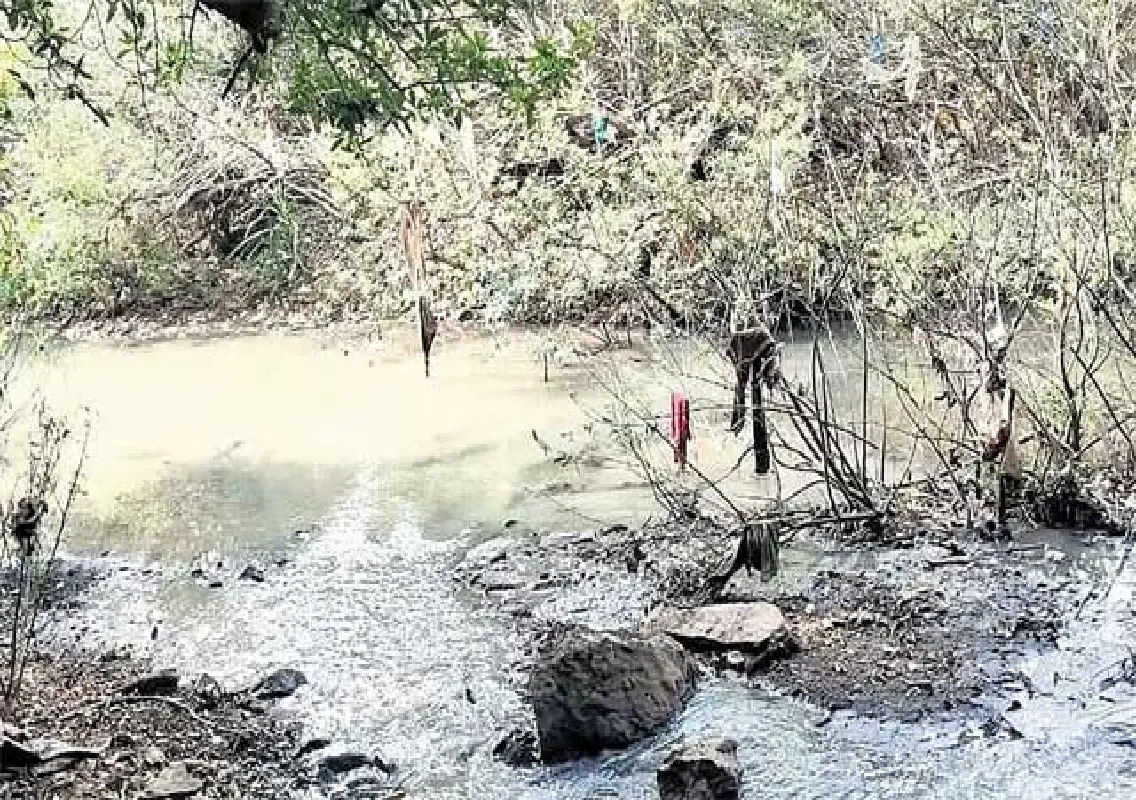


Udupi: The National Green Tribunal (NGT), Southern Zone, Chennai, has directed the Udupi deputy commissioner Swaroopa T K and the chairperson of the Karnataka Urban Water Supply and Drainage Board (KUWSDB) to submit a comprehensive report detailing the steps taken and the timeline proposed to prevent the discharge of untreated sewage into the Souparnika river at Kollur. The tribunal has posted the matter for further hearing on February 9.
The direction was issued while hearing a petition filed by Kollur-based social activist Harish Tholar, who alleged that untreated sewage and wastewater have been continuously polluting the Souparnika river for several years. The judicial bench comprised Justice Pushpa Sathyanarayana and expert member Dr Prashanth Garg.
Allegations of long-term river pollution
The petition stated that untreated sewage generated from the Sri Mookambika temple and nearby commercial establishments, including lodges and hotels, is being discharged directly into the Souparnika river. The petitioner contended that the pollution has continued despite repeated complaints and has adversely affected the river’s ecological health and water quality.
According to the petitioner, the river holds religious and cultural significance, especially for devotees visiting the Sri Mookambika temple. The continued pollution, he argued, not only violates environmental laws but also causes hardship to devotees and local residents who depend on the river for various purposes.
UGSS project failed to curb pollution
The tribunal noted that an underground sewerage system (UGSS) project was taken up in Kollur in 2015 at an estimated cost of ₹19.97 crore and was completed in 2020. However, despite the completion of the project, the discharge of sewage into the river has not been effectively stopped.
The petitioner submitted that the very objective of the UGSS project has been defeated, as several commercial establishments continue to release untreated waste into the river. He alleged that weak enforcement and inadequate monitoring have allowed violations to persist unchecked.
NGT dissatisfied with earlier report
During the hearing, the NGT observed that notices had been issued to the concerned authorities over the past two years regarding the pollution of the Souparnika river. The Udupi district administration had also submitted a report on November 25, 2025. However, the tribunal expressed dissatisfaction with the contents of the report, stating that it lacked comprehensive and critical details.
The bench pointed out that although certain directions had been issued by the district administration to KUWSDB and the panchayat development officer (PDO) concerning the operation of the sewage treatment plant (STP), the report failed to address key technical and operational aspects.
Key data missing in official report
The tribunal specifically noted that the report did not provide information on the quantity of sewage generated in the Kollur area, the actual carrying capacity of the existing UGSS, or the extent to which the system’s capacity needs enhancement. It also lacked details on the estimated cost involved in upgrading the infrastructure and the time required to complete such improvements.
“The absence of such crucial data makes it difficult for the tribunal to assess the effectiveness of the measures taken so far,” the bench observed, stressing the need for a clear action plan backed by technical details and timelines.
Officials directed to appear before tribunal
In view of the incomplete information, the NGT directed Udupi deputy commissioner Swaroopa T K and the KUWSDB chairperson to appear before the tribunal through video conferencing on the next date of hearing. The tribunal made it clear that senior officials must take responsibility for ensuring compliance with environmental norms and court directions.
The tribunal also instructed the Karnataka State Pollution Control Board (KSPCB) to submit a detailed and independent report. The KSPCB has been asked to identify violators, specify the action taken against them, and outline concrete steps implemented to prevent further discharge of untreated sewage into the river.
Activists highlight impact on devotees
Local environmental activists and residents have welcomed the NGT’s intervention, stating that pollution of the Souparnika river has reached alarming levels. They pointed out that the release of untreated sewage has discoloured the water and created foul odours, affecting the overall sanctity of the area.
Activists said that despite the installation of the UGSS, enforcement against erring commercial establishments has been weak. “Hotels and lodges continue to bypass the system and discharge waste into the river. This completely undermines the purpose of spending nearly ₹20 crore on the sewerage project,” a local activist said.
They further noted that devotees visiting the Sri Mookambika temple are among the worst affected, as the polluted river water poses health and environmental risks.
Need for accountability and enforcement
Environmental experts have stressed that infrastructure projects like UGSS must be accompanied by strict enforcement, regular audits and transparent reporting. Without accountability, they warned, such projects risk becoming ineffective despite significant public expenditure.
The NGT’s directive is expected to put pressure on the district administration and implementing agencies to provide a time-bound and technically sound solution to the long-pending issue.
Conclusion
The NGT’s order seeking a detailed report on measures to stop sewage discharge into the Souparnika river marks a significant step in addressing environmental concerns at Kollur. By demanding accountability, data-driven planning and strict enforcement, the tribunal has underscored the importance of protecting ecologically and religiously significant water bodies. The response of the district administration and allied agencies ahead of the February 9 hearing will be crucial in determining whether lasting solutions are finally put in place.