







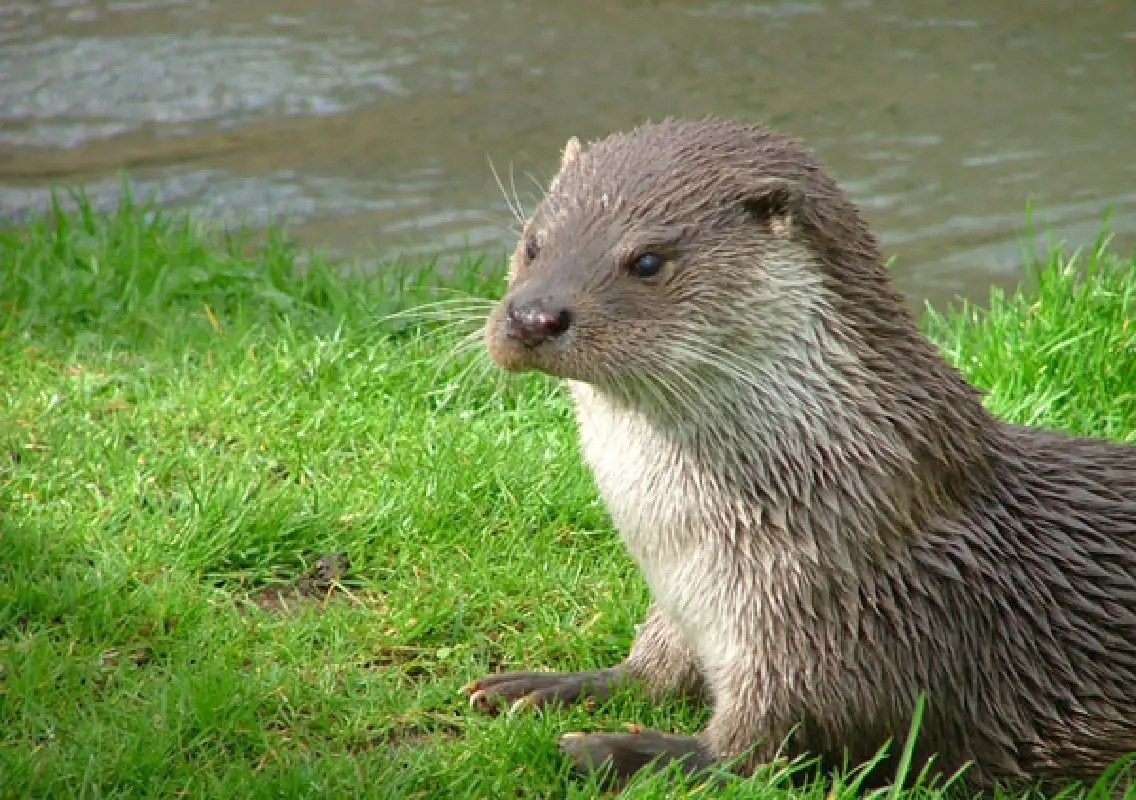


Udupi: A rare otter was spotted in an agricultural field at Paddam near Hiriadka, creating curiosity among local residents after the animal was found during ploughing work on the night of August 7.
The unusual sighting occurred when local farmer Raghavendra was working in his field with a tractor. While ploughing the land, he suddenly noticed the animal and realised that it was an otter.
The animal, locally known as neeru naayi, reportedly remained in the area instead of immediately moving away. It was seen resting at the same location again on Saturday morning.
Farmer surprised by unusual sighting
Raghavendra was reportedly carrying out routine agricultural work when he noticed the unfamiliar animal in the field.
The unexpected appearance of the otter surprised him, as such animals are not commonly seen in agricultural fields in the area.
After spotting the animal, he observed it from a distance. Rather than immediately fleeing, the otter remained in the vicinity and was reportedly found resting in the same spot the following morning.
The continued presence of the animal attracted the attention of local residents, who became curious about how it had reached the agricultural field.
Otters usually associated with water habitats
Otters are semi-aquatic mammals that are generally associated with rivers, streams, wetlands, ponds and other water-rich habitats.
Their bodies are adapted to life in and around water, and they are known for their swimming ability and dependence on aquatic environments for much of their food.
Because of these habitat preferences, finding an otter in an agricultural field away from an obvious water body can appear unusual to local residents.
The sighting at Paddam has therefore generated interest among villagers, particularly because the animal remained in the field for an extended period.
The animal’s local name, neeru naayi, reflects its association with water.
Sighting creates curiosity among residents
The discovery has drawn the attention of people in the surrounding area, with residents keen to understand why the otter had entered the agricultural land.
Otters can travel across land between water bodies and may occasionally move away from their usual habitats in search of food, shelter or suitable conditions. An individual animal may also find itself in an unfamiliar location due to changes in its surroundings.
However, the sighting does not by itself indicate a broader change in the species’ habitat or population.
The presence of the otter has nevertheless provided an unusual wildlife encounter for residents of Paddam.
Residents advised to maintain distance
Wild animals that enter agricultural or residential areas should generally be observed from a safe distance rather than approached or handled.
An animal that appears calm or inactive may still become defensive if it feels threatened. Unnecessary crowding can also cause stress to wildlife.
Residents who encounter unusual wild animals can inform the relevant forest or wildlife authorities so that trained personnel can assess the situation and determine whether intervention is necessary.
The Paddam sighting also serves as a reminder that wildlife can sometimes move beyond areas where people normally expect to encounter it.
An unusual wildlife encounter in Hiriadka
The sighting of the otter has added an unexpected wildlife moment to the agricultural landscape around Paddam.
For Raghavendra, what began as a routine night of ploughing turned into an unusual encounter with a wild animal rarely seen in such surroundings. The fact that the otter remained at the same location into Saturday morning made the sighting even more noteworthy for local residents.
While otters are naturally associated with water bodies, their occasional movement across land can bring them into contact with agricultural areas and human settlements.
The incident has prompted curiosity among residents and highlighted the presence of wildlife in the wider Hiriadka landscape. It also underlines the importance of allowing wild animals to move safely without unnecessary disturbance when they are encountered outside their usual habitats.