







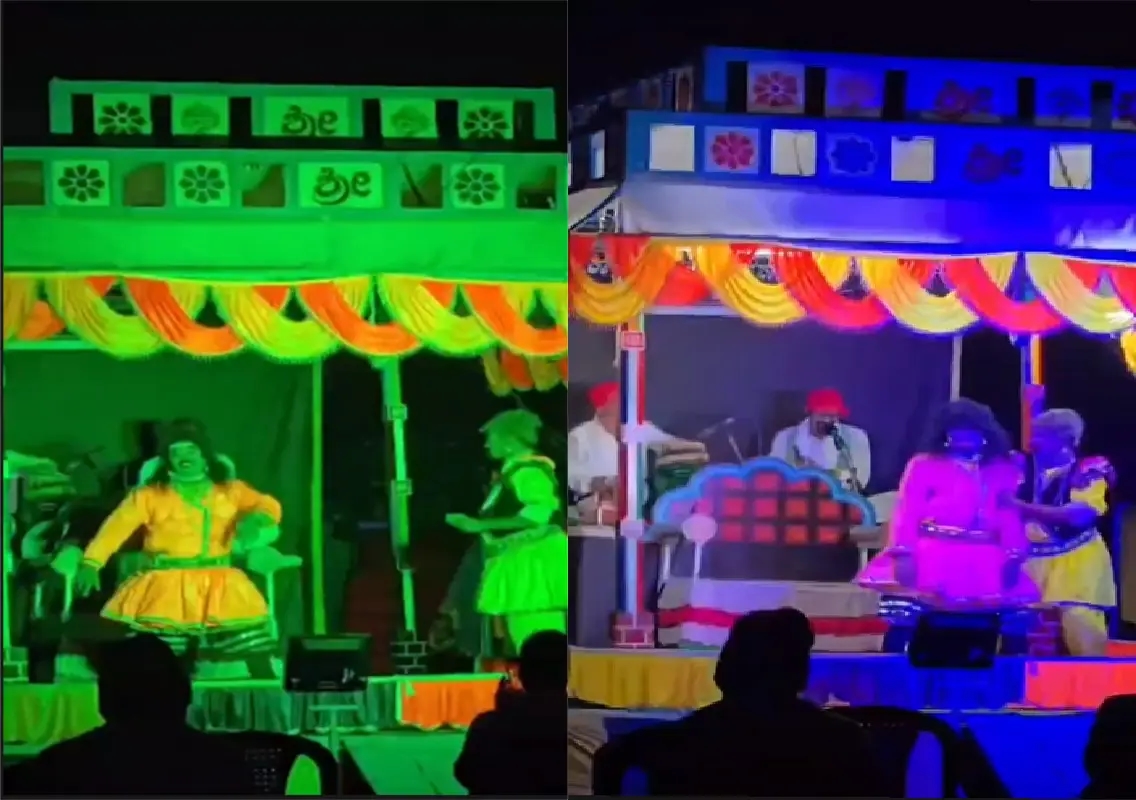


Udupi: The inclusion of a Tamil song in a Yakshagana performance by the Sri Kshetra Kukkehalli Yakshagana Mela has triggered a linguistic controversy, with the Karnataka Rakshana Vedike (KRV) strongly objecting to the use of a song in another language in the traditional coastal art form.
The organisation has described the inclusion as an affront to Kannada language and culture and has submitted a complaint to the Byndoor Police Station, seeking restrictions on the troupe’s scheduled performance within the police station limits.
The controversy centres on the ‘Vaibhava Suryavamshi’ performance presented by the Kukkehalli Mela. The use of the Tamil song has drawn criticism from the organisation, which maintains that Yakshagana should preserve its traditional linguistic and cultural identity.
KRV objects to Tamil song in performance
The Karnataka Rakshana Vedike has expressed strong displeasure over the inclusion of the Tamil song in the Yakshagana prasanga.
Yakshagana is a traditional performance art associated with the coastal districts of Karnataka. It brings together music, dance, dialogue, elaborate costumes and storytelling, drawing extensively on Kannada literary and cultural traditions.
The KRV has argued that Yakshagana is not merely an entertainment programme but an important expression of the language, literature, culture and heritage of Karnataka.
According to the organisation, introducing songs in other languages into performances of this traditional art form could undermine its distinctive character and hurt the sentiments of Kannada-speaking audiences.
The organisation has therefore questioned the decision to include a Tamil song in the ‘Vaibhava Suryavamshi’ presentation.
Complaint submitted to Byndoor Police
In connection with the issue, Ansar Ahmed, honorary president of the organisation, has submitted a complaint to the Byndoor Police Station.
The complaint requests the police not to grant permission for the Kukkehalli Mela’s Yakshagana performance scheduled to be held within the jurisdiction of the Byndoor Police Station.
The organisation has taken the position that performances of traditional art forms should respect their established cultural and linguistic framework. It has called for the issue to be addressed before the troupe stages its programme in the area.
The complaint brings the controversy before the local police authorities, although no response from the police or the Yakshagana troupe has been provided in the information available.
Warning against changes to Yakshagana tradition
The KRV has warned that it would not tolerate experiments that, in its view, compromise the traditional structure and identity of Yakshagana.
The organisation has also cautioned that it would take direct action if performances continued in a manner it considered disrespectful to Kannada language and culture.
It warned that its members could visit the performance venue and stop the programme if such practices continued.
The warning has added another dimension to the controversy, moving the issue beyond criticism of the song’s inclusion to a potential confrontation at the venue.
Debate over tradition and artistic choices
The controversy has once again brought attention to questions surrounding the preservation of traditional performance forms and the creative choices made by contemporary troupes.
Yakshagana has a long-standing place in the cultural life of coastal Karnataka, with performances combining regional storytelling traditions, music, dance and dialogue. Its linguistic and musical elements are central to the identity of the art form.
The KRV’s objection is based on its view that the use of songs in other languages is inconsistent with Yakshagana’s cultural purpose. The issue, however, also raises questions about how traditional art forms respond to changing artistic practices.
With the organisation submitting a complaint to the Byndoor Police and warning of possible intervention at the venue, attention is likely to remain on the Kukkehalli Mela’s scheduled performance.
The controversy highlights the sensitivity surrounding language and cultural identity in Karnataka’s traditional arts. Any further developments will depend on the response of the police, the organisers and the Yakshagana troupe.