







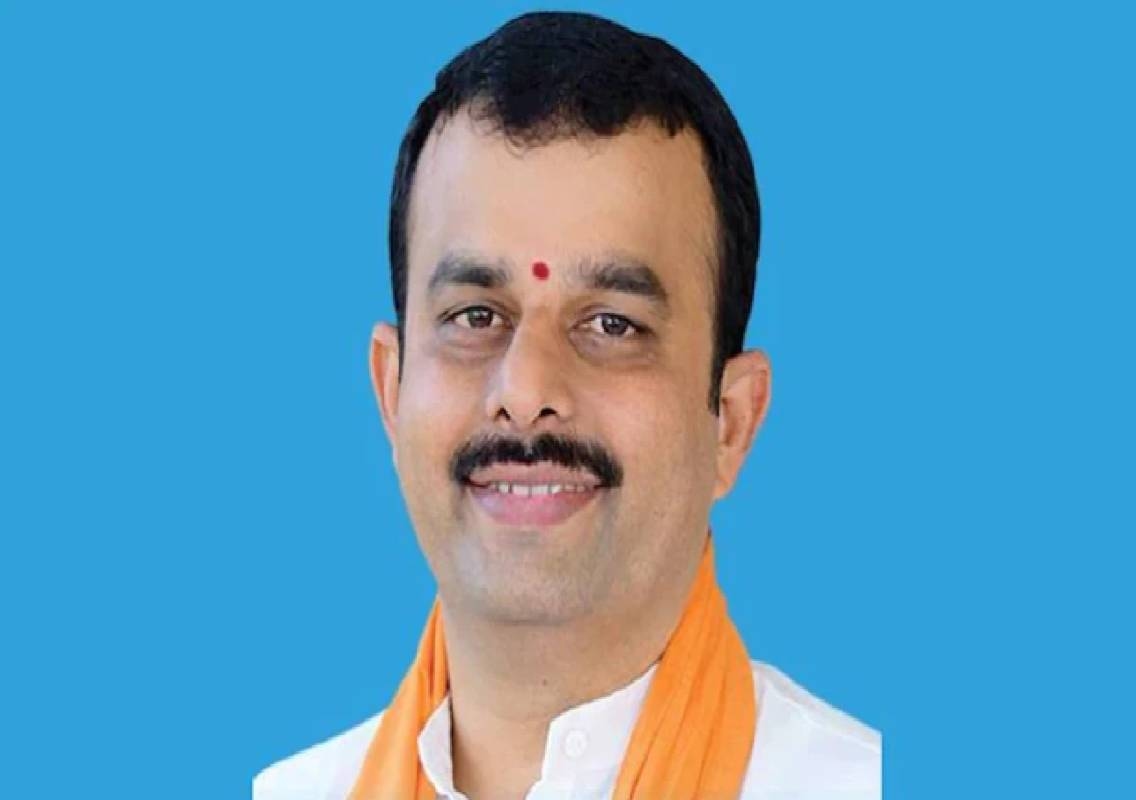


Udupi: BJP leader and Karkala MLA V. Sunil Kumar has criticised the Congress over its opposition to the Special Intensive Revision (SIR) of electoral rolls in Karnataka, questioning the party’s objections to the ongoing voter-list verification exercise.
Sunil Kumar said political parties should allow the Election Commission of India (ECI) to complete the verification process rather than characterising applications submitted during the exercise as fraudulent before they are examined by election authorities.
His remarks come amid a political dispute in Karnataka over the SIR exercise. Congress leaders have raised concerns about alleged attempts to remove genuine voters from electoral rolls through bulk Form-7 applications, while BJP leaders have defended the need for verification and said the applications must ultimately be examined by the election authorities.
Sunil Kumar questions Congress opposition
Sunil Kumar questioned the Congress’s position on the SIR process and its objections to applications submitted for changes to electoral rolls.
According to reports, he argued that the Election Commission has the responsibility to verify applications seeking inclusion or deletion of names from the electoral rolls.
His remarks were made against the backdrop of allegations from Congress leaders that Form-7 applications have been used in some places to target large numbers of voters.
The BJP leader’s position, as reported, was that an application itself should not be treated as proof of voter deletion or fraud because the Election Commission has to examine and verify the claims before taking a decision.
Dispute centres on Form-7 applications
Form-7 is an official application used to request deletion of a name from an electoral roll. During the ongoing SIR exercise, concerns have emerged over the filing of multiple applications seeking deletion of voters’ names.
The issue has become politically contentious in Karnataka.
Congress leaders have alleged that some applications were submitted in bulk and without valid grounds, raising concerns that eligible voters could be removed from the electoral rolls. The party has demanded action against those allegedly responsible for such applications.
The Election Commission, however, has a verification process through which claims and objections are examined before changes are made to the electoral roll.
A recent report said the Karnataka Chief Electoral Officer agreed to initiate legal proceedings against those responsible for fraudulent bulk Form-7 applications following a Congress protest. The CEO also instructed electoral registration officers to take appropriate action where violations are established.
Congress has protested against SIR
The Congress has organised protests in Karnataka against the SIR exercise and has raised concerns about the manner in which the electoral-roll revision is being conducted.
In Udupi, the district Congress unit staged a protest at the Deputy Commissioner’s Office in Manipal on September 28. The party demanded the resignation of Chief Election Commissioner Gyanesh Kumar and alleged irregularities in the functioning of the Election Commission and the SIR process.
The protest formed part of a wider Congress campaign against the Election Commission’s handling of the electoral-roll revision.
Congress leaders have argued that the process could result in eligible voters being excluded if objections and deletion applications are not properly scrutinised.
These remain political allegations and concerns raised by the party. The final electoral roll will depend on the verification and adjudication process conducted by the election authorities.
BJP says verification is the responsibility of ECI
The BJP’s response has focused on the Election Commission’s role in examining applications.
A recent report quoted Sunil Kumar as saying that calling the applications fraudulent was inappropriate because verification has to be carried out by the ECI. He also pointed out that applications for inclusion and deletion can be submitted through the prescribed process.
This position places the emphasis on the distinction between submitting an application and actually deleting a voter’s name.
A Form-7 application does not, by itself, establish that a voter has been removed from the electoral roll. Election officials are required to examine the application and the relevant circumstances before making changes.
The distinction has become central to the political debate surrounding SIR in Karnataka.
Concerns over alleged bulk voter deletions
The controversy intensified after reports of large numbers of Form-7 applications being submitted in some constituencies.
The Indian Express recently reported concerns about alleged bulk deletion applications in at least four constituencies. The report also said warnings had been issued that people submitting Form-7 applications without supporting evidence could face legal action.
Congress leaders have described some of these cases as attempts to remove eligible voters from the rolls.
The Election Commission’s verification mechanism is intended to determine whether such applications are valid. Where applications are found to be false or unsupported, authorities can take action according to the applicable rules.
The dispute therefore involves both the electoral-roll revision process and competing political interpretations of how applications are being used.
SIR process continues across Karnataka
The Special Intensive Revision is being carried out to verify and update electoral rolls.
The exercise involves checking voter details and processing claims and objections relating to electoral-roll entries.
As the process progresses, election authorities are expected to examine applications and supporting documents before final decisions are taken.
The issue has attracted considerable political attention because electoral rolls directly affect the eligibility of citizens to participate in elections.
The current dispute also highlights the importance of distinguishing between allegations about the process, applications submitted by individuals and decisions actually taken by election officials.
Political debate continues in Udupi
Sunil Kumar’s remarks add to the wider political debate over SIR in Karnataka.
Congress leaders have continued to question the process and have organised protests against what they describe as irregularities. BJP leaders, meanwhile, have defended the revision exercise and emphasised the Election Commission’s authority to verify applications.
In Udupi, the Congress protest on September 28 reflected the intensity of the local political opposition to the process. The party’s district unit called for action against the Chief Election Commissioner and raised concerns about the conduct of the revision.
The competing positions are likely to remain part of the political discussion until the electoral-roll revision process reaches its next stages.
For voters, the key issue is whether their names and details are correctly reflected in the electoral rolls and whether objections or claims are properly considered by the election authorities.
Conclusion
BJP leader and Karkala MLA V. Sunil Kumar has criticised the Congress over its opposition to Karnataka’s SIR exercise, saying applications for electoral-roll changes should be subjected to verification by the Election Commission rather than being labelled fraudulent before examination.
Congress leaders have raised concerns over alleged bulk Form-7 applications and the possible deletion of eligible voters, while election authorities have indicated that appropriate action can be taken where fraudulent applications are established.
The debate remains ongoing as the SIR process continues across Karnataka.