







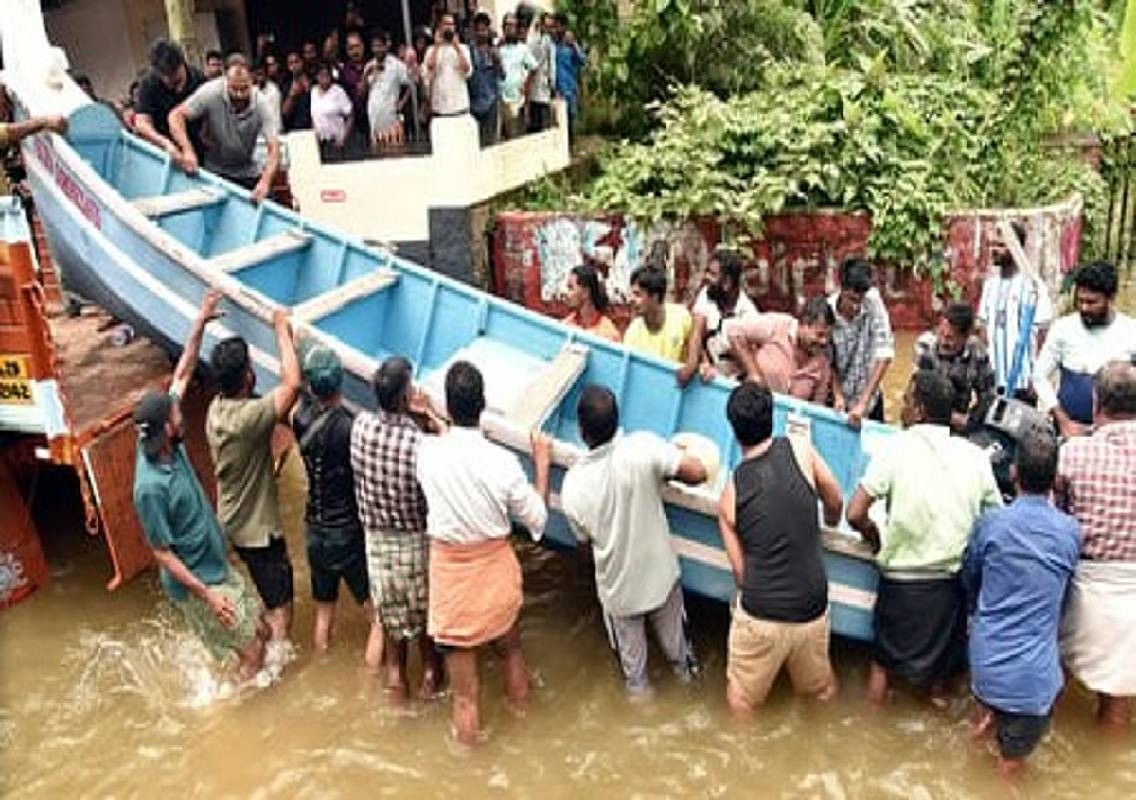


Udupi: Twenty-seven fishers were rescued after their boat began sinking in the sea off Gangolli on Wednesday afternoon, following damage to the vessel that allowed seawater to enter rapidly. Police and fellow fishing boat crews responded to the emergency and shifted all 27 fishers to rescue boats, averting a major tragedy.
The incident occurred when the fishing vessel was about three nautical miles from the Gangolli sea mouth. Strong waves reportedly ripped off a plank of the boat, causing water to gush into the vessel. The fishers were left in a potentially dangerous situation as the boat began taking in water.
Boat starts sinking after plank is damaged
The incident took place at around 3.30 pm when the fishing boat was operating off the Gangolli coast in Udupi district.
According to the report, powerful waves struck the vessel and ripped off one of its planks. The damage allowed seawater to enter the boat rapidly.
With the vessel taking in water, the 27 fishers on board were at immediate risk.
The boat was approximately three nautical miles from the Gangolli sea mouth at the time, putting the fishing crew offshore and away from immediate land-based assistance.
The situation required a quick response because continued flooding could have caused the vessel to capsize or sink completely.
Police rush to rescue fishers
After receiving information about the sinking boat, police quickly moved towards the location.
Rather than waiting for the damaged vessel to reach shore, police personnel travelled towards the fishing boat aboard other fishing vessels.
The rescue operation involved shifting the stranded fishers from the damaged boat to safer rescue boats.
All 27 fishers were successfully evacuated from the sinking vessel.
The quick intervention helped ensure that no lives were lost in the incident.
Rescue boats bring all 27 fishers to safety
The fishers were transferred from the damaged vessel to rescue boats after the emergency was reported.
The operation was carried out while the boat was taking in seawater, making the timing of the rescue particularly important.
Once all 27 fishers had been moved to safer vessels, the immediate danger to their lives was brought under control.
There were no reports of casualties in the incident.
The successful evacuation also demonstrated the importance of communication between fishing communities and local authorities when emergencies occur at sea.
Gangolli sea mouth becomes focus of rescue operation
The incident occurred near the Gangolli sea mouth, an important fishing area along the Udupi coast.
Fishing activity is common along Karnataka’s coastline, with numerous vessels operating from coastal harbours and landing centres.
However, fishing vessels operating at sea remain exposed to changing weather and wave conditions.
Damage to a boat’s hull or planks can quickly become dangerous, particularly when seawater starts entering the vessel faster than it can be removed.
In this case, the damage caused by the waves resulted in precisely such a situation.
Strong waves damaged the fishing vessel
The immediate cause of the emergency was the force of the waves, which reportedly ripped off a plank from the boat.
Once the plank was dislodged, seawater began entering the vessel rapidly.
A fishing boat can become unstable when substantial quantities of water enter its hull.
The additional weight of the water can affect the vessel’s balance and make it increasingly difficult to keep it afloat.
For the 27 fishers on board, the situation could therefore have deteriorated quickly if rescue efforts had been delayed.
Quick response prevented a major tragedy
The successful rescue is significant because all 27 people aboard the vessel were brought to safety.
A sinking fishing boat can pose serious risks, particularly when it is several nautical miles from the coast.
The response by police and other fishing vessels ensured that the fishers did not remain aboard the damaged boat while it continued to take in water.
The coordinated rescue also highlights the role of nearby fishing communities during maritime emergencies.
Fishing communities play key role in emergencies
Fishing boats often operate in groups or within areas where other vessels are active.
This can provide an important first line of assistance when a vessel encounters mechanical problems, damage or rough sea conditions.
In the Gangolli incident, fishing boats were used to reach the stranded crew and help shift them to safety.
Such cooperation can be particularly important when an emergency occurs away from the shore and before larger rescue agencies can reach the location.
No casualties reported
Despite the dangerous circumstances, all 27 fishers were rescued.
There were no reports of deaths or serious injuries following the incident.
The absence of casualties marks the rescue as a successful emergency response, especially considering that the vessel was already taking in seawater.
The fishers were moved away from the damaged boat before the situation could escalate further.
Importance of communication at sea
The incident also highlights the importance of immediately reporting emergencies involving fishing vessels.
The rescue operation began after authorities received information about the boat’s condition.
A delay in communicating the problem could have made the rescue significantly more difficult, especially if the vessel had drifted further offshore or begun to capsize.
Quick communication allows nearby boats and authorities to assess the situation and send assistance.
Fishing vessels face multiple risks offshore
Fishing at sea involves several risks, including rough waves, mechanical failures, equipment damage and sudden changes in weather conditions.
Even a relatively small structural failure can become dangerous if water begins entering the hull.
Fishing crews therefore need to remain alert to damage and communicate quickly with nearby vessels when an emergency occurs.
The Udupi incident is another reminder of the challenges faced by fishers who spend long periods at sea.
Karnataka’s coastal fishing sector
Karnataka has a significant fishing community spread across its coastal districts, including Udupi, Dakshina Kannada and Uttara Kannada.
The fisheries sector provides livelihoods to thousands of people directly and indirectly through fishing, processing, transportation and marketing.
The Centre has also been supporting fisheries infrastructure in Karnataka.
According to the Union Fisheries Ministry, projects worth Rs 1,053.60 crore were approved under the Pradhan Mantri Matsya Sampada Yojana in Karnataka between 2020-21 and 2026-27. The initiatives include fishing harbour infrastructure, cold-chain facilities and other fisheries-related development.
Safety remains crucial for fishers
While infrastructure and technology can improve fishing operations, safety at sea remains a critical concern.
Fishing vessels need to be maintained properly because structural damage can quickly turn into an emergency.
The latest incident shows how a damaged plank can allow large quantities of seawater to enter a vessel within a short period.
For fishing crews, being prepared to respond to such situations can make the difference between a manageable emergency and a major accident.
Rescue highlights value of local coordination
The successful rescue of all 27 fishers was possible because information about the emergency reached authorities and nearby boats responded quickly.
Police travelled to the location using fishing boats and helped transfer the crew to rescue vessels.
Such coordination between law enforcement and the fishing community can be particularly valuable along coastal areas where boats are frequently operating offshore.
What happened to the damaged boat?
The initial report focuses on the rescue of the 27 fishers and does not provide further details about the final condition or recovery of the damaged vessel.
The priority during the incident was to get everyone aboard the sinking boat to safety.
Once the crew had been evacuated, authorities could assess the condition of the vessel separately.
Further information about whether the boat was recovered or towed to shore may emerge later.
Rescue averts possible maritime tragedy
With 27 people aboard, the incident had the potential to become a major maritime accident.
The vessel was already taking in seawater and was several nautical miles from the coast.
The timely rescue prevented the situation from escalating into a mass-casualty incident.
For the families of the fishers, the successful rescue ensured that all those aboard returned safely after what could have been a frightening experience at sea.
Coastal authorities remain important during emergencies
Local police and coastal authorities play an important role in responding to incidents involving fishing vessels.
While specialised maritime agencies may handle larger emergencies, local coordination can help get assistance to stranded crews quickly.
In the Gangolli case, the response was initiated after police received information about the vessel’s condition.
The involvement of nearby fishing boats also enabled the rescue team to reach the affected vessel.
Conclusion
Udupi: Twenty-seven fishers were rescued after their boat began sinking about three nautical miles off the Gangolli sea mouth on Wednesday afternoon. Strong waves reportedly ripped off a plank of the vessel, allowing seawater to enter rapidly.
After receiving information about the emergency, police rushed to the location aboard fishing boats and helped transfer all 27 fishers to rescue vessels. No casualties were reported.
The incident highlights the risks faced by fishing crews operating offshore and the importance of rapid communication and coordination between authorities and nearby fishing vessels during maritime emergencies.