







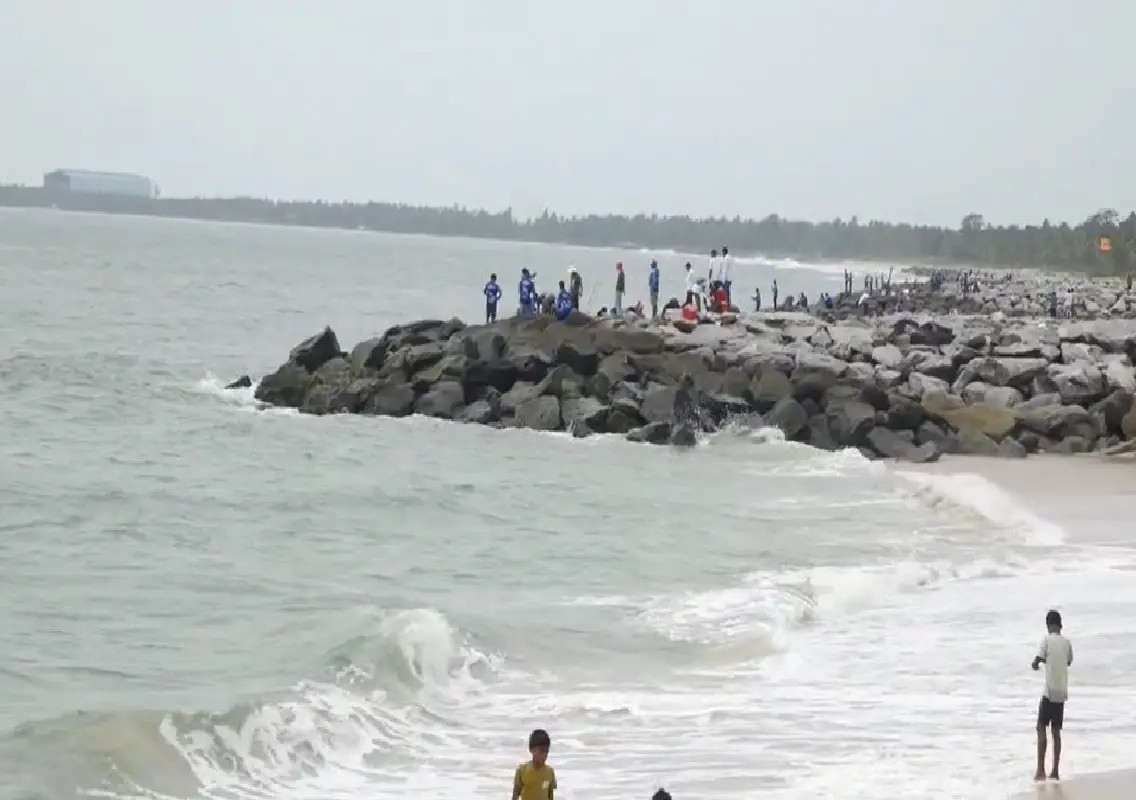


Udupi: A unique fishing competition using angling rods brought together more than 83 teams along the coast, turning the traditional fishing environment into an exciting sporting contest for amateur fishermen in Udupi.
In a district where fishing is a major livelihood for thousands of families, participants took part in the unusual competition without relying on large fishing nets. Instead, contestants stood along the seashore with fishing rods, patiently waiting for fish to take the bait amid the waves.
The competition attracted considerable attention as participants competed to catch fish of different sizes. The excitement increased every time an angler felt a bite and successfully pulled a fish from the water.
Amateur anglers take on the waves
Unlike conventional fishing, where professional fishermen often venture into the sea using boats and large nets, the competition focused on rod-and-line angling.
Contestants remained stationed along the shore, carefully watching their fishing rods and waiting for the right moment to make a catch. The unpredictable nature of fishing made every catch a moment of excitement, with participants eagerly watching one another.
Some anglers managed to catch smaller fish, while others landed comparatively larger ones. The competition created a lively atmosphere along the coast as participants waited to see whose rod would produce the day’s biggest catch.
The anticipation was not limited to the contestants. People watching the event were also curious about which participant would make the first significant catch and who would eventually emerge as the winner.
More than 83 teams participate
More than 83 teams participated in the fishing competition, demonstrating the interest generated by the distinctive format.
For many participants, the event offered an opportunity to experience fishing as a recreational activity rather than as a profession. The competition allowed amateur anglers to test their patience, technique and ability to read the movement of fish in the coastal waters.
The presence of numerous teams also added to the competitive spirit. Participants kept a close watch on their catches while continuing to wait for opportunities to land bigger fish.
The event combined the traditional association of the coastal region with fishing and the recreational appeal of angling, giving participants a different experience by bringing the activity into a competitive setting.
Biggest catch determines prizes
Prizes were awarded to participants who recorded notable catches during the competition. The first prize and other awards were presented based on the size of the fish caught.
This made the size of the catch one of the major attractions of the event. Participants were eager to see whether their fishing rod would produce a catch large enough to win one of the prizes.
The possibility of landing the biggest fish added another layer of excitement to the contest, with every successful catch drawing attention from fellow contestants and spectators.
Fishing takes on a new dimension
Fishing has traditionally been closely associated with the lives and livelihoods of coastal communities in Udupi. Thousands of families depend on fishing and related activities for their income, making it an important part of the region’s coastal identity.
The angling competition presented a different side of this familiar activity. Rather than focusing on commercial fishing, it introduced fishing as a recreational and competitive pursuit for amateurs.
Participants experienced the thrill of waiting for a fish to bite, responding quickly when the rod moved and attempting to land the catch successfully.
The event also demonstrated how familiar coastal traditions can be presented in new formats. For professional fishermen, fishing is primarily a livelihood and a demanding occupation. For the amateur participants at the competition, however, it became an opportunity for recreation, friendly rivalry and enjoyment.
Coastal event attracts public attention
The competition held amid the waves of the sea attracted the attention of people along the coast. The sight of dozens of teams waiting patiently with fishing rods created a different atmosphere from the usual commercial fishing activity seen along the coastline.
The uncertainty surrounding each catch kept the competition engaging until the end. Participants waited to find out who would make the largest catch and take home the top prize.
The event thus brought together the region’s strong fishing tradition and the growing interest in recreational angling. With more than 83 teams participating, the competition offered amateur fishermen a platform to showcase their fishing skills while enjoying a day by the sea.
In a region widely recognised for its fishing culture, the contest introduced another dimension to the activity, transforming a familiar coastal practice into an entertaining competition for amateur anglers.