


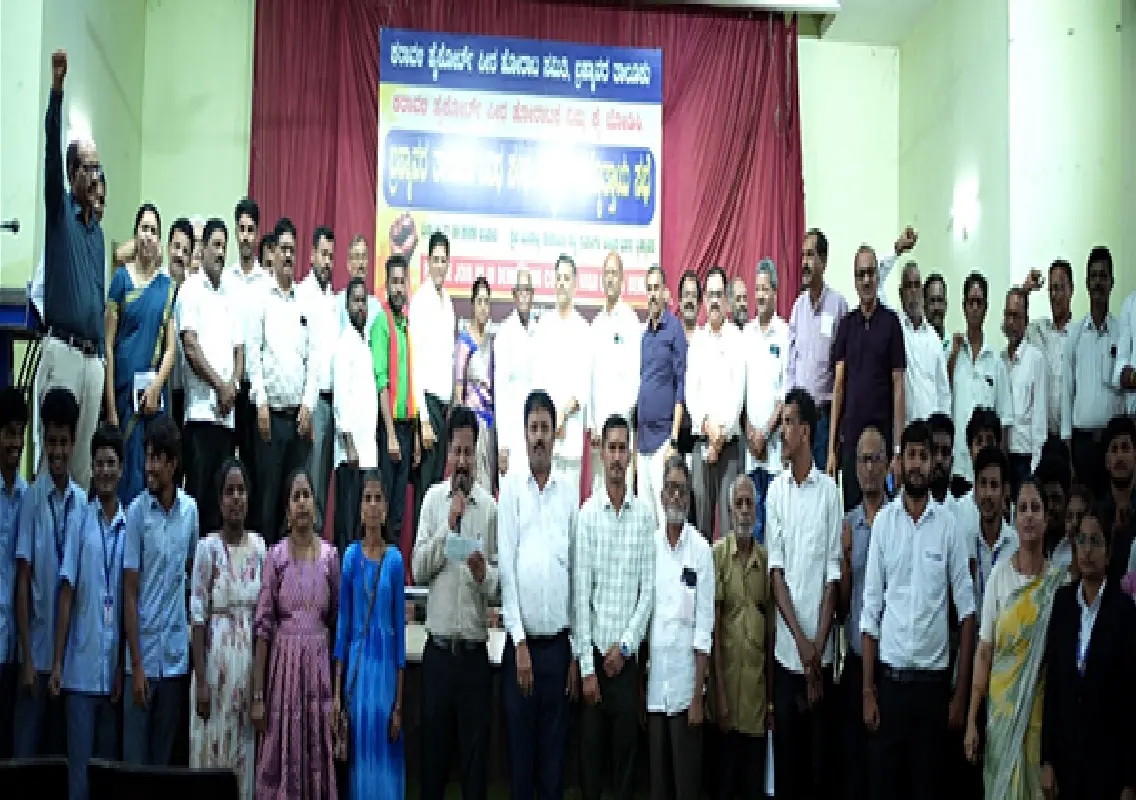


Brahmavar: The demand for establishing a separate High Court bench for Karnataka’s coastal region in Udupi gained momentum at a meeting organised by the Brahmavar Taluk High Court Bench Struggle Committee and the Advocates’ Association, following a call by the Udupi District High Court Bench Struggle Committee.
Representatives of various organisations, community groups, professional associations and educational institutions participated in the meeting and urged the authorities to expedite the process of establishing the proposed bench. Speakers argued that Udupi’s central location in the coastal region would make it accessible to people from Dakshina Kannada, Udupi and Uttara Kannada districts, as well as neighbouring areas of Shivamogga and Chikkamagaluru.
The participants maintained that a separate bench would reduce the difficulties faced by litigants who currently have to travel to Bengaluru to pursue cases before the Karnataka High Court.
Long-standing demand for a coastal High Court bench
Introducing the meeting, advocate Prem Prasad Shetty, district convener of the High Court Bench Struggle Committee, said the time had come to fulfil the long-standing demand for a separate High Court bench for the coastal region.
He referred to reports and recommendations associated with the Justice Jaswant Singh Commission, NITI Aayog and the Law Commission of India, stating that discussions on judicial reforms had highlighted the importance of improving access to justice.
Shetty said the proposed bench should be viewed as an important step towards making judicial services more accessible to ordinary citizens, particularly those who face financial and logistical difficulties in pursuing legal remedies.
He urged representatives of different organisations to continue working together until the demand was addressed.
According to the committee, the proposal has gained renewed attention following a notification issued by the Karnataka Chief Justice last month constituting a three-member judicial committee to examine the feasibility and implications of establishing a High Court bench.
Shetty welcomed the development, describing it as a positive step resulting from sustained efforts by advocates and supporters of the demand.
The committee’s examination is expected to consider the practical implications of establishing a separate bench. The meeting participants called for the process to move forward and for the long-standing demand to receive due consideration.
Travel costs and distance cited as major concerns
A key argument raised at the meeting was the difficulty faced by litigants from the coastal districts in accessing the principal seat of the Karnataka High Court in Bengaluru.
Shetty said people travelling from the coastal region had to contend with long journeys, considerable expenditure and the loss of time involved in attending court proceedings. He referred to the distance involved as a major obstacle for people who need to pursue legal cases over extended periods.
For litigants from economically disadvantaged backgrounds, the cost of travel and accommodation can add to the financial burden of litigation. Repeated journeys may also require people to take time away from work and other responsibilities.
Supporters of the proposed bench believe that locating it in Udupi would reduce these difficulties for a significant section of the coastal population. They also argued that easier geographical access could help ordinary citizens pursue their legal remedies more effectively.
The demand, as presented at the meeting, centres on bringing judicial services closer to the people rather than requiring litigants to travel long distances for hearings.
Constitutional principles and access to justice
Shetty linked the demand to the constitutional principles of equality before the law and the right to life and personal liberty, referring to Articles 14 and 21 of the Constitution of India.
He said the proposed bench would help advance the broader objective of ensuring that access to justice was not hindered by geographical distance or financial limitations.
Shetty also referred to the coastal region’s population, which he said exceeded 50 lakh, and described it as one of Karnataka’s major tax-contributing regions.
He argued that the region’s population and economic contribution strengthened the case for improving access to judicial services locally.
“The main objective is to bring justice closer to the people. This is a legitimate struggle for the poor, disadvantaged sections and ordinary citizens. We must remain united and organised until the demand is fulfilled,” he said.
The committee and participating organisations called for continued public support, arguing that the issue affected not only members of the legal profession but also citizens who might need to approach the High Court.
Leaders and organisations extend support
Several prominent representatives addressed the gathering and expressed support for establishing the proposed bench in Udupi.
Entrepreneur and political leader Prasad Raj Kanchan, former Zilla Panchayat president Bhujanga Shetty, Advocates’ Association president Kadoor Praveen Shetty, social activist Shekhar Havanaje and Jnana Vasanth Shetty were among those who spoke.
Their participation reflected support for the demand from different sections of the region, including the legal profession, public life and social organisations.
The meeting was attended by Lions Club president Sudesh Hegde, Rotary Club representative Pramod Shetty, Jaikishan, senior citizens’ forum representative Shedikodlu Vittal Shetty, Samata Sainik Dal women’s president Jyothi Shiriyara, RTI activist Sadashiva Shetty, Barakuru Shantharam Shetty, Akhil Hegde, Dalit Sangharsha Samiti district president Chandra Althar, Harish Shetty Cherkadi and Pournami Prem.
Representatives of the auto drivers’ association, goods auto owners’ association and women’s self-help groups also participated. Students from SMS and VBCL colleges attended the programme.
The participation of these groups highlighted the organisers’ effort to build a broad coalition in support of the proposed bench.
Alwyn Andrade compered the programme, while Mahesh Tadekallu proposed the vote of thanks.
Judicial committee’s examination seen as an important step
The constitution of a three-member judicial committee to examine the feasibility and implications of a separate High Court bench has given the campaign a fresh point of focus.
Supporters of the proposal are seeking further progress following the notification and want the concerns of coastal Karnataka’s residents to be considered during the examination process.
The meeting in Brahmavar reiterated that Udupi could serve as a central location for litigants from the three coastal districts and neighbouring regions. Participants said a bench in the region would help reduce travel-related burdens and improve access to judicial services.
However, the proposal remains subject to examination of its feasibility and implications. The meeting concluded with a call for unity among advocates, public representatives, community organisations and residents to sustain the demand.