


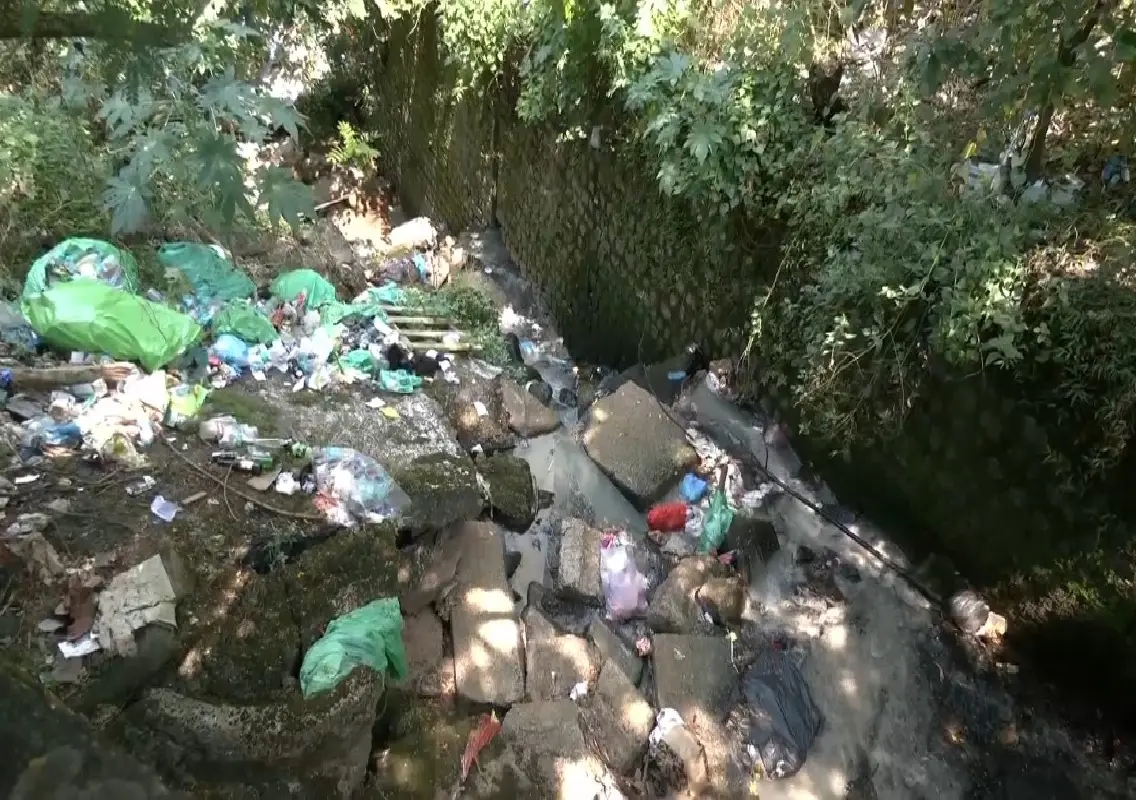


Udupi: Residents of Sagri and other villages around Udupi and Manipal have raised concerns over the alleged discharge of untreated sewage into residential areas, claiming that wastewater is contaminating wells, creating mosquito breeding grounds and increasing the risk of diseases such as dengue.
The residents have urged the authorities to extend the underground drainage (UGD) network to areas that remain without connectivity and take action against the discharge of wastewater from urban areas into nearby villages.
The concerns come as Udupi City Municipal Council continues to face challenges in expanding its drainage infrastructure. According to Municipal Commissioner Mahantesh Hangaragi, 16 of the 35 wards under the civic body’s jurisdiction have underground drainage connectivity, while the remaining 19 wards, including Manipal, do not have the facility.
A detailed project report (DPR) and cost estimate have been prepared for the proposed drainage infrastructure, with the estimated expenditure standing at around Rs 1,000 crore.
Sagri residents allege sewage discharge from Manipal
Sagri village, located between Udupi and Manipal, has been among the areas affected by the alleged flow of wastewater from surrounding urban settlements.
Local resident Sampath told ANI that sewage flowing into the village was contaminating wells and creating conditions conducive to mosquito breeding. He said residents were concerned about the possible health consequences and had appealed to the authorities to resolve the problem.
According to Sampath, Sagri’s lower elevation causes wastewater from surrounding urban areas to flow into the village.
He alleged that drainage upstream was not being properly managed and that wastewater was being discharged into the village without adequate treatment.
Sampath said Sagri did not have an underground drainage connection despite the presence of a UGD line along a nearby main road. Residents have urged the authorities to connect the village to the existing network so that wastewater can be collected and managed through an organised system.
He added that the villagers had raised the issue with the Deputy Commissioner during a village programme and submitted a request seeking a solution. The residents are awaiting action from the concerned departments.
Residents link drainage problems to dengue concerns
Another resident, Umesh Nayak, said the lack of adequate drainage infrastructure had affected several villages around Udupi and Manipal, particularly during the monsoon.
He alleged that wastewater from large buildings in urban areas flowed into neighbouring villages during the rainy season, creating stagnant water and mosquito breeding grounds.
Nayak claimed that around 25 to 30 people across two or three nearby villages had contracted dengue during the current year’s rainy season. He said he had also suffered from the disease, as had two or three other members of his household.
The reported cases and their alleged connection to sewage discharge have not been independently established in the information provided. However, the residents’ concerns highlight the need to address stagnant wastewater and improve drainage and sanitation in affected areas.
Nayak also expressed concern about possible groundwater contamination. He alleged that wastewater was seeping into wells and stepwells used by residents, making some water sources unsuitable for drinking.
The concerns have prompted calls for the authorities to inspect the affected locations, assess water quality and ensure that wastewater is properly collected and treated.
Residents seek better planning and stricter controls
Nayak questioned whether the expansion of buildings and other urban development around Udupi and Manipal had been accompanied by adequate drainage infrastructure.
He said permissions were being granted for large buildings even as nearby villages continued to face wastewater management problems.
According to him, development planning should account for essential infrastructure, including drainage networks, appropriate setbacks and systems for managing sewage before new buildings are permitted.
The residents have called for stricter monitoring of buildings to prevent wastewater from being discharged indiscriminately into surrounding areas.
They have also urged officials to ensure that construction approvals are accompanied by adequate arrangements for sewage collection, treatment and disposal.
The issue highlights the challenges that can arise when residential and commercial development expands into areas where drainage infrastructure has not kept pace with growth.
Only 16 of 35 wards have underground drainage
Responding to the concerns, Udupi City Municipal Commissioner Mahantesh Hangaragi told ANI that underground drainage work had been completed in 16 of the 35 wards under the civic body’s jurisdiction in 2009.
The remaining 19 wards do not have underground drainage connectivity. The Manipal region falls within this group.
Hangaragi said the hilly terrain in these areas makes it difficult to pump wastewater, which has contributed to the delay in extending the network.
The civic body has prepared a detailed project report and an estimate through the Water Board for the proposed drainage infrastructure. The estimated cost is approximately Rs 1,000 crore.
Under the proposal, eight wet wells and one sewage treatment plant (STP) have been planned. The commissioner said that after suitable locations are identified, the files relating to land acquisition would be moved forward.
Wet wells are used in pumping systems to collect wastewater before it is transferred to another location. Such infrastructure can be important in areas where elevation differences make gravity-based drainage difficult.
The proposed network is intended to address the infrastructure gap in the wards that remain without underground drainage facilities.
Existing drainage network undergoing upgrades
Alongside the proposed expansion, the civic body is undertaking repair and improvement work in the 16 wards that already have underground drainage connectivity.
According to Hangaragi, the work includes changing pipeline routes, increasing pipeline diameters and replacing existing brick-wall chambers with concrete-wall chambers.
These measures are intended to improve the functioning of the existing network and address infrastructure requirements in areas already connected to the system.
The improvements are significant because the effectiveness of an underground drainage network depends not only on connectivity but also on the capacity and condition of pipelines, chambers and pumping arrangements.
The civic body will also upgrade the sewage treatment plant at Nittur, which was commissioned in 2009 with a capacity of 12 million litres per day (MLD).
The plant uses Aerated Lagoon technology. Its capacity is being increased to 20 MLD, and the upgraded facility is scheduled to be commissioned next year, the commissioner said.
The expansion is expected to increase the volume of wastewater that can be treated at the facility.
Residents await action on sewage pollution
Residents of Sagri and surrounding villages have called for immediate attention to the alleged sewage discharge, along with a long-term solution to the lack of underground drainage connectivity.
Their demands include connecting uncovered areas to the existing network where feasible, ensuring proper treatment of wastewater, monitoring potential groundwater contamination and preventing sewage from flowing into residential areas.
The proposed Rs 1,000-crore drainage project, along with upgrades to the existing network and the Nittur treatment plant, represents the civic body’s planned response to infrastructure gaps.
However, the proposed works will require further steps, including finalising locations, addressing land acquisition and implementing the infrastructure.
Until the drainage issues are addressed, residents are seeking action to prevent wastewater from entering their villages and to safeguard local water sources.