


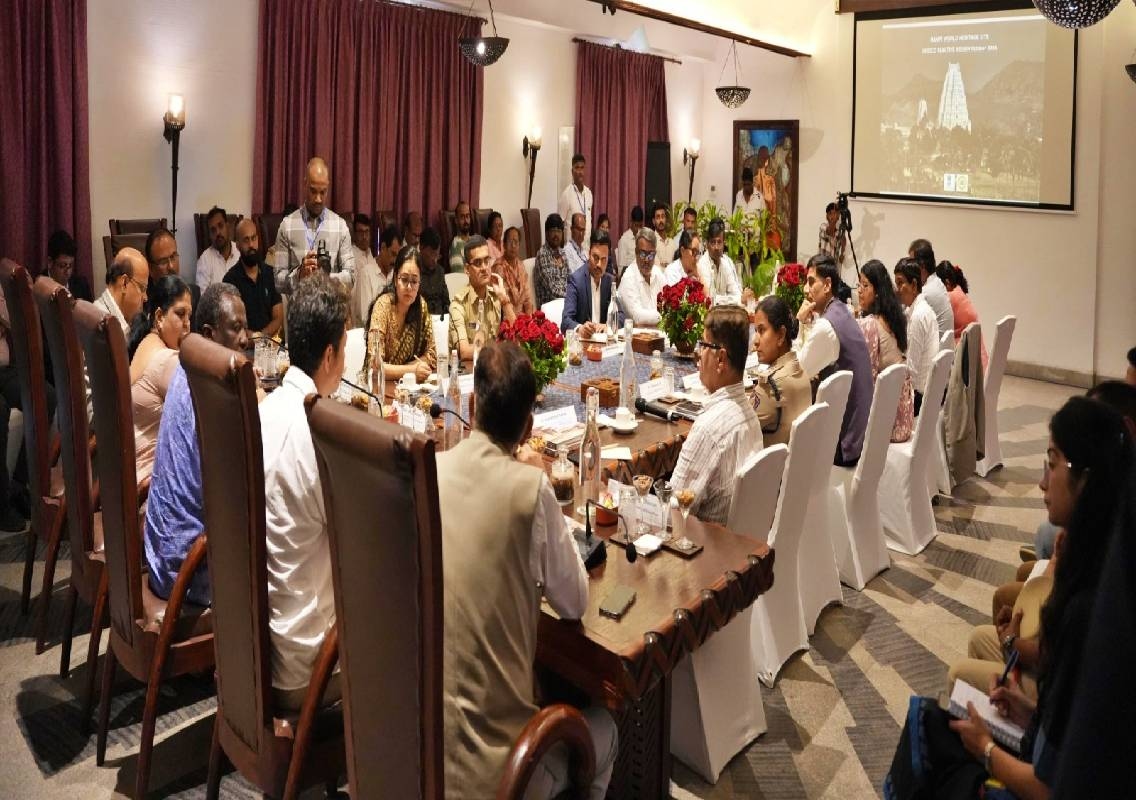


VIJAYANAGARA: A team of international heritage experts arrived at Hampi on Saturday to assess conservation measures, monument protection and management practices at the UNESCO World Heritage Site, amid continuing concerns over development activities and the protection of its historic landscape.
The UNESCO-ICOMOS reactive monitoring mission includes heritage experts George Abungu of Kenya and Ichida Shimoda of Japan, along with senior officials from the Archaeological Survey of India (ASI). The delegation is reviewing conservation initiatives, tourism infrastructure and development plans across Hampi and its surrounding heritage areas.
The inspection assumes significance as authorities continue efforts to protect the monuments and landscape associated with the Vijayanagara Empire while addressing tourism-related pressures and development requirements.
Officials brief delegation on conservation measures
The delegation held discussions with officials from the Vijayanagara and Koppal district administrations, the ASI, the Hampi World Heritage Area Management Authority (HWHAMA), the Tourism Department and the State Department of Archaeology.
Officials presented details of conservation initiatives and the measures adopted by their respective departments to maintain the monuments and manage the wider heritage area.
According to an official who attended the meeting, the UNESCO team appreciated the functioning of HWHAMA and suggested that similar management mechanisms could be considered for other heritage sites.
The meeting was held at a resort in Kamalapura and was not open to media representatives. The district administration did not issue a detailed public briefing on the discussions, leaving several aspects of the assessment undisclosed.
The mission is expected to examine how various departments coordinate their work, the progress of conservation programmes and the implementation of plans governing development within the heritage area.
Inspection covers Hampi and Anegundi monuments
The delegation’s itinerary includes visits to several prominent monuments and heritage structures across Hampi, Kamalapura and Anegundi.
On Sunday, the experts are scheduled to visit the ASI Museum in Kamalapura, Malyavanta Raghunatha Temple and the Vijaya Vittala Temple. The team is also scheduled to visit Anjanadri and Gagan Mahal at Anegundi in Gangavathi taluk.
A meeting with officials from various departments and tourism stakeholders is planned for 5.30 pm at the Deputy Commissioner’s office in Hosapete.
On October 26, the delegation is scheduled to inspect the Virupaksha Temple, Krishna Temple and Kamal Mahal areas. Discussions on Hampi’s master plan and integrated management plans are also planned.
The meetings are expected to examine the status of planning documents, conservation priorities, tourism management and the responsibilities of the agencies involved in protecting the heritage site.
The delegation’s programme continues until October 27, after which the experts are scheduled to travel to Bengaluru. On October 28, they are expected to meet the State Chief Secretary, ASI officials and UNESCO representatives.
Master plan and tourism management under scrutiny
The inspection comes as Hampi faces the challenge of balancing tourism and infrastructure development with the preservation of its historic monuments and surrounding landscape.
The UNESCO World Heritage Committee has previously called for progress on Hampi’s integrated management plan and the completion of key planning documents, including a comprehensive conservation plan, tourism strategy and visitor management plan.
In its 2026 decision on the Group of Monuments at Hampi, the committee also raised concerns about development proposals near Anjanadri and called for heritage impact assessments to be submitted for relevant projects before decisions that could be difficult to reverse are made.
These issues make the current monitoring mission important for assessing the implementation of conservation commitments and identifying areas requiring further attention.
Hampi, the former capital of the Vijayanagara Empire, is renowned for its temples, royal enclosures, stone chariot and other architectural remains. Protecting the site’s heritage value requires coordination among conservation authorities, local administrations, tourism agencies and other stakeholders.
Findings will inform further conservation measures
The experts’ assessment is expected to contribute to UNESCO’s continued monitoring of the site’s condition and the implementation of conservation and management measures.
The mission’s findings will be important for determining what further action may be required to protect Hampi’s monuments and historic landscape. The World Heritage Committee has requested that the results of the mission be presented at its 49th session for information.
The inspection does not, by itself, mean that Hampi will lose its World Heritage status or automatically be placed on the List of World Heritage in Danger. Any such decision would be a matter for the World Heritage Committee, based on the site’s condition and the applicable criteria.
The outcome of the review will therefore be closely watched by conservation authorities and heritage stakeholders. The key challenge remains ensuring that tourism, infrastructure and development plans proceed in a manner consistent with the long-term protection of Hampi’s internationally recognised cultural heritage.