







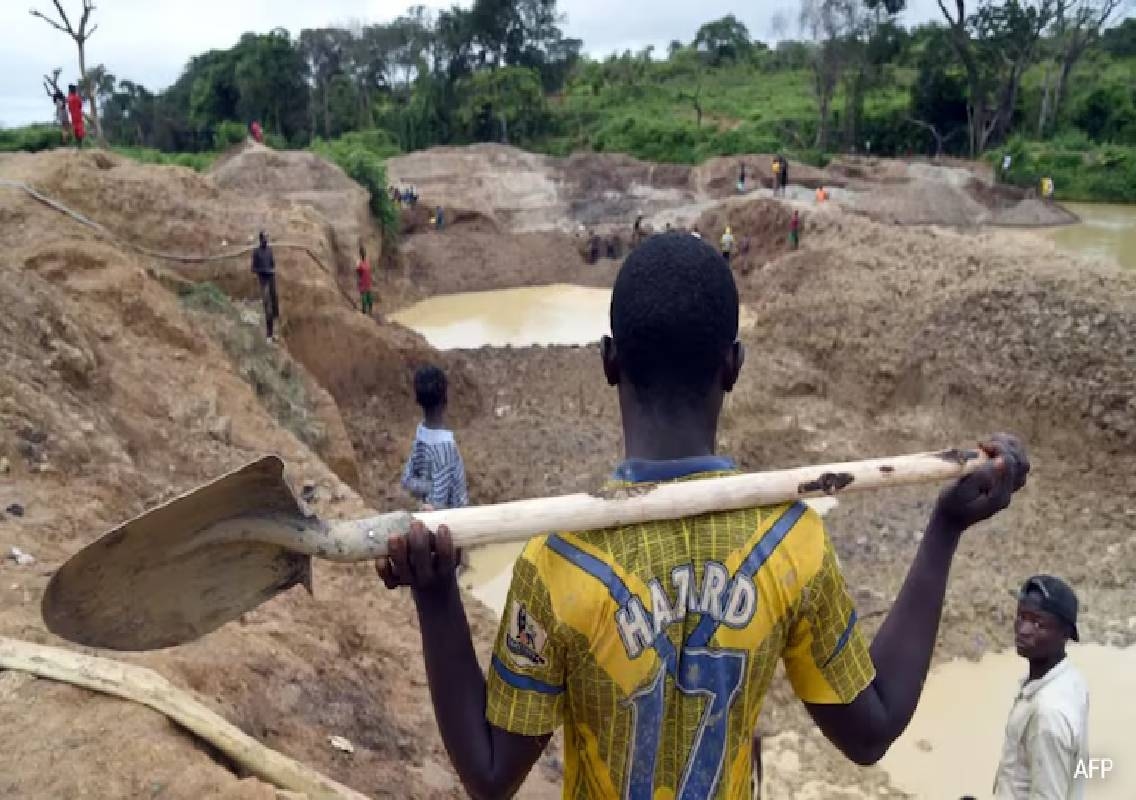


Bangui: At least 30 miners have been killed after an artisanal gold mine collapsed in the western Central African Republic (CAR), with several other workers feared trapped underground. Rescue teams and local residents were working to recover victims from the collapsed site, authorities and survivors said.
The accident took place on Tuesday morning in the Abba region of Nana-Mambéré prefecture, where small-scale and largely low-tech gold mining operations are common. Rescue efforts were continuing as authorities attempted to determine the full scale of the disaster.
30 bodies recovered from collapsed mine
Souleymane Bi, the deputy mayor of the affected sub-prefecture, said rescuers and local residents had recovered 30 bodies from the mine over several hours.
Several injured miners were also receiving medical treatment, while rescue workers continued searching for people believed to be trapped beneath the collapsed earth.
Florian Gaguende, one of the miners who survived the collapse, said the chances of finding additional workers alive were becoming increasingly slim as rescue operations continued.
The exact number of people still missing was not immediately available.
Rescue operation continues at Abba site
The collapse left rescue teams facing difficult conditions as they attempted to reach workers trapped inside the mine.
Footage from the site showed chaotic rescue efforts, with miners and local workers covered in mud attempting to pull victims from the collapsed pit. Several people could also be seen gathered around the expansive mining area as the rescue operation continued.
Local authorities have appealed for additional assistance to help reach those who may still be underground.
Artisanal mining carries major risks
The disaster has once again highlighted the dangers associated with artisanal mining in the Central African Republic.
Thousands of people are involved in small-scale mineral extraction across the country. Many such operations rely on basic equipment and lack the safety infrastructure available at larger industrial mines.
Mine collapses are consequently a recurring danger, particularly when workers operate in unstable underground pits.
The lack of protective equipment and formal safety systems can make even relatively small collapses deadly.
Government promises assistance
Government spokesman Evariste Ngamana expressed condolences to the families of those killed.
He said authorities were working to provide relief and assistance to people affected by the disaster.
The government is expected to assess the situation at the site as rescue operations continue and determine what additional support is required for injured miners and victims’ families.
Survivors describe a chaotic scene
Survivors and rescuers faced a difficult situation following the collapse.
Workers at the site reportedly attempted to dig through the debris and mud using available equipment as they searched for colleagues.
The scene was particularly challenging because the mine was an artisanal operation rather than a large industrial facility equipped with specialised rescue infrastructure.
The continuing search could also become more difficult if the collapsed sections remain unstable.
Central African Republic has a history of mine accidents
The latest disaster is not an isolated incident in the country.
Artisanal mining accidents have previously resulted in significant loss of life in the Central African Republic. Earlier mine collapses have also been linked to unstable ground and inadequate safety measures.
The repeated accidents have raised concerns over working conditions in the country’s informal mining sector.
For many communities, however, artisanal mining remains an important source of income, making it difficult to eliminate the practice despite the risks involved.
Search for trapped miners continues
The immediate priority remains finding anyone who may still be alive beneath the collapsed mine.
Rescuers are also recovering bodies and assisting injured workers while authorities assess the extent of the damage.
The death toll could potentially rise if additional victims are located inside the mine.
Authorities have not yet provided a final figure for the number of people who were working at the site when the collapse occurred.
Calls for more support
The deputy mayor has appealed to organisations and others willing to help with the rescue effort.
The scale of the operation has placed additional pressure on local authorities and residents who are attempting to reach trapped miners with limited resources.
The incident has highlighted the need for better emergency response capabilities at remote artisanal mining sites.
Conclusion
At least 30 miners have died after an artisanal gold mine collapsed in the Abba region of western Central African Republic, while several others remain feared trapped. Rescuers and local residents have recovered dozens of bodies and are continuing the search for survivors.
The disaster underscores the persistent dangers faced by workers in the country’s small-scale mining sector, where inadequate safety measures and basic equipment can turn mine collapses into mass-casualty incidents.
Authorities have promised assistance to affected families and injured workers, while rescue teams continue their efforts to determine the final toll.