







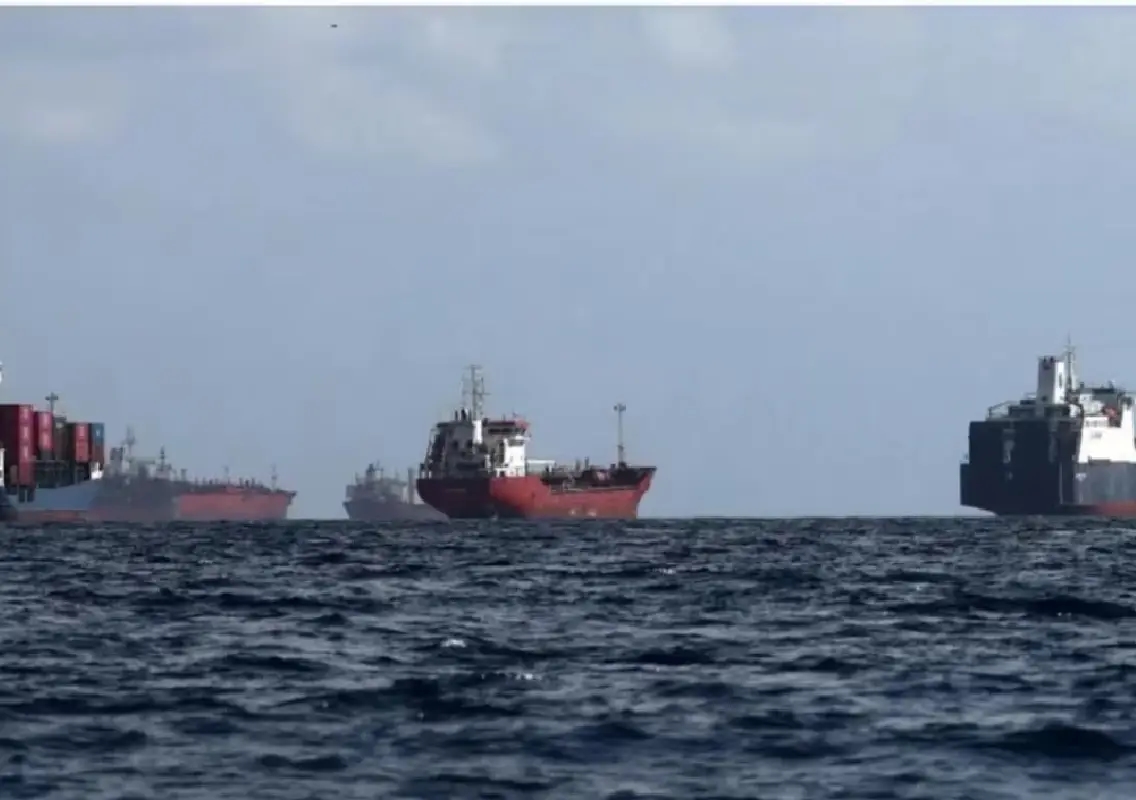


As tensions escalate in West Asia, 38 Indian-flagged ships carrying nearly 1,100 seafarers remain stranded in the Persian Gulf, raising concerns about maritime safety and global trade disruptions.
Officials said the vessels are mostly crude oil and LNG carriers navigating the sensitive waters around the Strait of Hormuz, a vital shipping corridor for global energy supplies.
Review meeting held to ensure safety
Union Shipping Minister Sarbananda Sonowal chaired a high-level review meeting on Tuesday to assess the situation and ensure the safety of Indian maritime personnel.
The minister directed officials, including the Directorate General of Shipping (DG Shipping), to take necessary measures to protect Indian seafarers and maritime assets operating in the region.
Officials informed the ministry that 24 ships are stranded west of the Strait of Hormuz, while 14 vessels are located east of the strait.
According to DG Shipping, there have been no confirmed cases of detention, boarding, or direct attacks involving Indian-flagged ships so far.
Casualties reported on foreign-flagged vessels
Authorities confirmed that three Indian sailors were killed and one injured in attacks on foreign-flagged vessels near the Oman port during the ongoing conflict.
DG Shipping stated that there have been four reported incidents involving Indian seafarers in the region, all on ships sailing under foreign flags.
Officials emphasised that nearly 23,000 Indian seafarers work on vessels operating in the conflict-hit region at any given time, highlighting the scale of India’s maritime workforce abroad.
India is currently the third-largest supplier of seafarers globally, after the Philippines and China.
Shipping routes disrupted
The conflict has also significantly disrupted global shipping routes. At least five tankers have reportedly been damaged, and nearly 150 ships are stranded around the Strait of Hormuz.
Several international container shipping lines have suspended services to West Asia due to safety concerns.
Many vessels that typically travel through the Suez Canal route are now being diverted around the Cape of Good Hope, increasing travel time and operational costs.
Cargo congestion at Indian ports
The disruptions have led to cargo congestion at Indian ports, with around 1,000 containers currently stuck awaiting shipment.
Sunil Vaswani, Executive Director of the Container Shipping Lines Association (India), said shipping lines have prioritised safety while continuing services to long-haul destinations such as the United States, Europe, and the Mediterranean.
However, exporters are already feeling the impact. Supplier Sanjay Pansare said around 150 containers of fruits and vegetables, including bananas, pomegranates, watermelons and onions, are currently stranded due to the disruption.
Shipping officials said some Gulf-bound vessels are being temporarily terminated at ports such as Fujairah, Sohar, and Khor Fakkan, from where cargo is transported further by land routes.
With tensions continuing in the region, authorities remain on alert as the situation threatens both maritime safety and global supply chains.